|
|
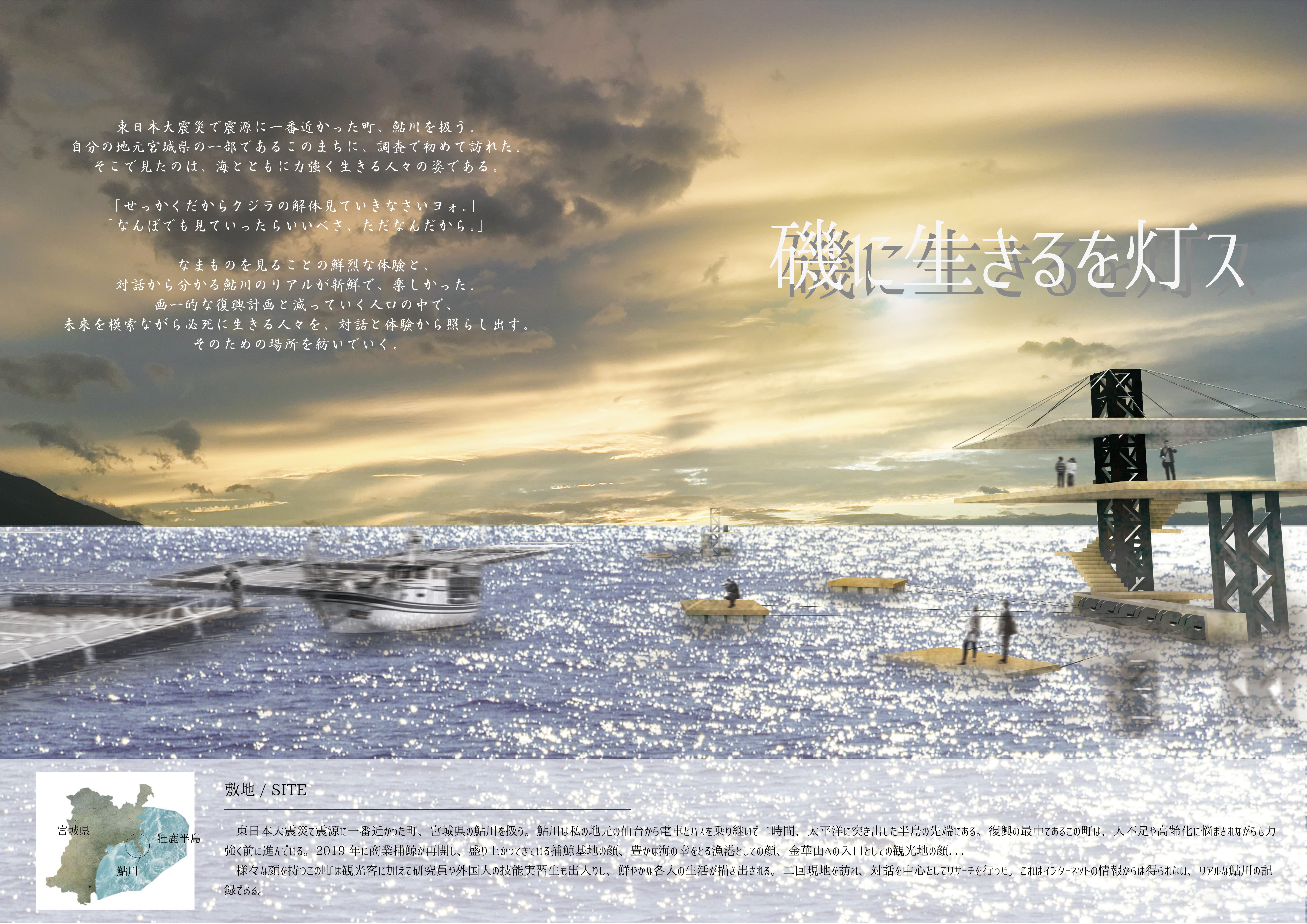
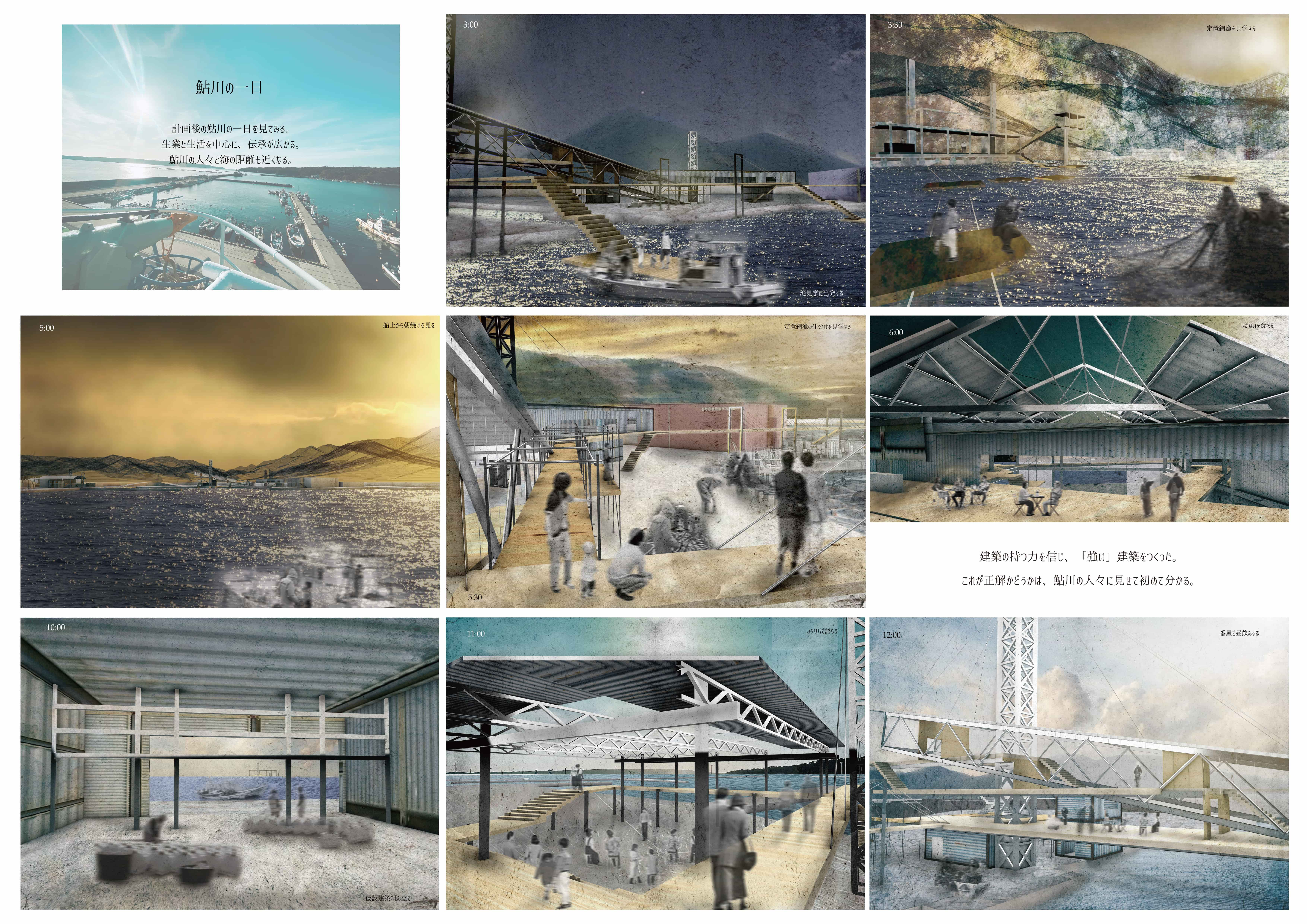
In spite of the tragedy of the tsunami, people still choose to live at the seaside. According to my survey, people in Ayukawahama, Ishinomaki City, Miyagi Prefecture who have undergone the disaster of 311 still place their core activities near the sea. For the residents of Ayukawa, the power of heritage of their livelihood and living style is stronger than anything, which also brings out the diversity of people who are working in this community. Accordingly, I intend to convert Ayukawa into a “museum” to display the originality of people here, that is, their livelihood and living style. I compose my project with four aspects: whaling, fishing, reconstruction, and landscape. By anchoring on these activities, the community will be open up to the outside world in a welcoming gesture. Moreover, considering the massive earthquake that might happen while trying not to devastate the original view of the harbor, temporal constructions with strong structures are what I want to build for the people here. With the power of architecture, a new future for Ayukawa will be established.
|
|
|
The site——Ayukawa, is a town located at the tip of the Oshika Peninsula, two hours by bus and train from my hometown of Sendai City, Miyagi.
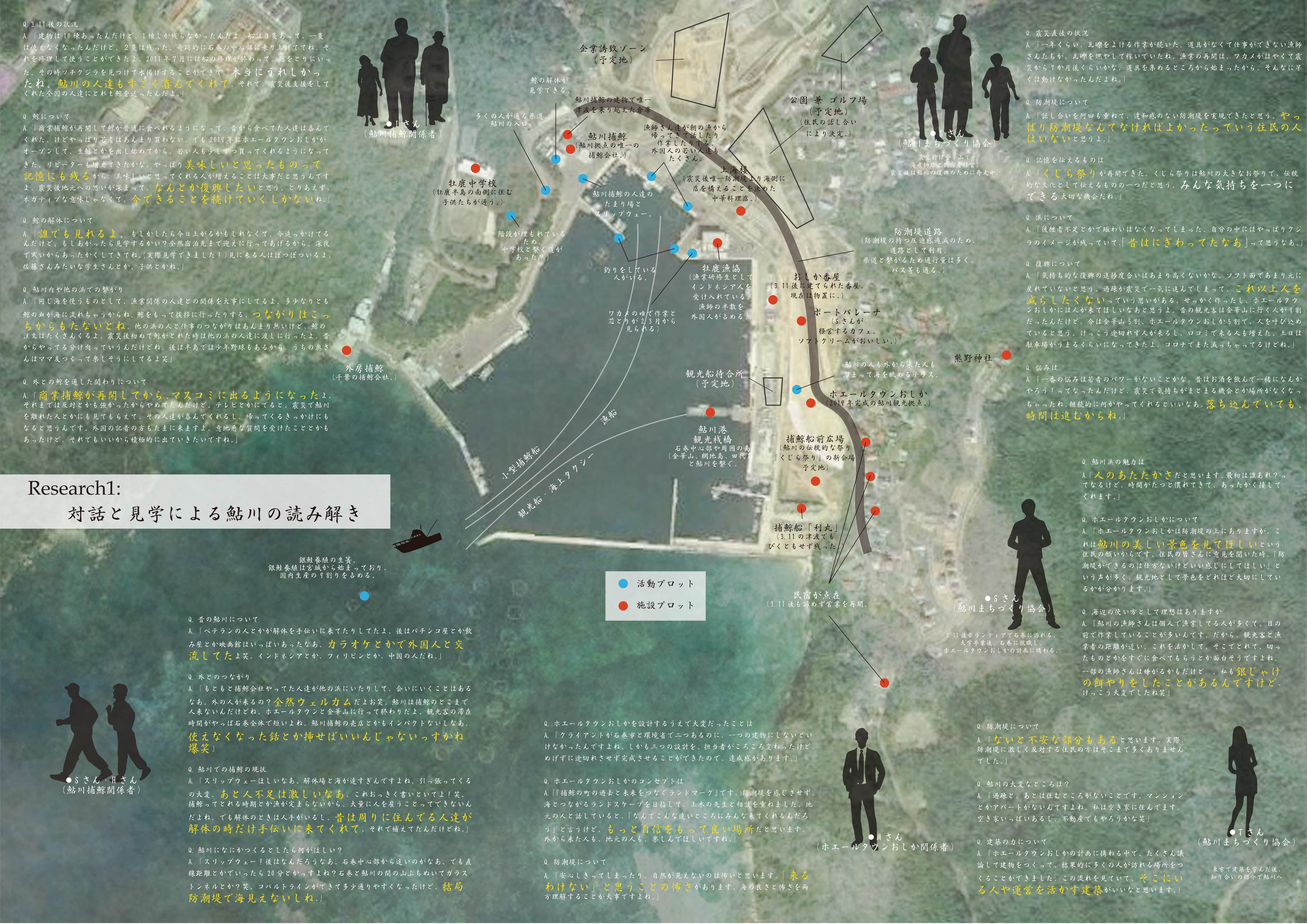
Here, I accumulated dialogues and gathered the real life of Ayukawa and the thoughts of people. In addition, I conducted a survey that directly touched on the livelihood, such as a tour of the dismantling of whales.
Analyzing the above research, I obtained three facts.
1.Even if the building is washed away by the tsunami, the core of people’s lives is on the sea side.
2 You can feel the strength of the folklore by actually seeing the real life and livelihood there.
3.Despite being located at the tip of the peninsula, the number and variety of people coming and going.
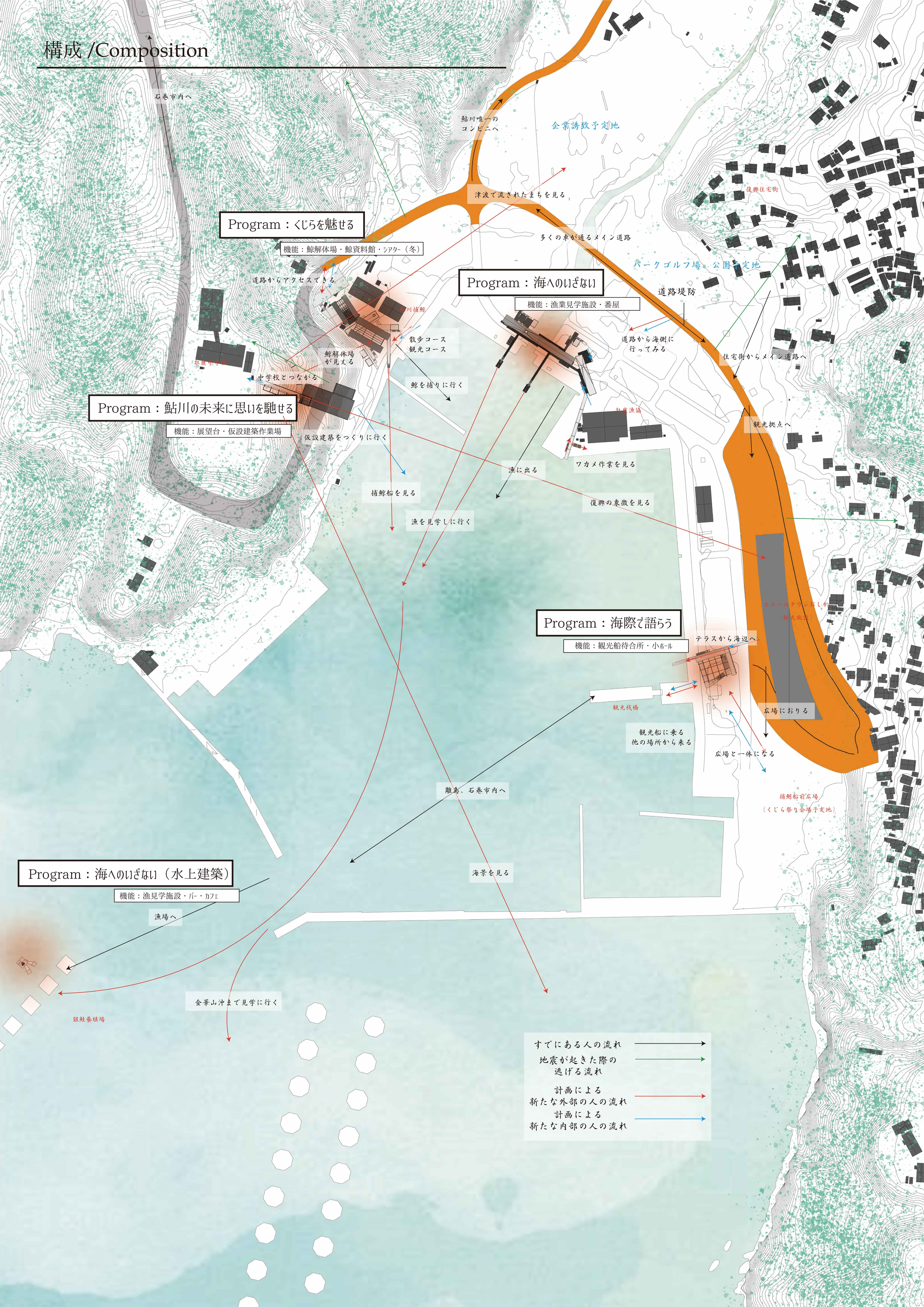
Based on the above facts, I plan to make Ayukawa a “museum” by fascinating people’s real lives on the sea side of the seawall, and to pass down there story to the region.
Consider the following four design configurations.
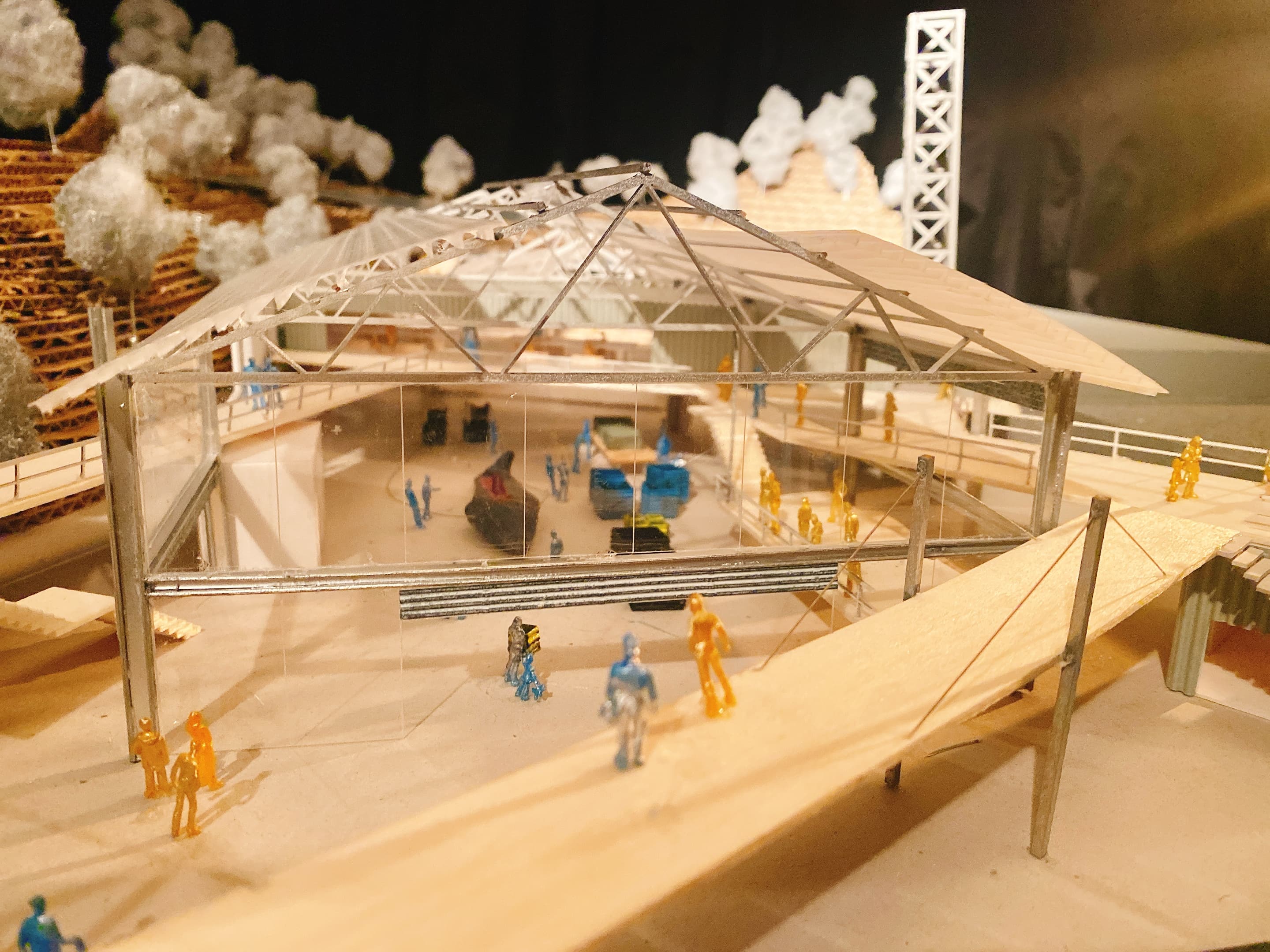
Liberation of the whale dismantling ground, which shows whaling that has been going on for a long time.
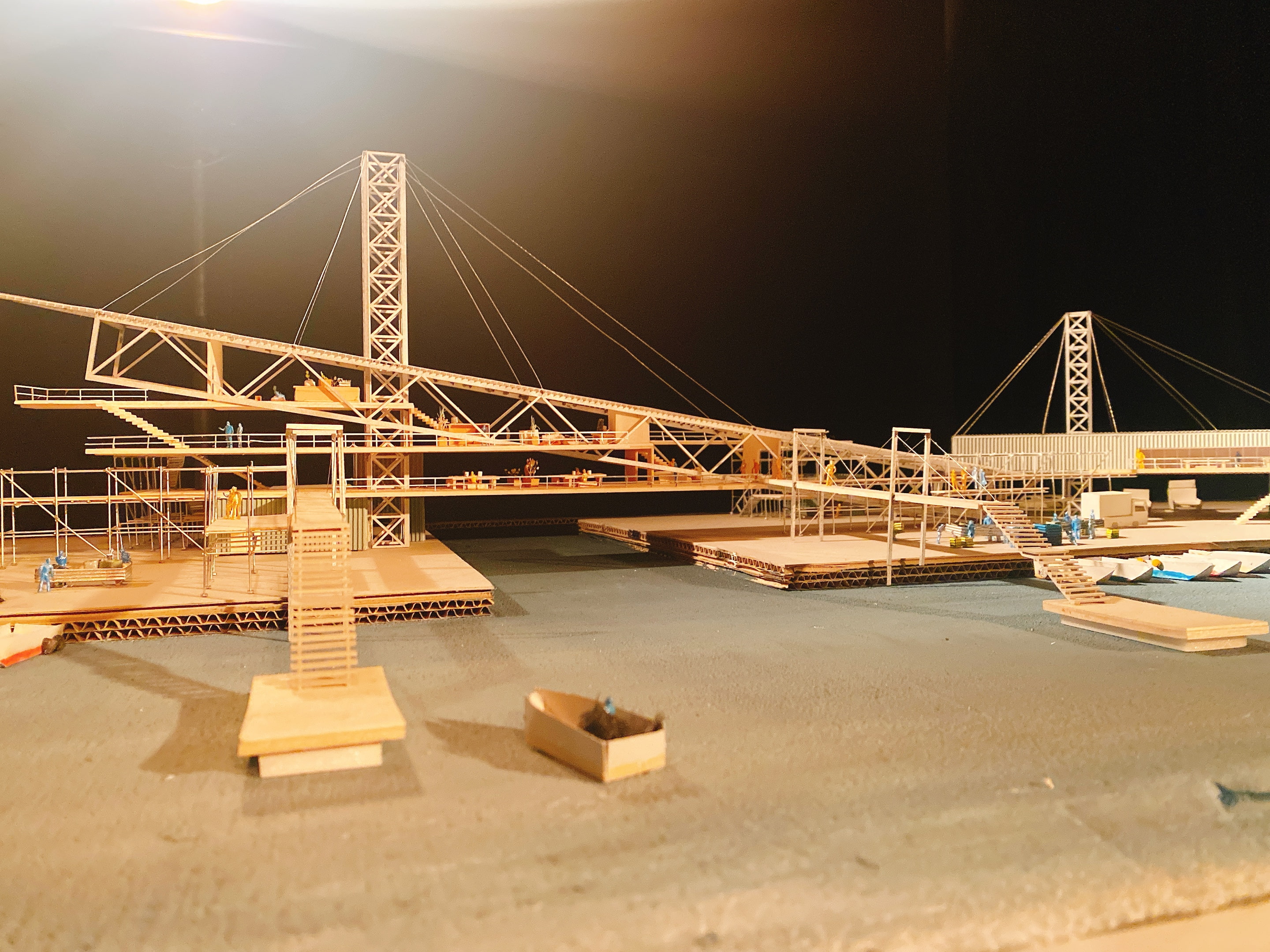
The regeneration of the house for fishermen. Inviting people to the sea and showing fishing at fishing grounds
The place for communication beside the sea showing the reconstruction of Ayukawa.
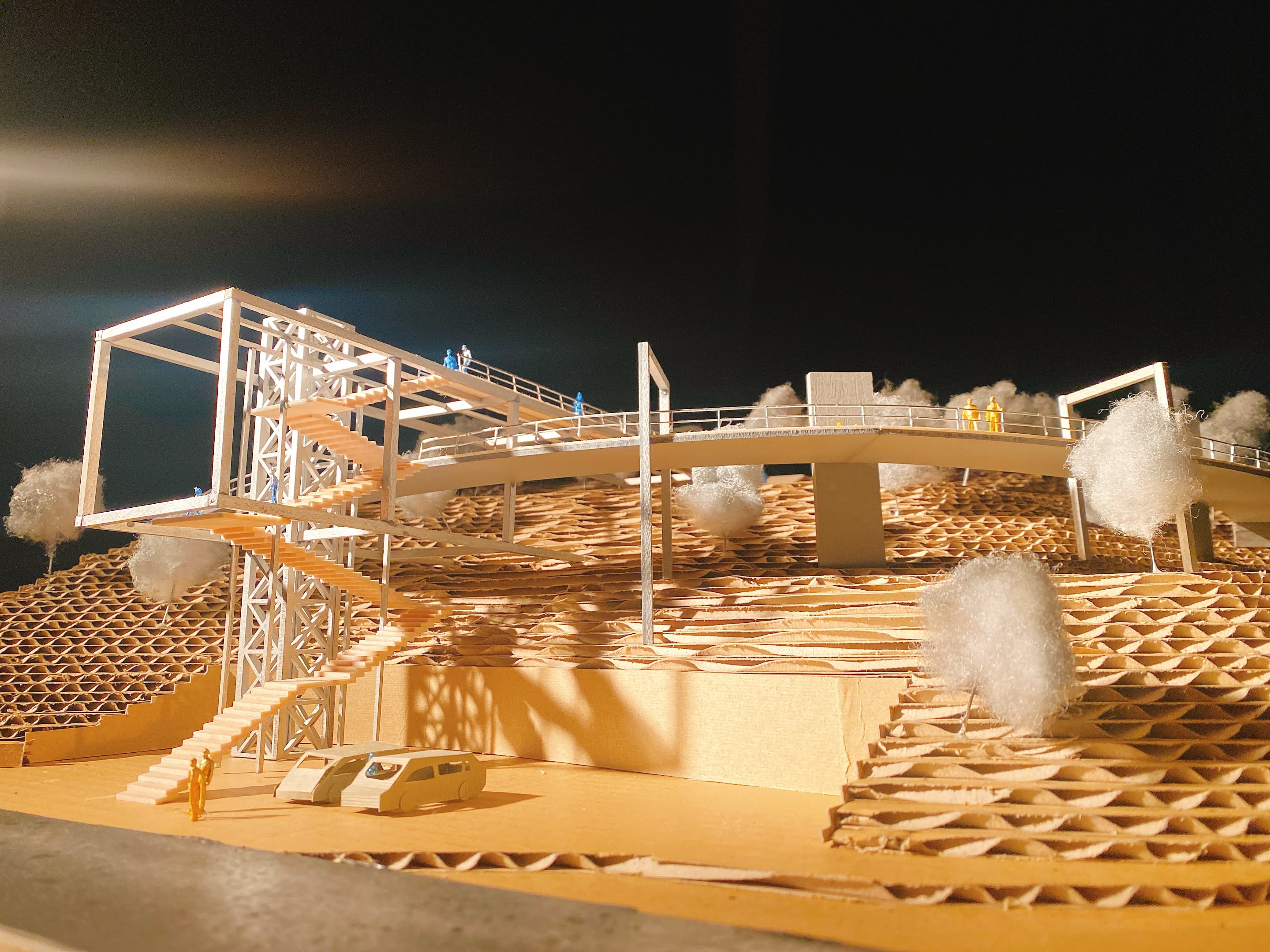
Think about the future of Ayukawa, a viewpoint that shows the future of Ayukawa.
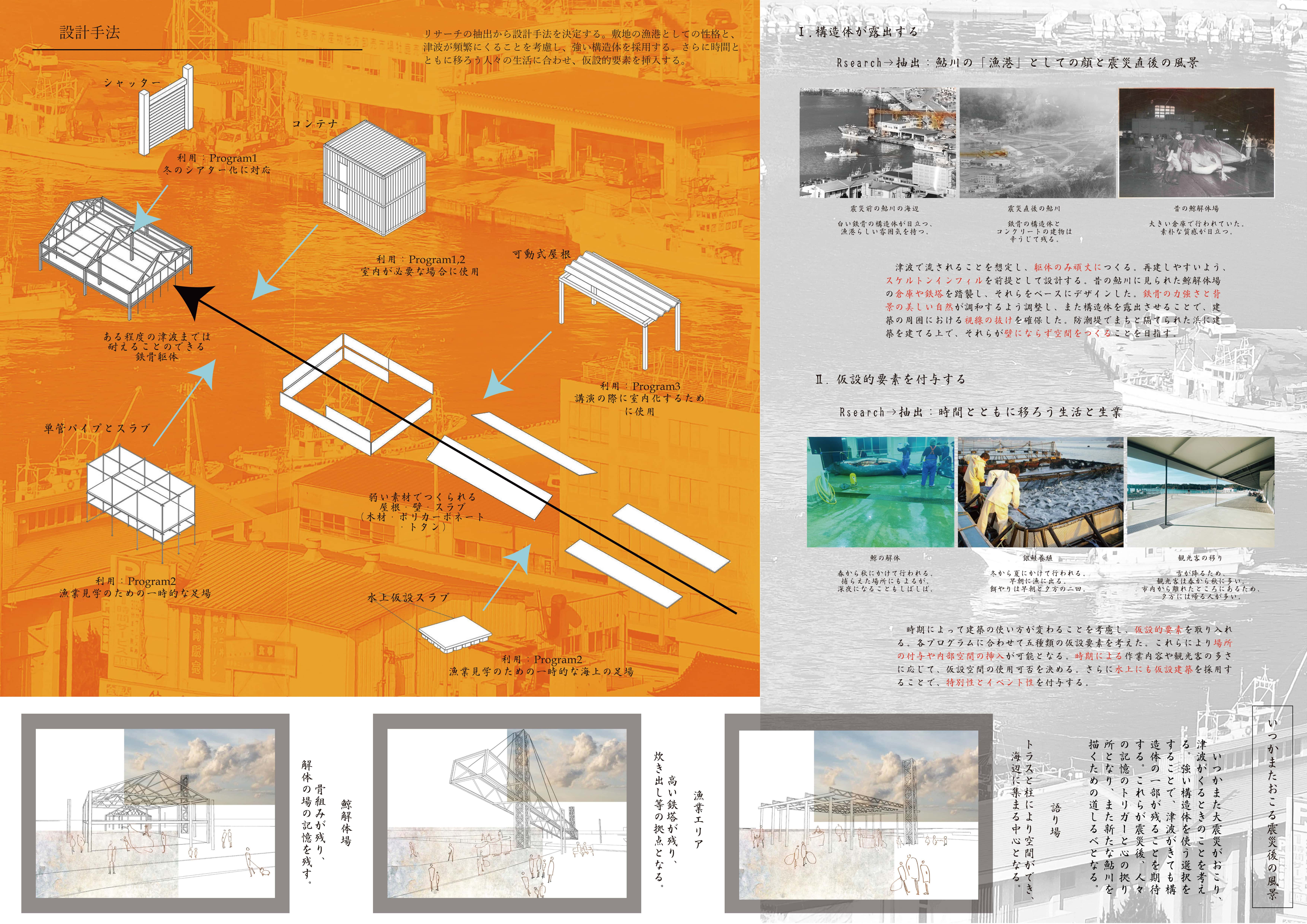
There will be two elements in the design method. First, using strong structure and SI. Considering the spatiality of the fishing port and the future that the earthquake happen again, I used a lot of steel frames. Second, temporary architecture. I decided to use it based on the spatiality of the seaside, which changes with time.
I will explain the scenery that each architecture fascinates.
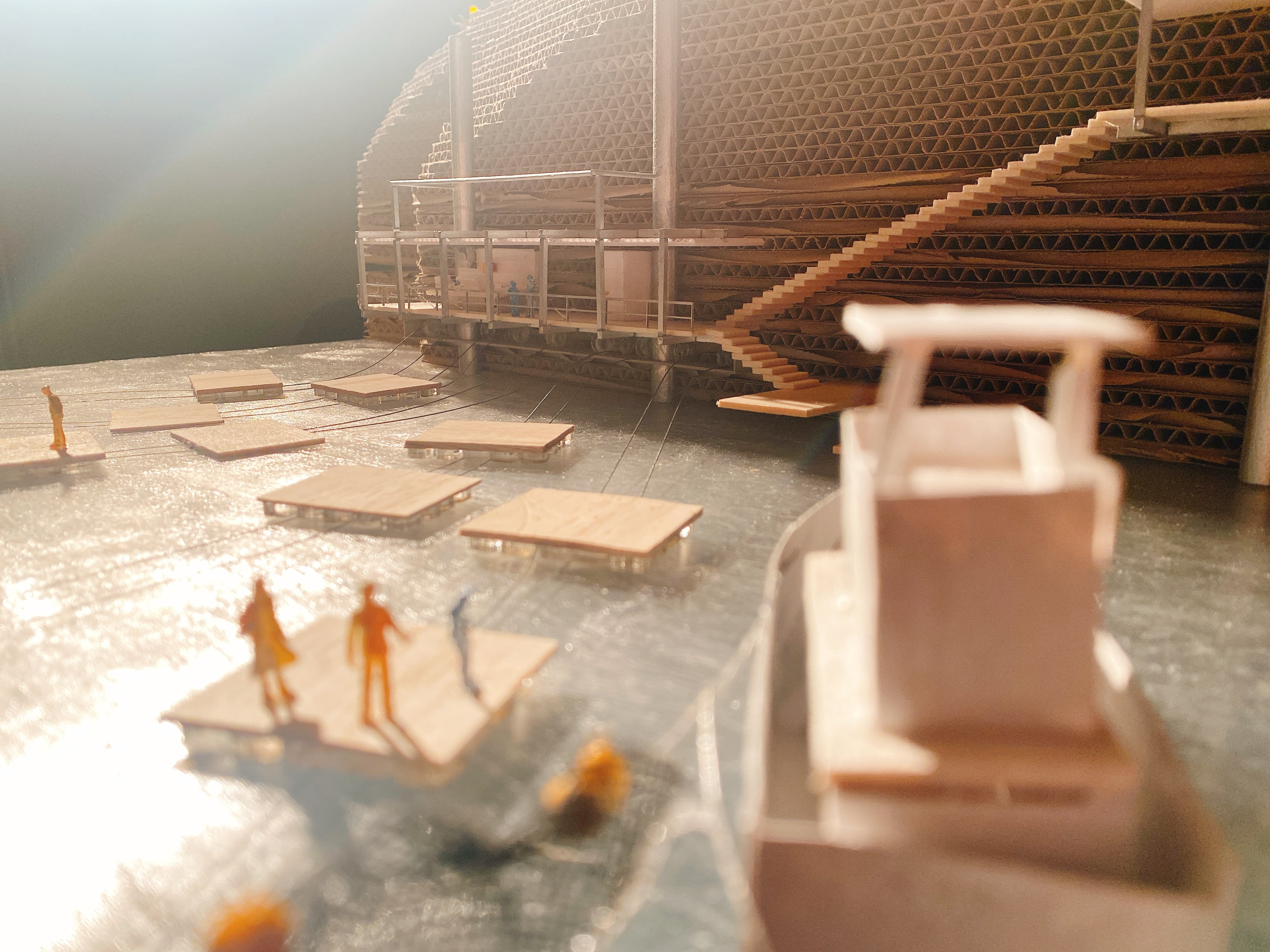
Program: The site that attracts whales is where Ayukawa whaling is currently located.I rebuild the dismantling site of the whale, which is just a box before. With reference to the old demolition site, I insert the slab into the warehouse frame. I aimed to show the interesting whale dismantling show.
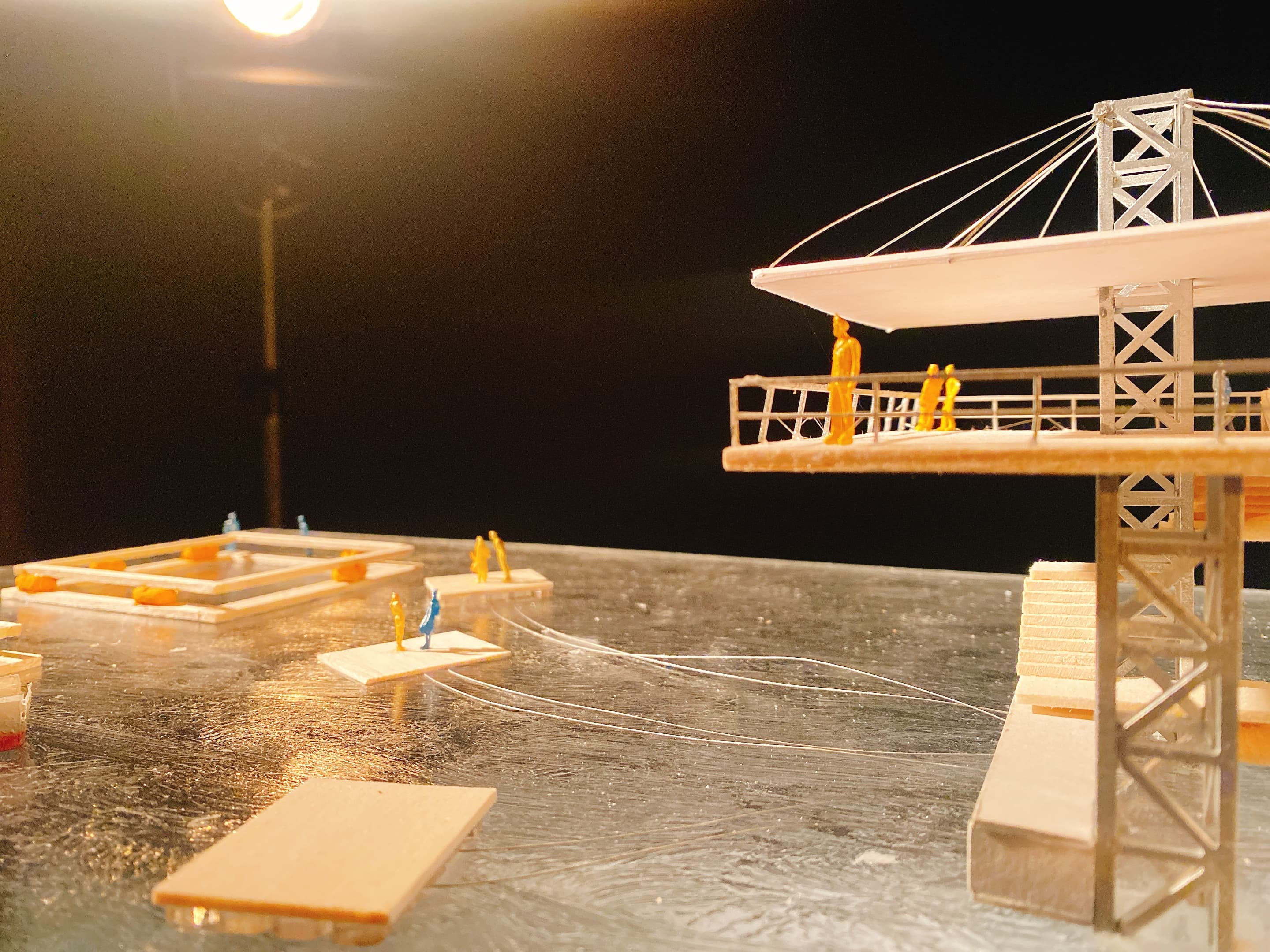
Program: The site that invite people to the sea is a vacant lot next to the fishery cooperative. I plan a house for fishermen, and people also can have fishing tour facility here. The structure of the diagonal truss is designed can be seen from the inside of the seawall. I also create a place for fishing tours on the surface of the water, making it possible to spend time on the sea.
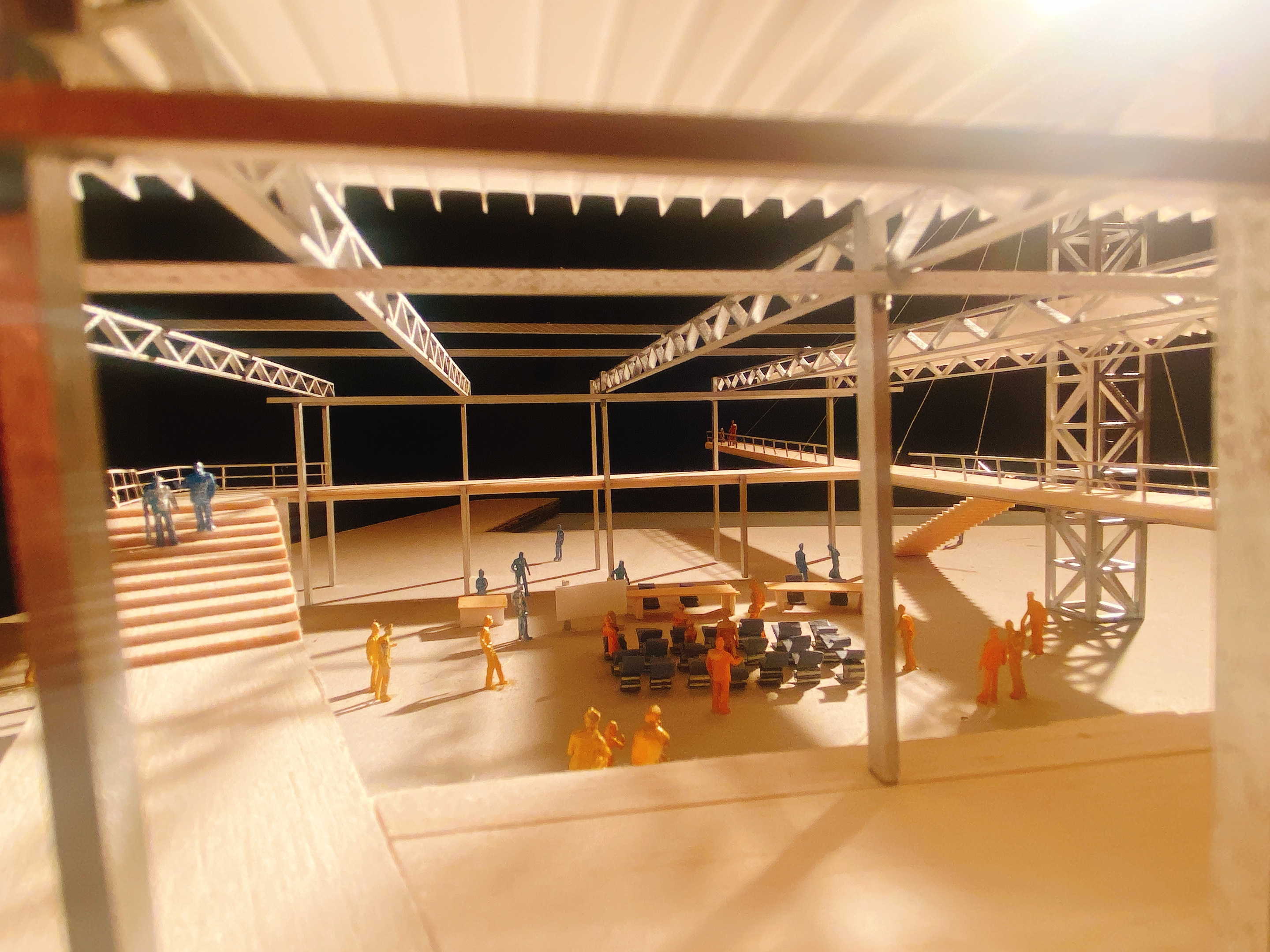
Program: Talking at the seaside. The site is on the east side of the beach, between the tourist facility and the pier of the tour boat. I plan a hall where people can gather and communicate . We will connect the culture that is handed down in a comfortable place where you can see the sea.
Program: The site where you can think about the future of Ayukawa is the mountain surface across the prefectural road on the west side of the beach. I plan a temporary architecture’s workshop and perspective. People can enjoy the changing look of the town in this place by overlooking the Ayukawa.
I aim to create such an architecture that attracts people from the outside to Ayukawa and shows new scenery to the locals.
|