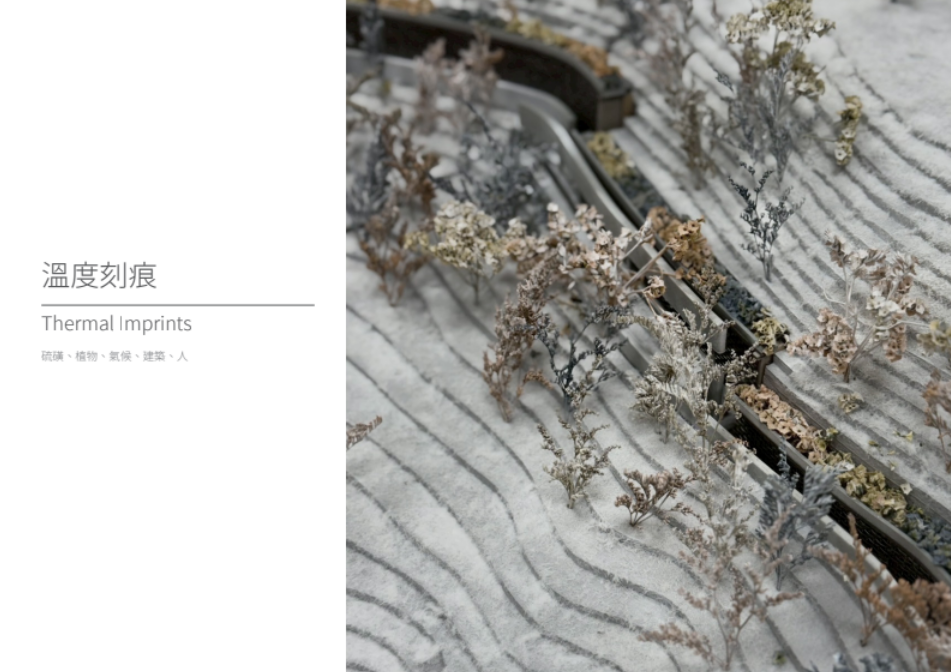
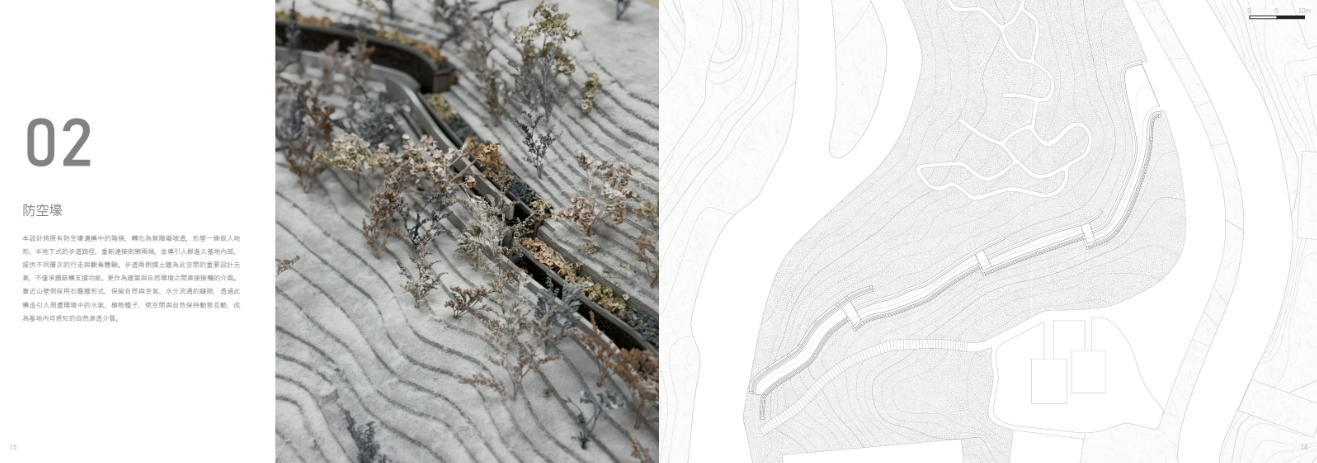
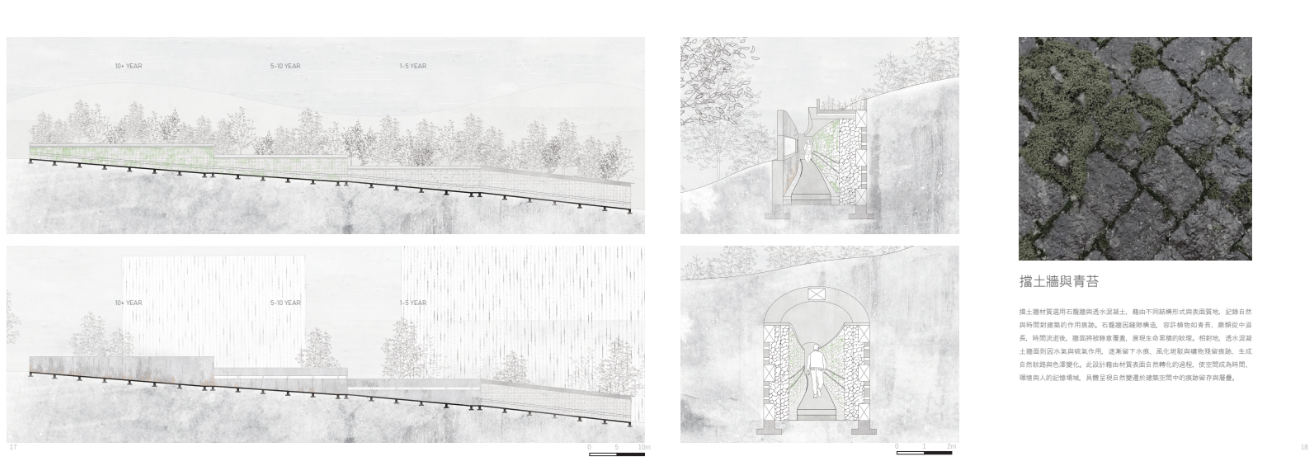
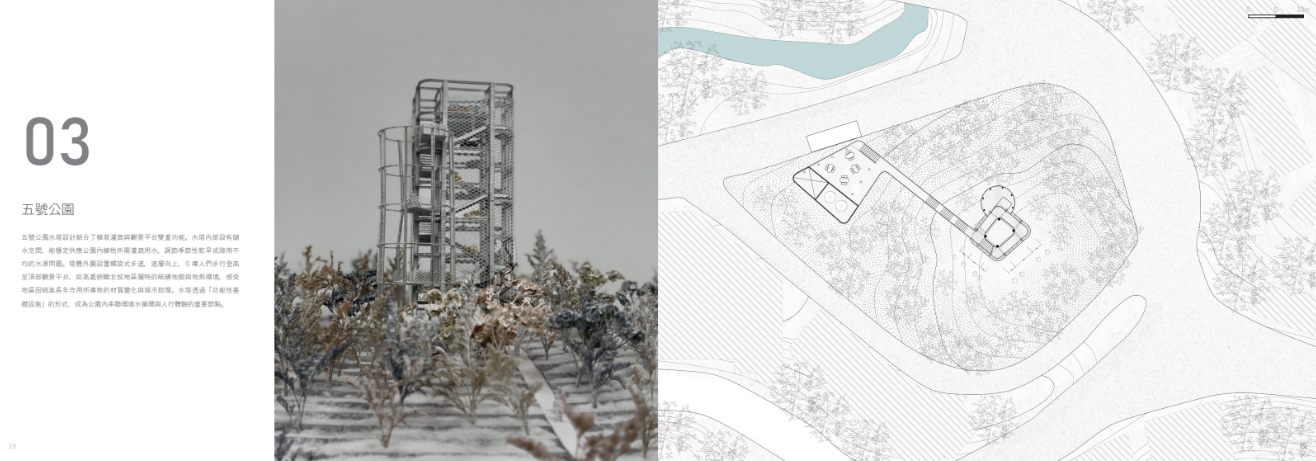
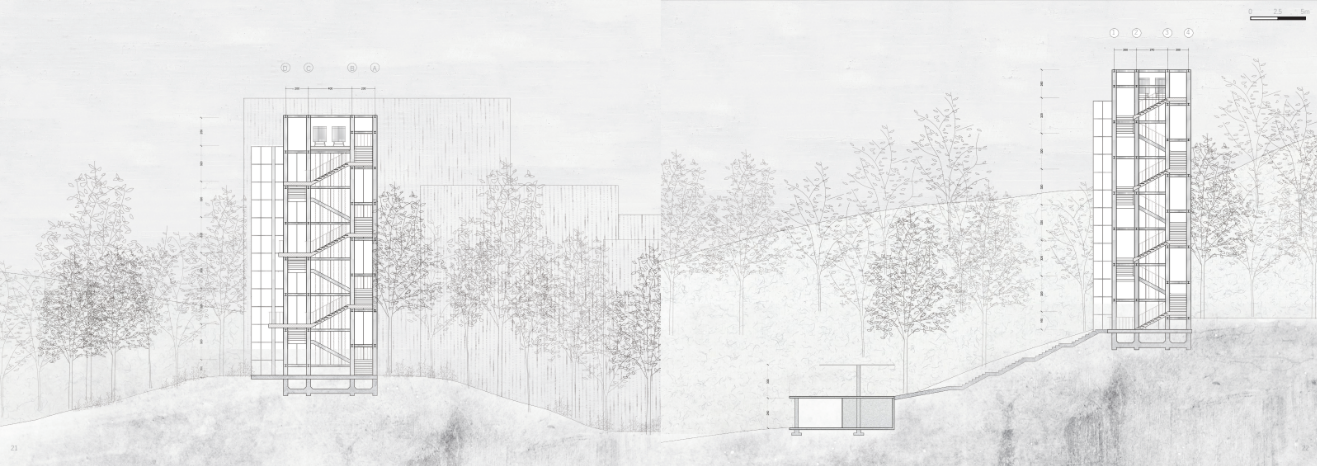
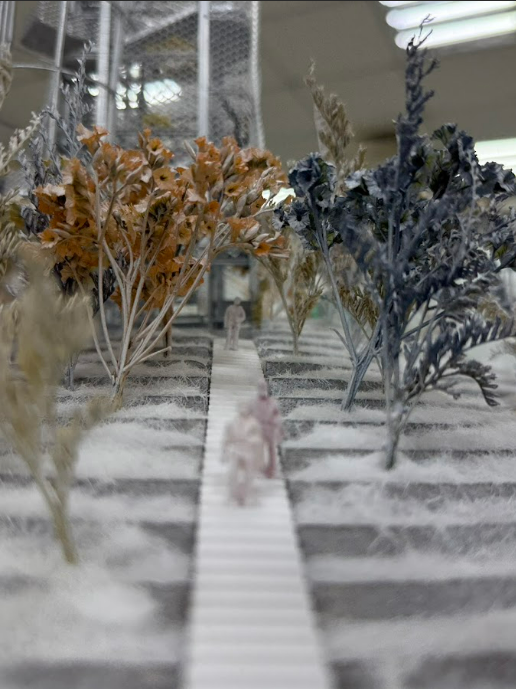
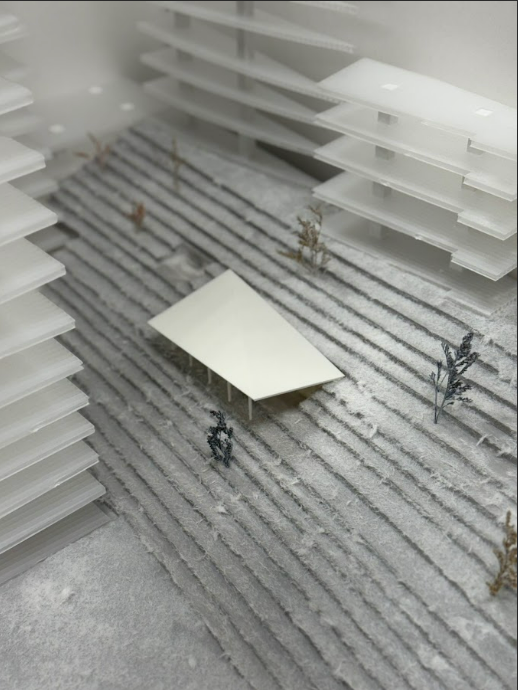
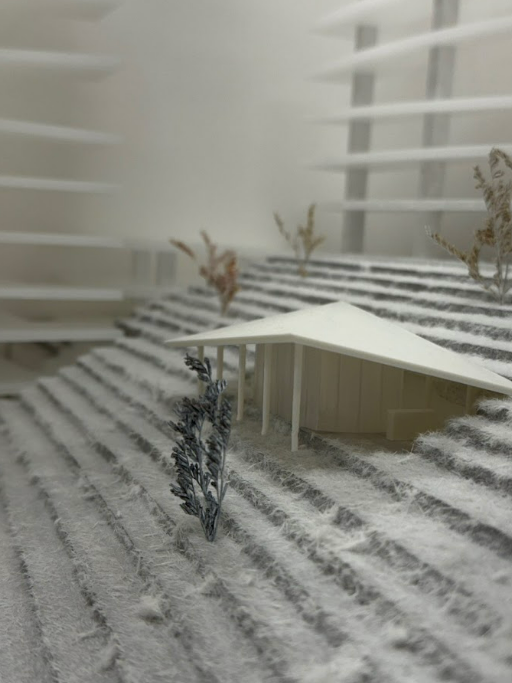
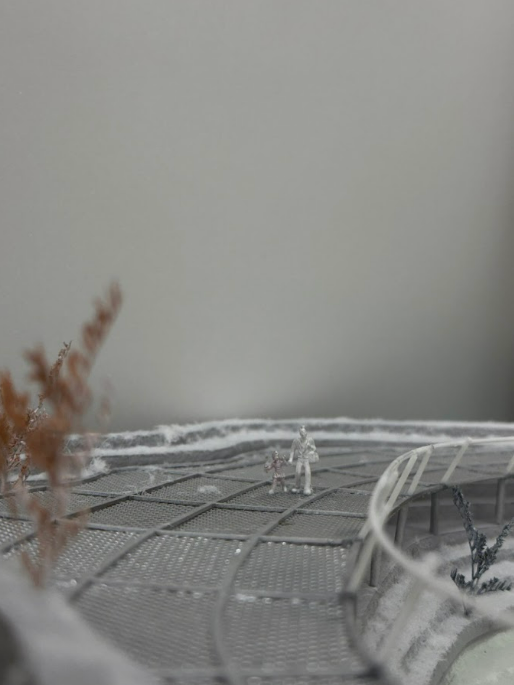
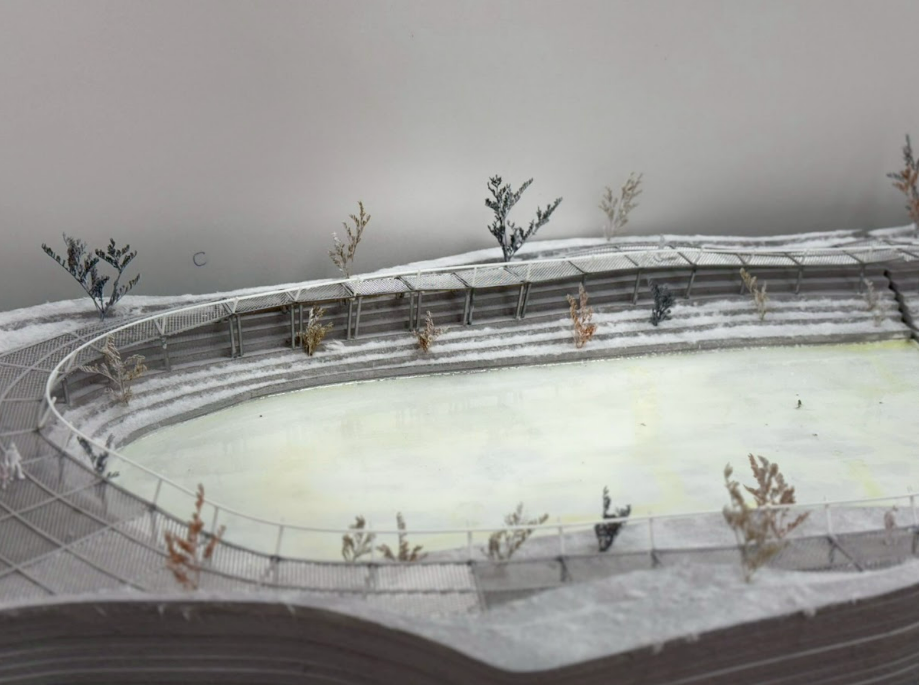
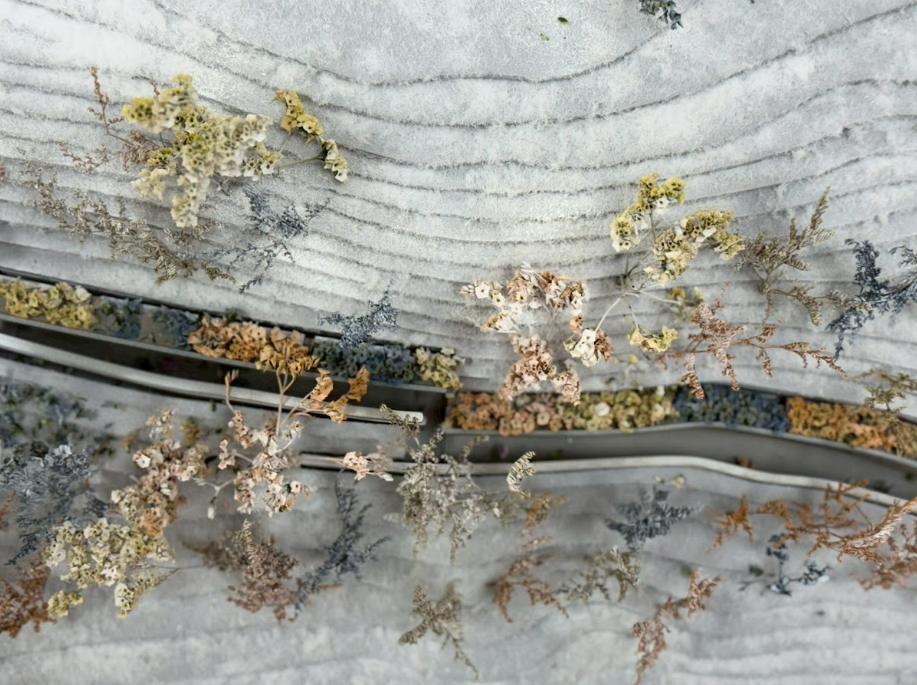
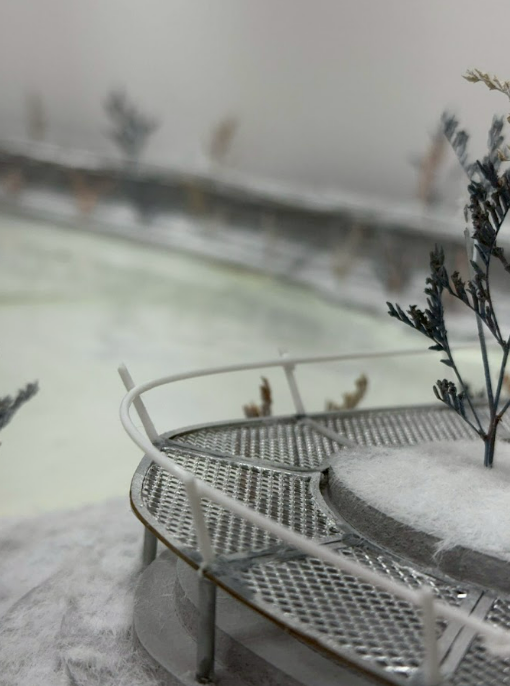
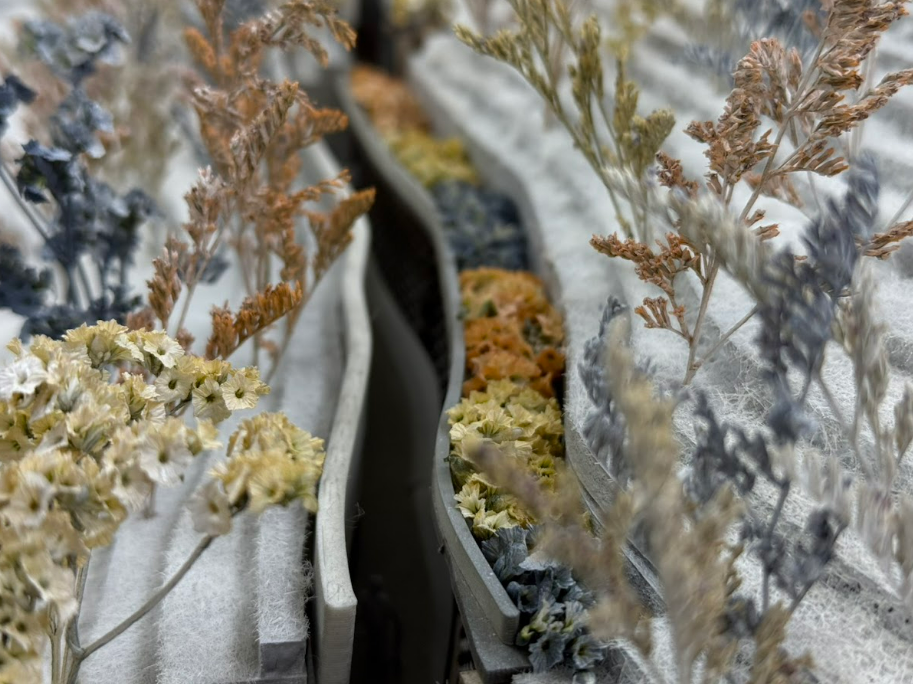
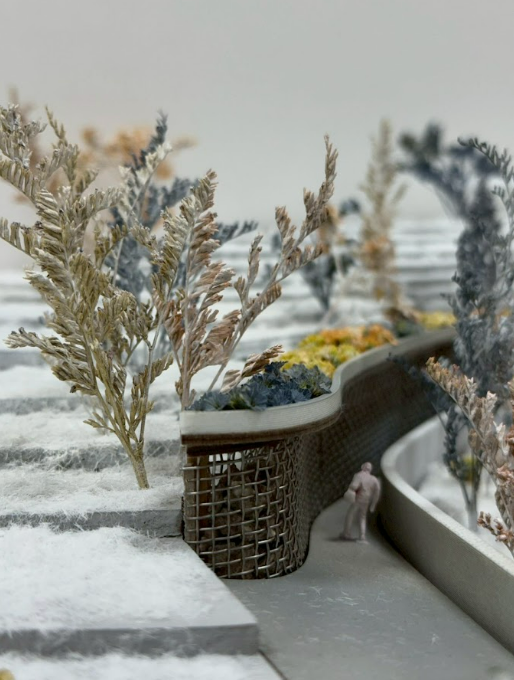
透過對生活的觀察,我發現建築不僅是承載行為的載體,它也可能成為自然與人、事件與人之間的間接介質。
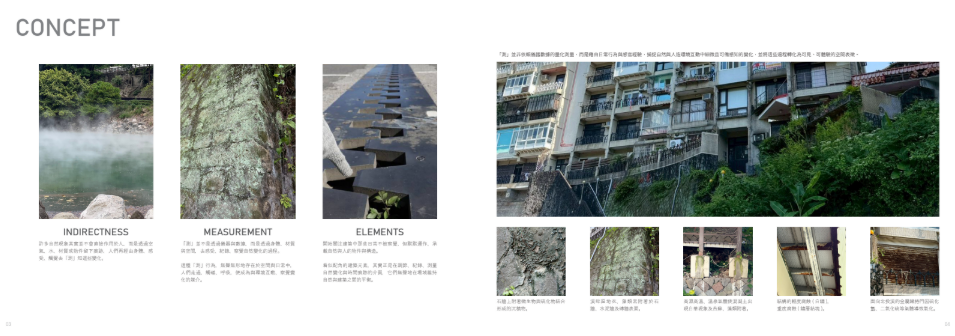
於是我將這種「間接性」轉化為一種行為概念:「測」。
「測」,並非指透過儀器量取數據的精密測量,而是透過身體、材質與空間去感受、記錄、察覺自然變化的過程。
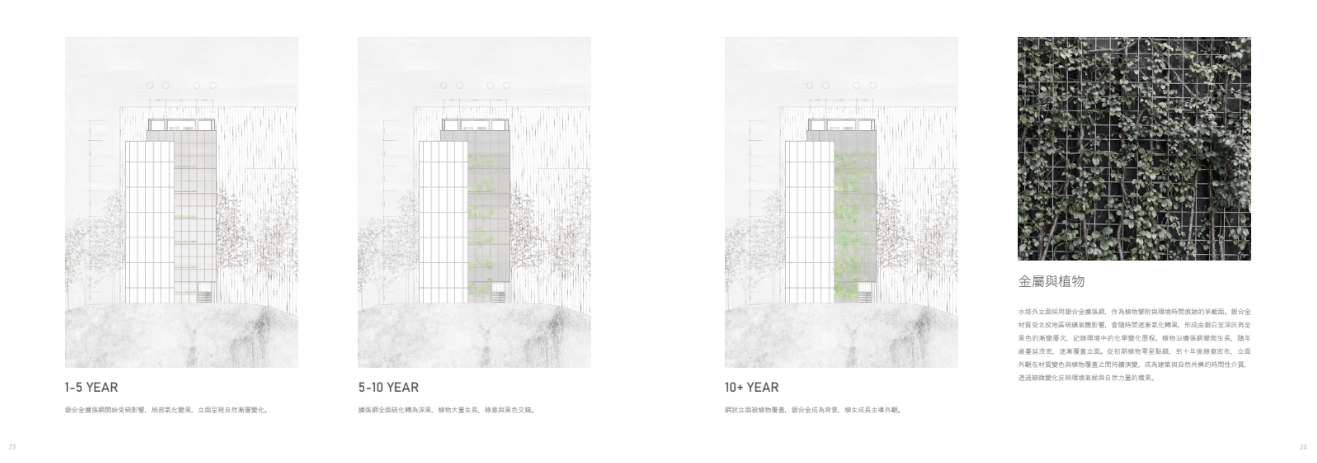
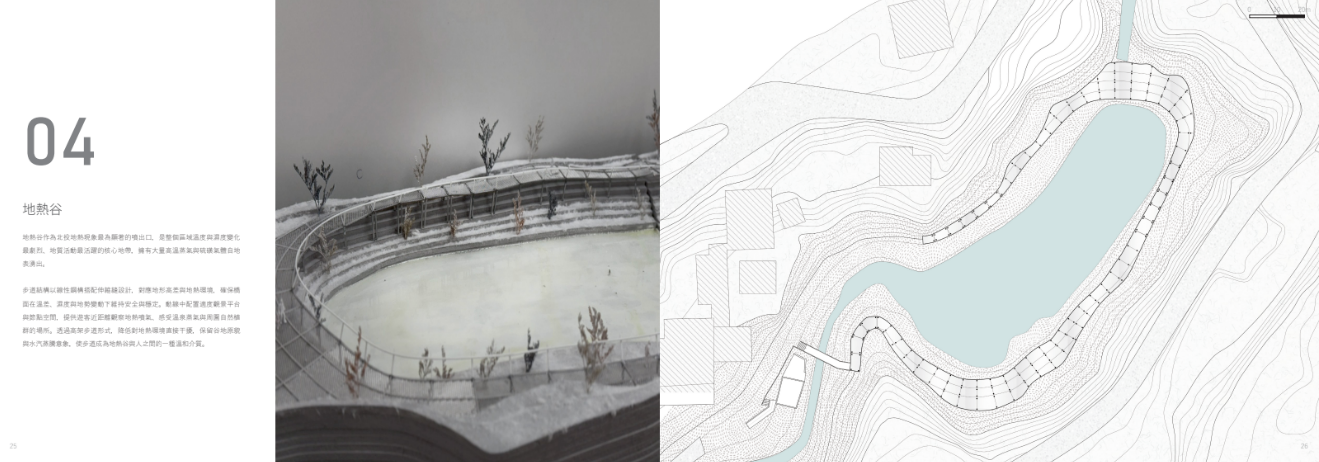
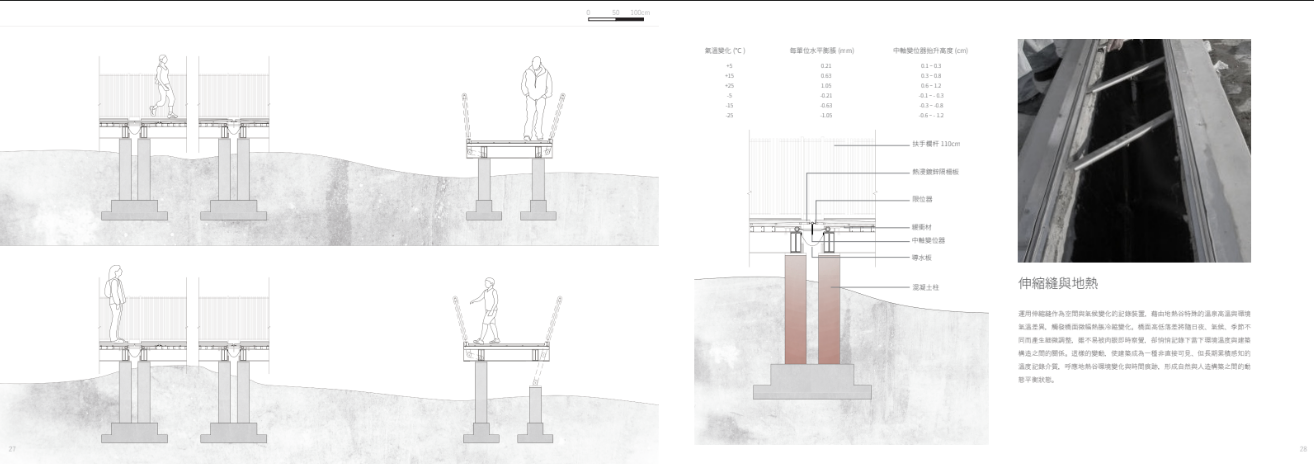
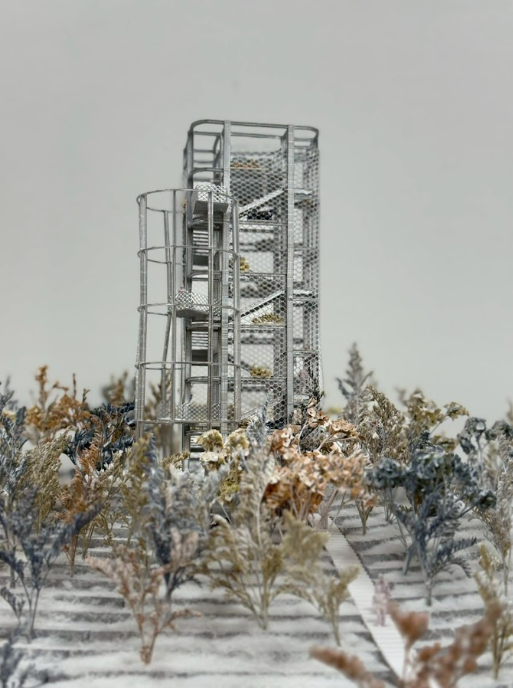
在建築空間中,這樣的「測」行為,可能透過材質變化、空氣溫濕感知、植物蔓延,以及身體觸覺與行走體驗實現。
建築於是成為一種測量自然流變、時間痕跡與人與環境關係的介質,並透過設計手法,將這些微小痕跡與變化具象化,讓人能在空間中意識到環境的存在與變動,並持續感受自然與人為之間,那種需被調節與平衡的關係。
–
Traces of Temperature
Through observing everyday life, I realized that architecture is not only a container for human activities, but also a mediator between nature and people, between events and the body.
This sense of indirectness is translated into a spatial concept: “measuring.”
Not in the sense of technical precision, but as a bodily and material process of sensing, recording, and responding to natural changes.
In the space, this act of measuring takes form through material transformation, shifts in air temperature and humidity, the spread of plants, and the tactile experience of movement.
Architecture becomes a medium that registers time, nature’s flux, and the relationship between humans and environment. Through design, these subtle traces are made tangible—reminding us of the ongoing need to balance, perceive, and engage with the changing world around us.