Satori Sento of Latent Ruin
新加坡 / singapore
李若樽 / LEE Andrew
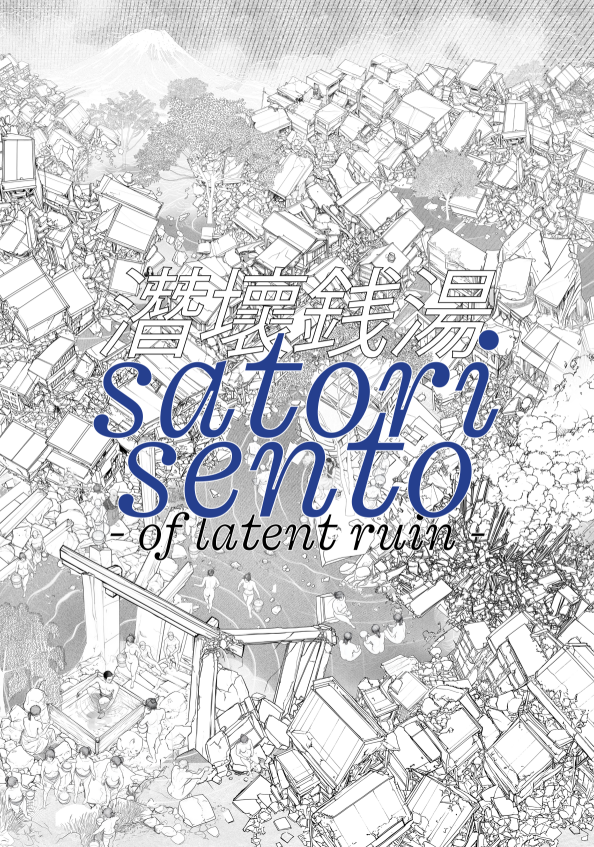
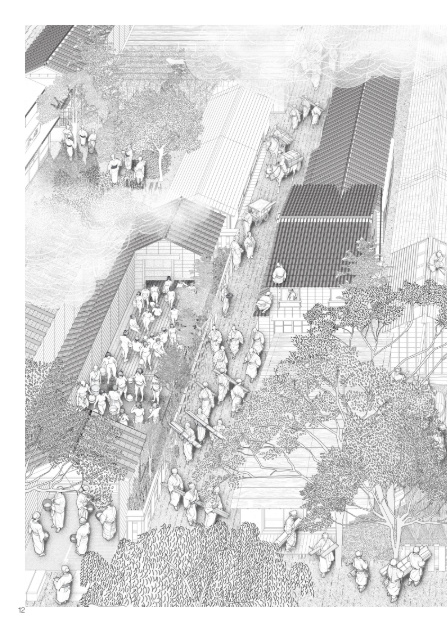
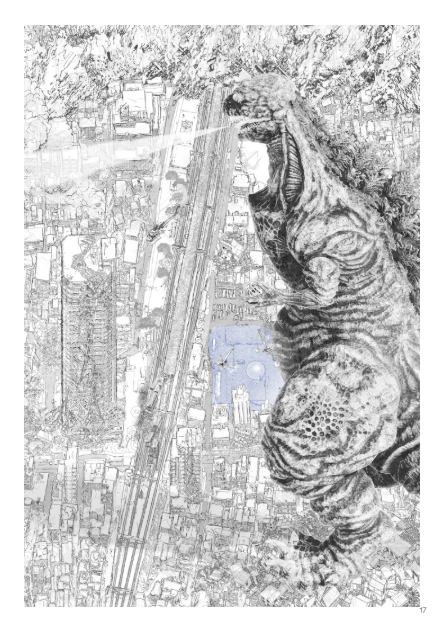
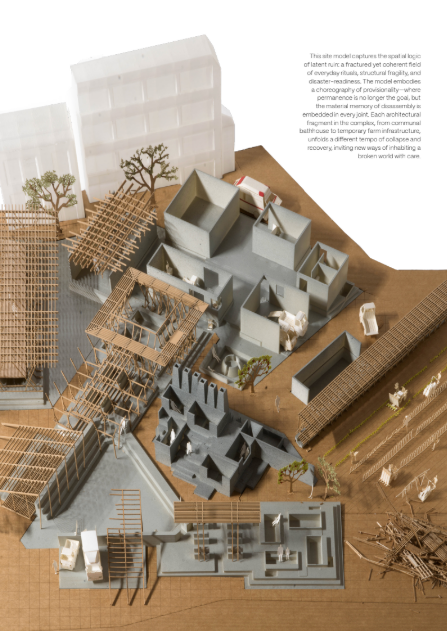
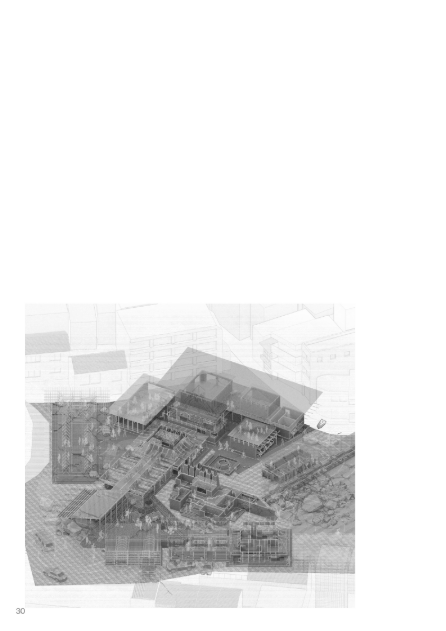
這是一個描繪「崩壞共存」的建築計畫,以悟道(satori)為核心思想,將公共澡堂(錢湯)轉化為無常的建築架構。建築由回收材料構成,能因災難而轉化:浴池為水盆、鍋爐為火爐。不求保存,只求變化與持續,強調建築即實踐,不是物件,而是日常關照與適應的場域。
–
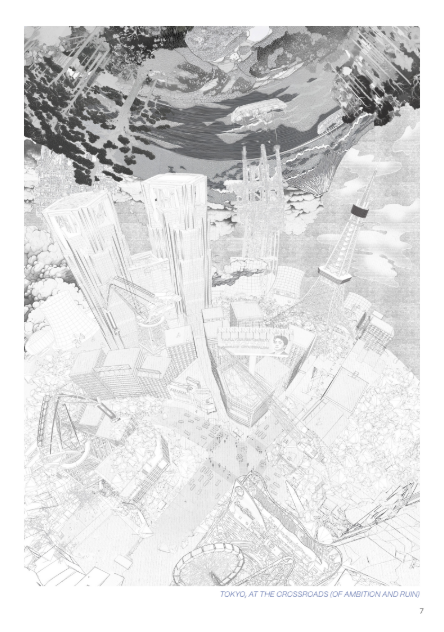
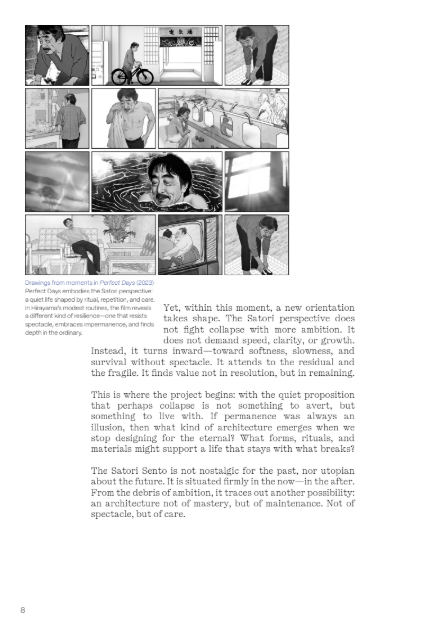
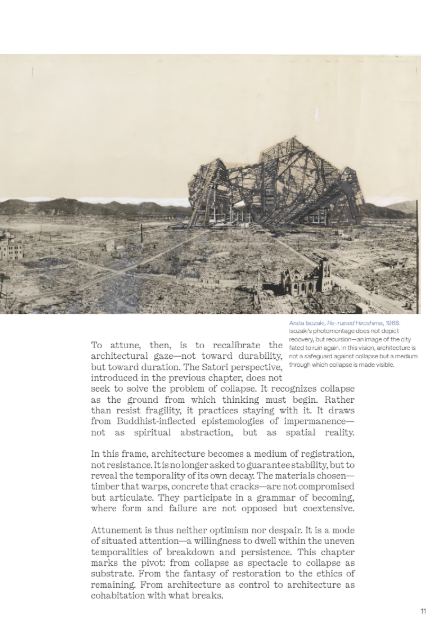
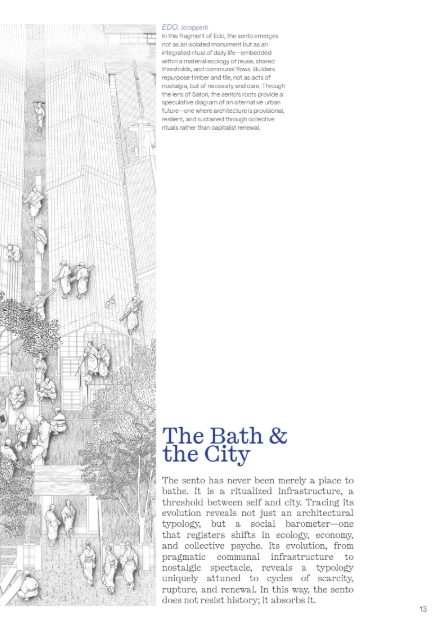
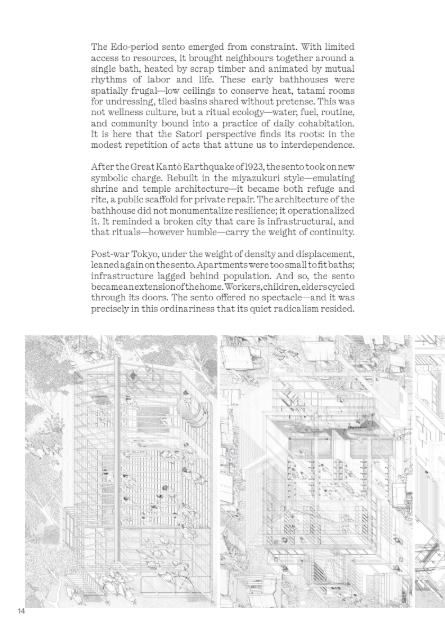
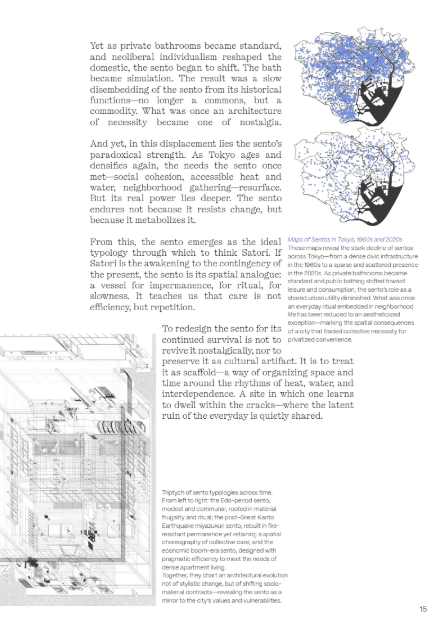
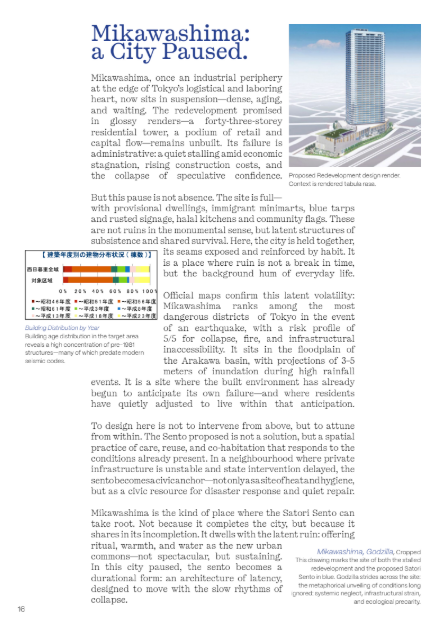
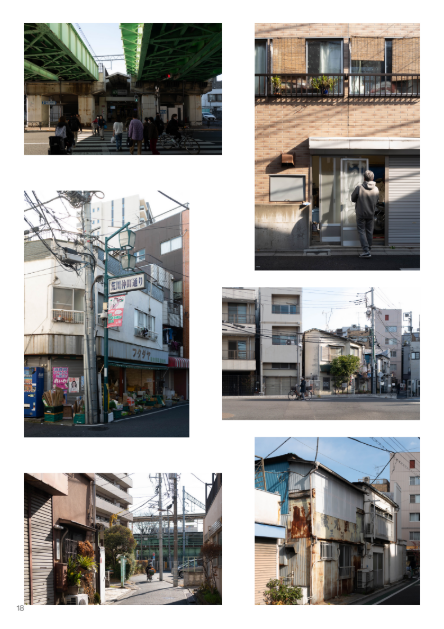
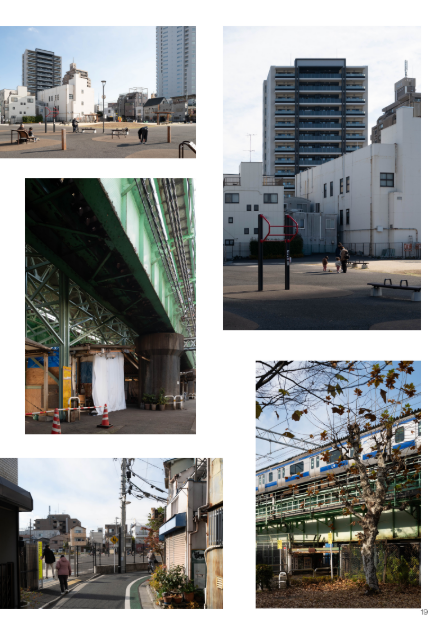
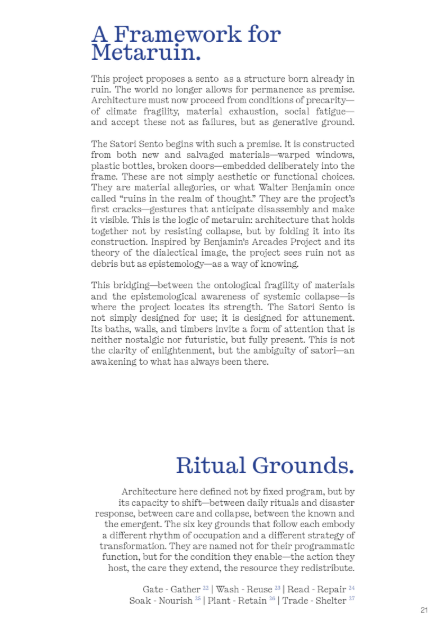
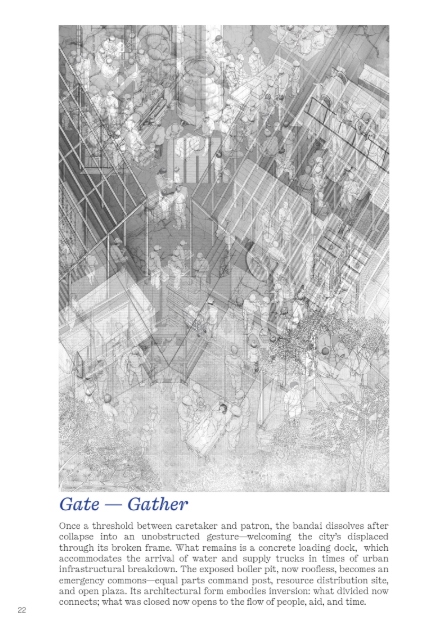
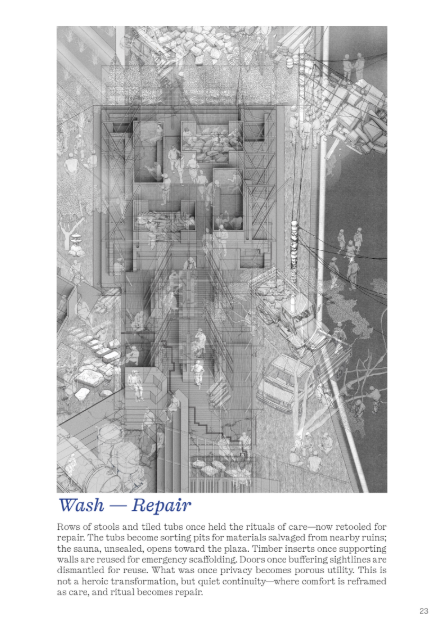
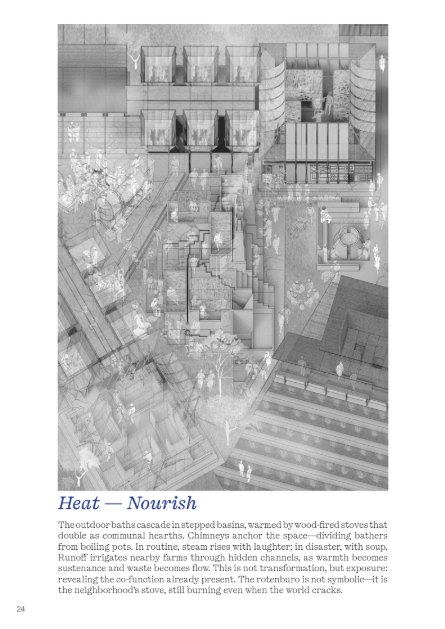
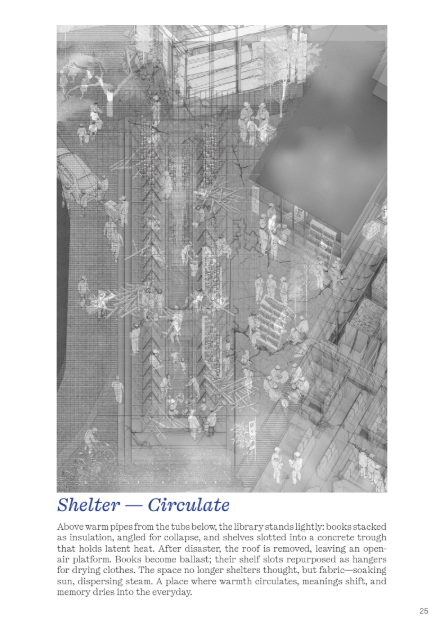
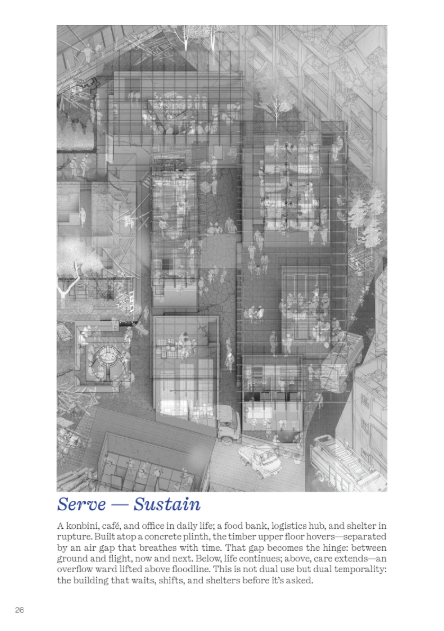
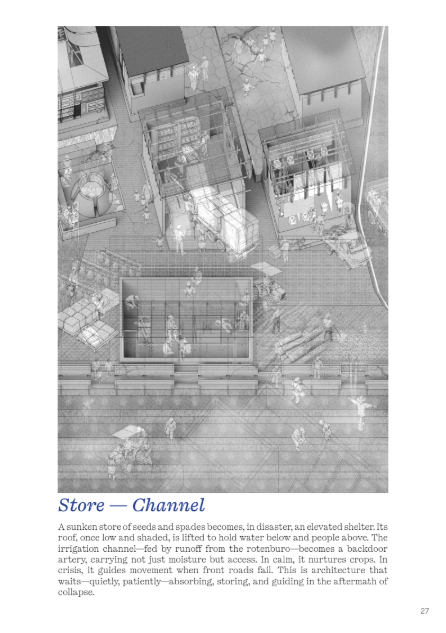
Satori Sento of Latent Ruin is an architectural project that imagines how we might live with collapse—not as catastrophe, but as quiet continuity. Set in Tokyo, the design draws from the worldview of satori (悟り): a post-growth sensibility grounded in care, repetition, and the fragile persistence of the everyday. Inspired by Wim Wenders’ film Perfect Days, the project reimagines the sento (銭湯)—the public bathhouse—not as fixed form, but as scaffold for impermanence. Arata Isozaki’s vision of future cities as ruins informs a material language of transformation: timber calibrated to splinter, concrete made to endure, fragments invited to speak. Built from salvaged wood, cracked tiles, and warped fittings, the architecture embeds its own future ruin. In moments of disaster, it adapts: baths become basins, boilers become hearths. Nothing is preserved; everything is prepared to change. This is not architecture as object, but as practice. Not permanence, but presence. A field of heat, water, and care—designed to yield, to persist, and to remain with what breaks.
More Projects of this Session
展區其他作品