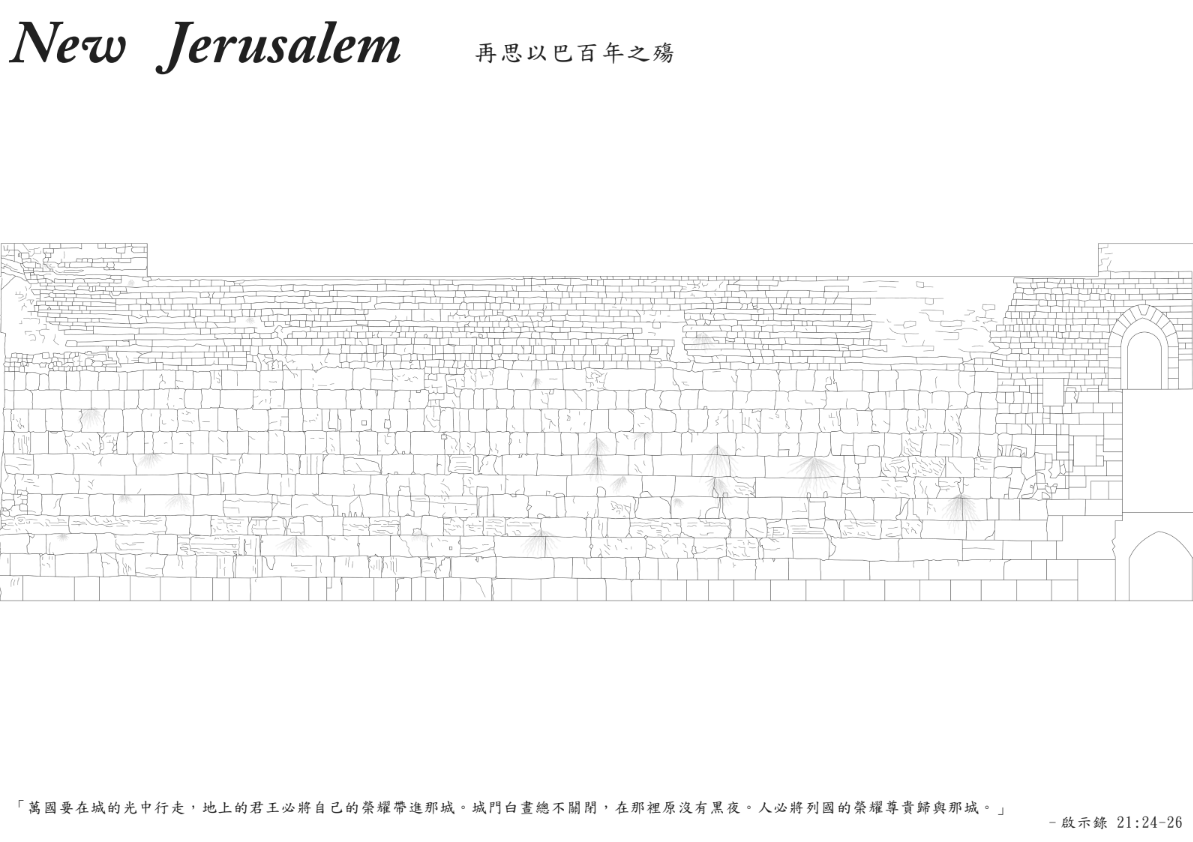
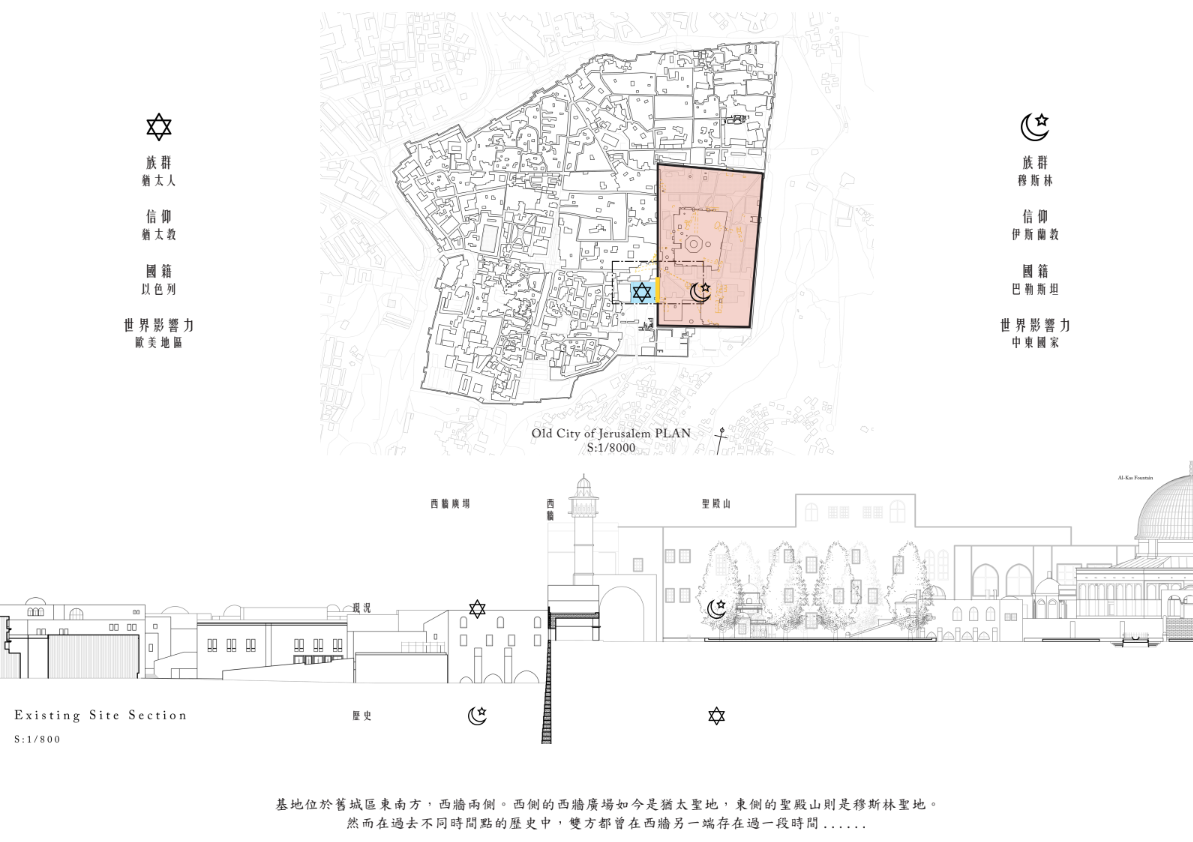
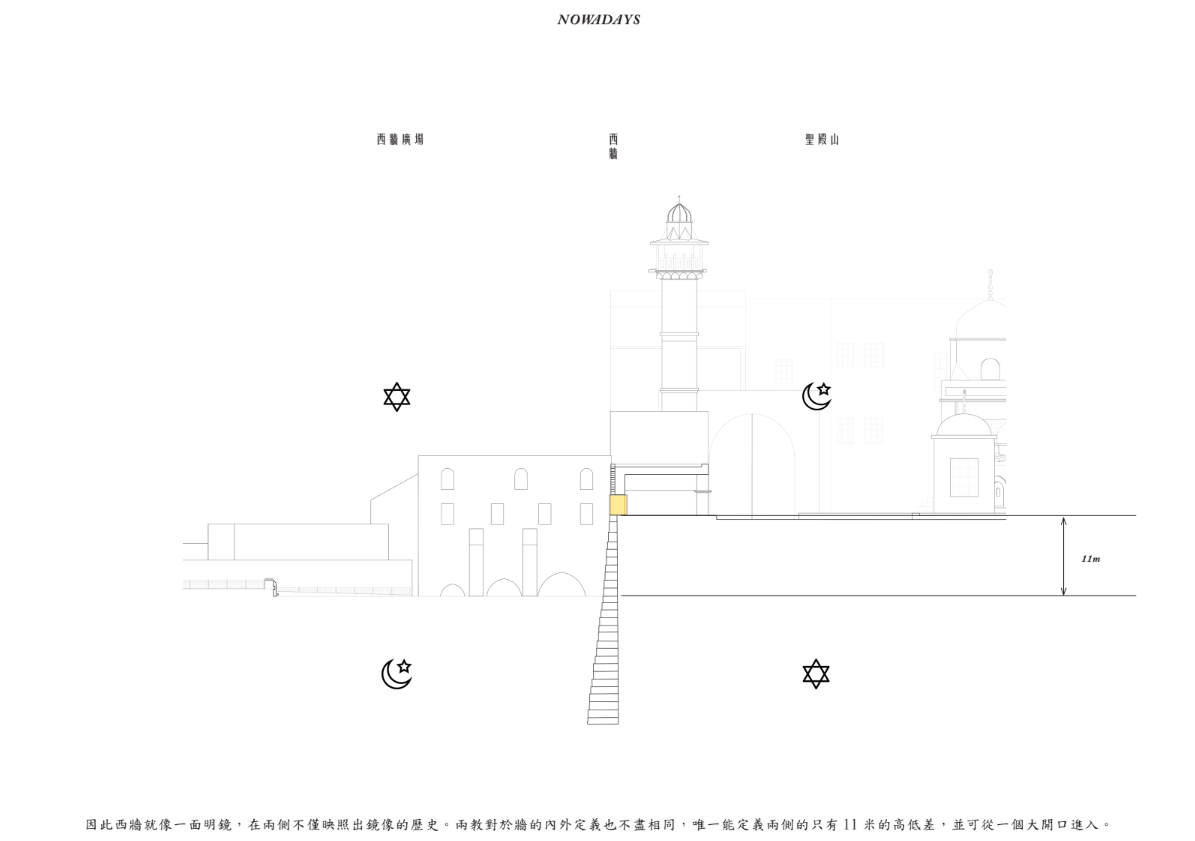
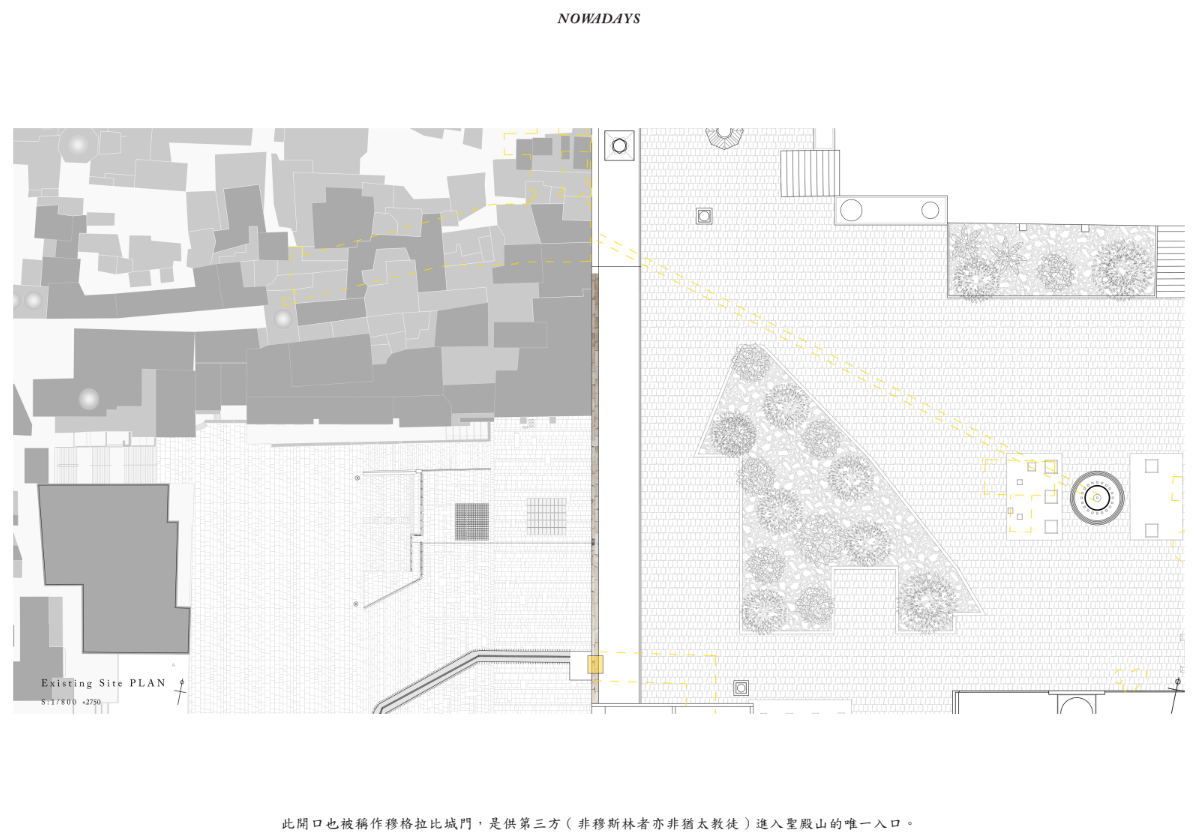
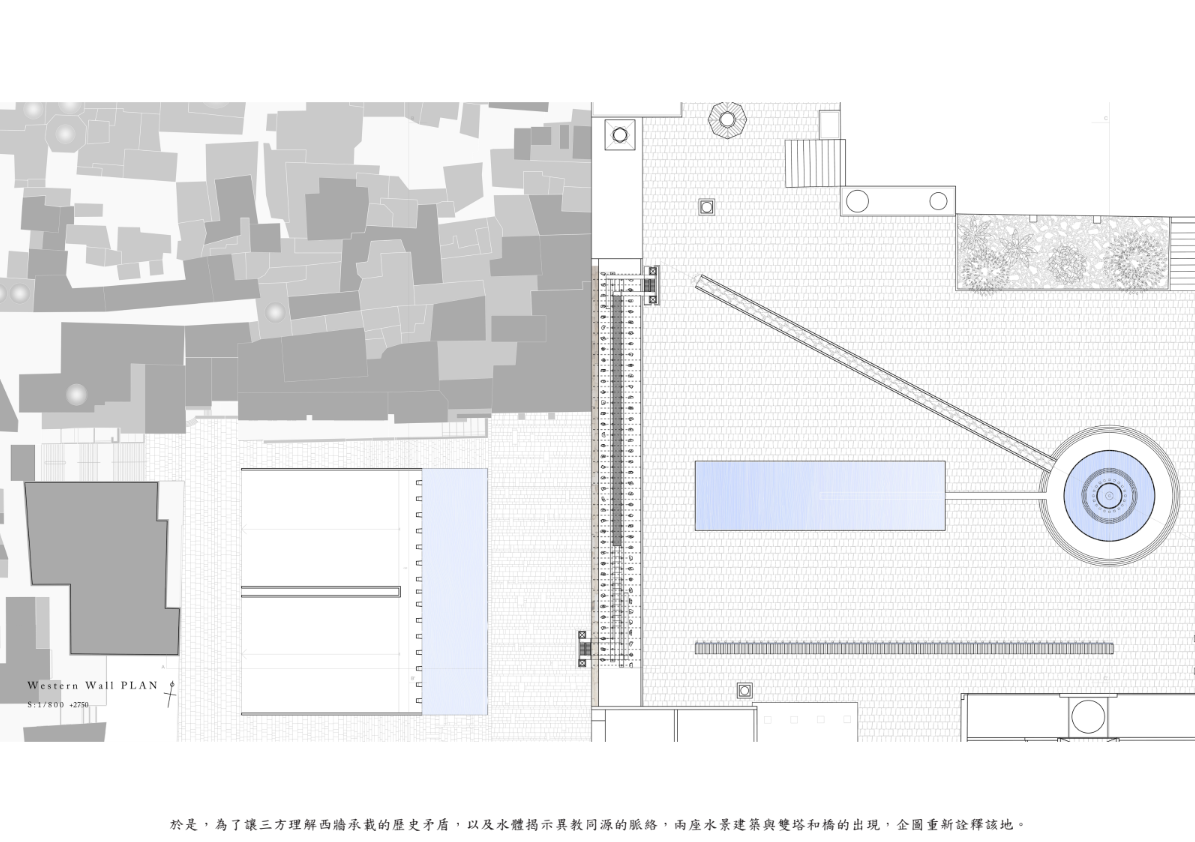
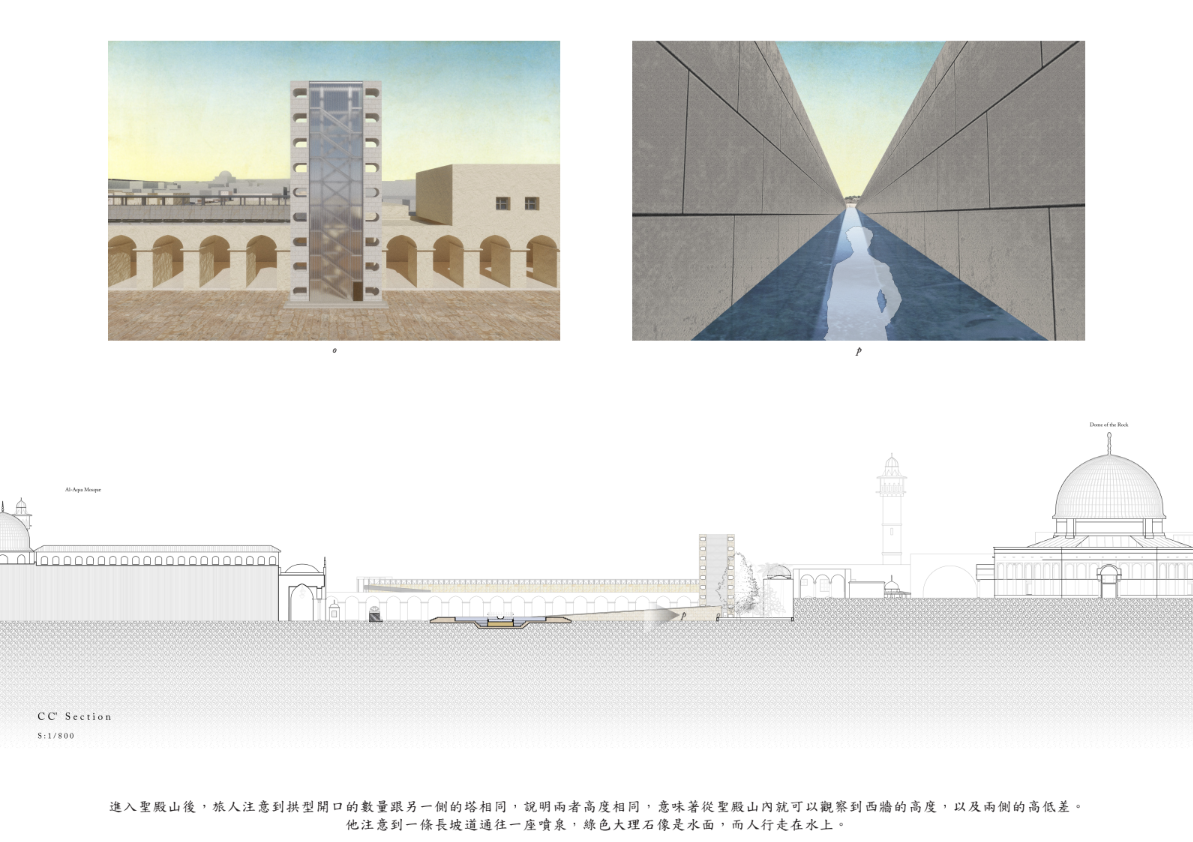
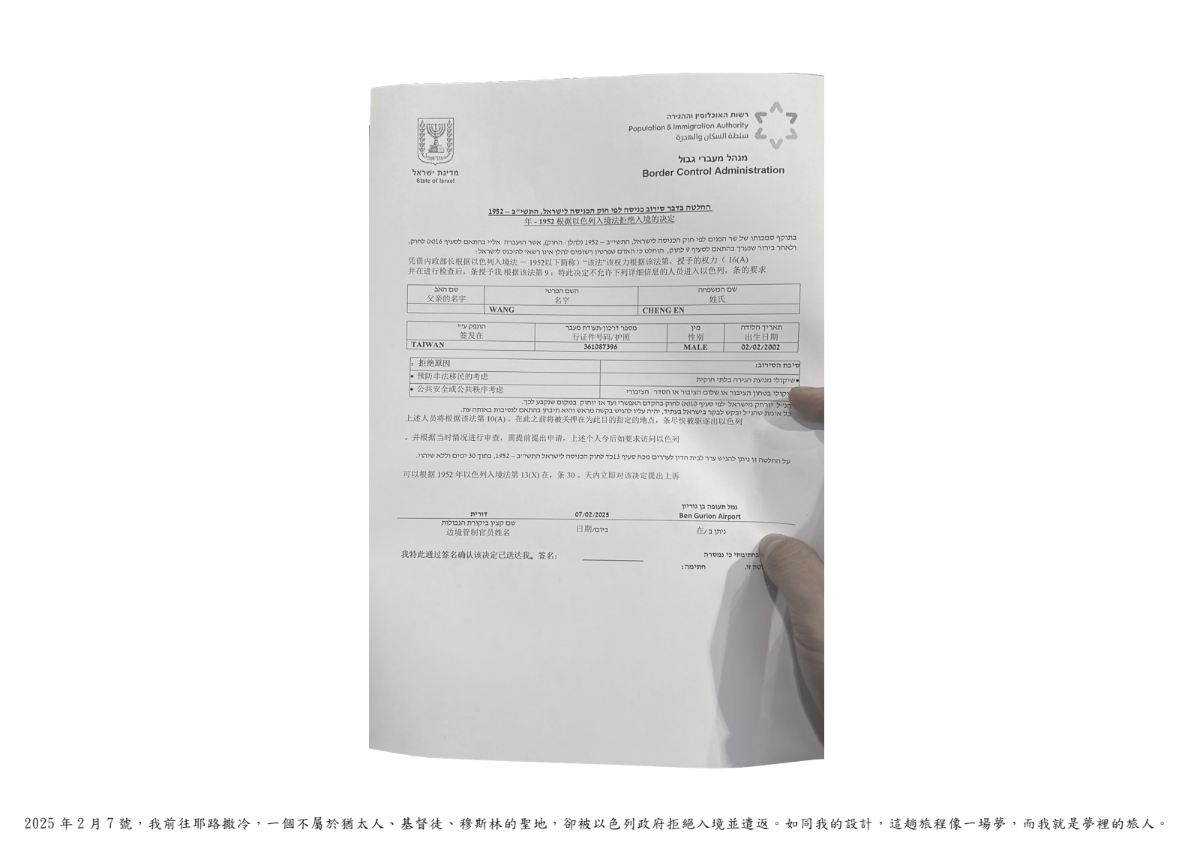
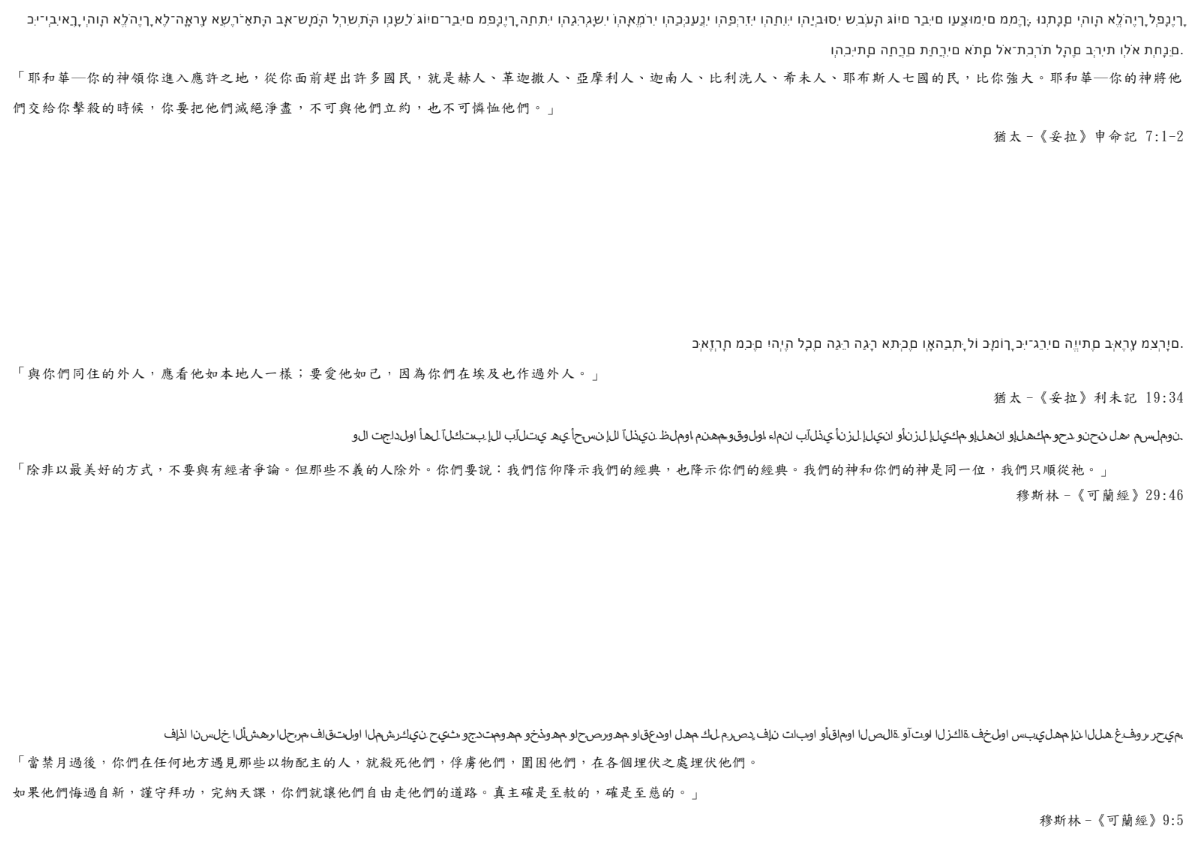
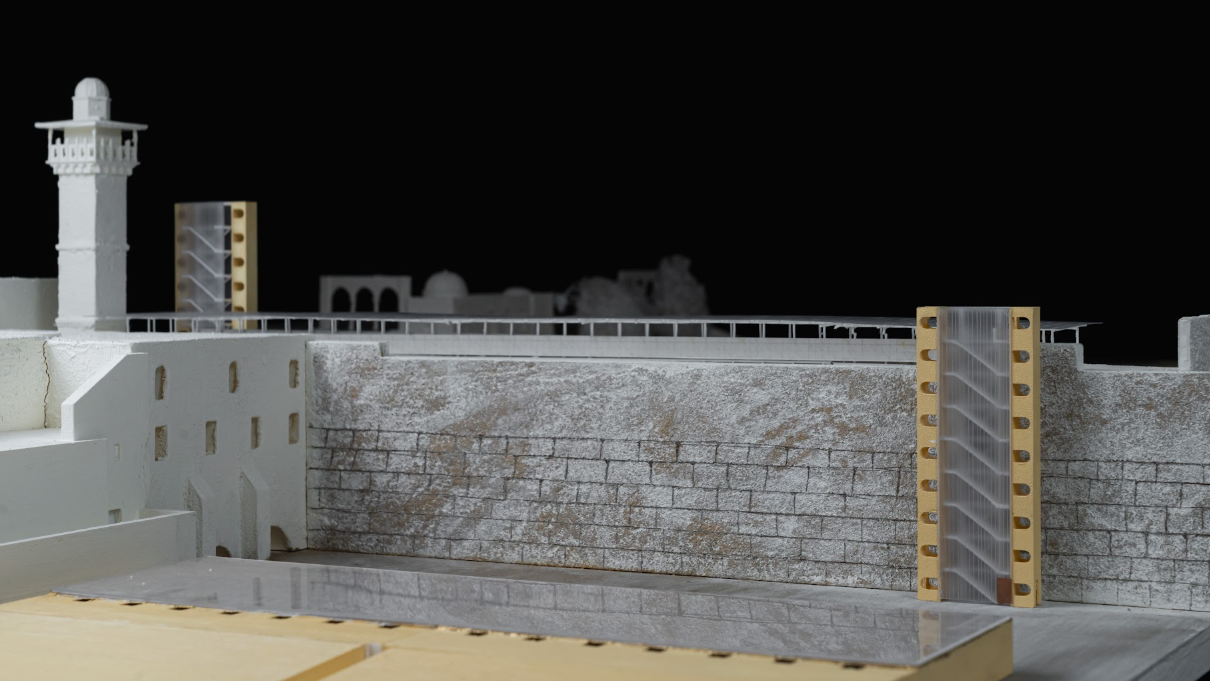
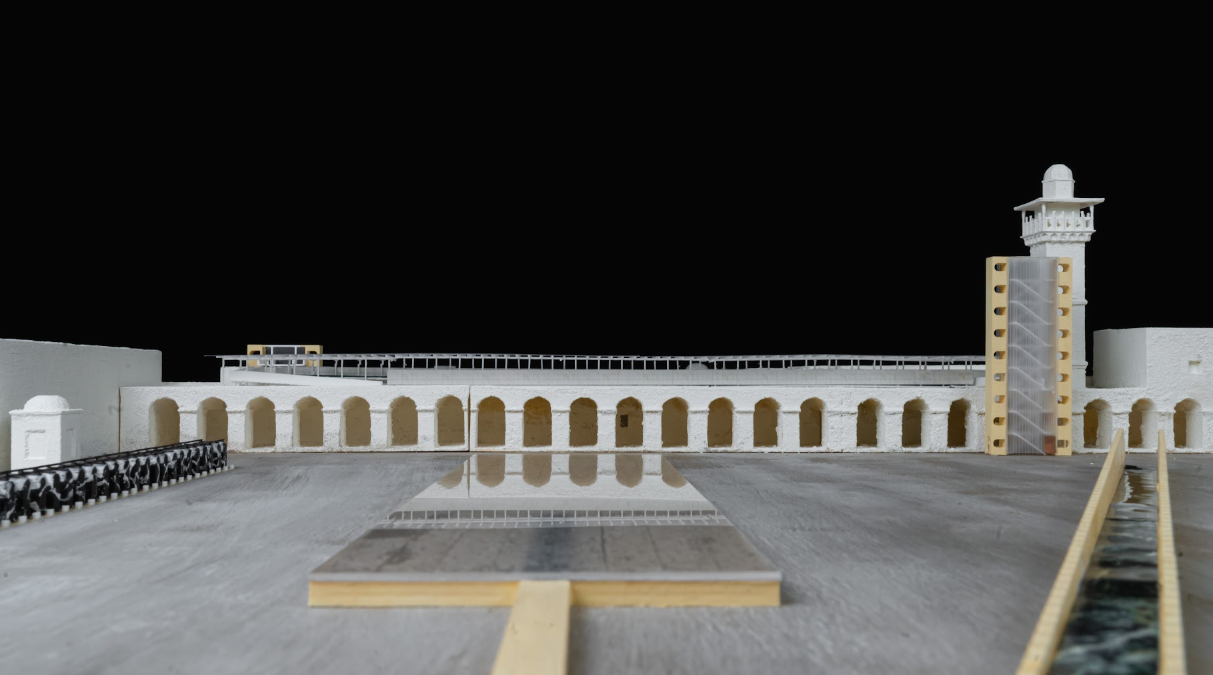
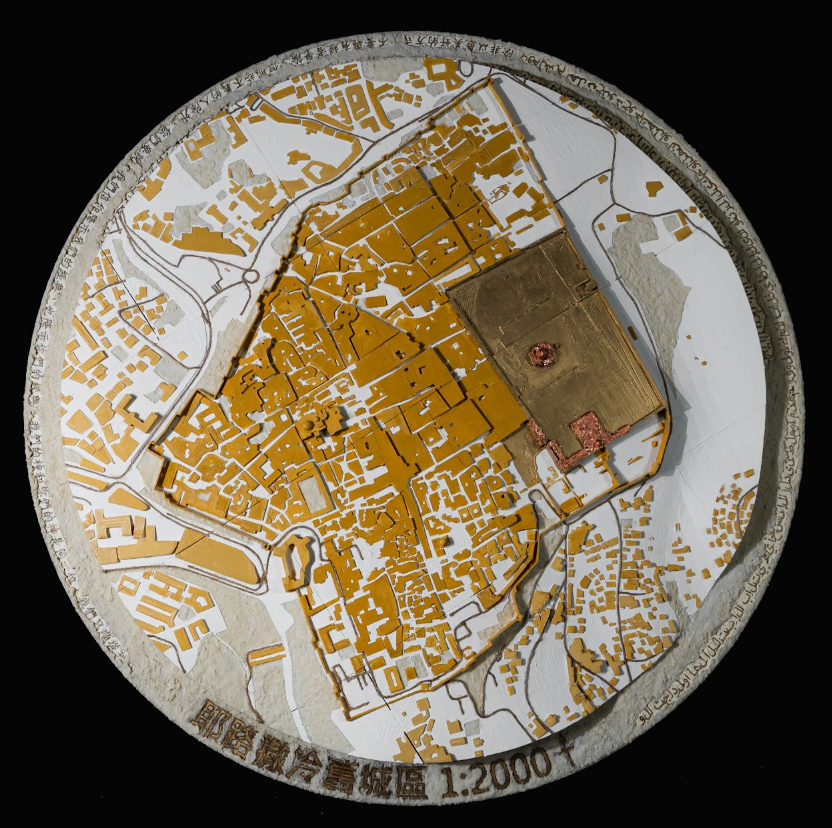
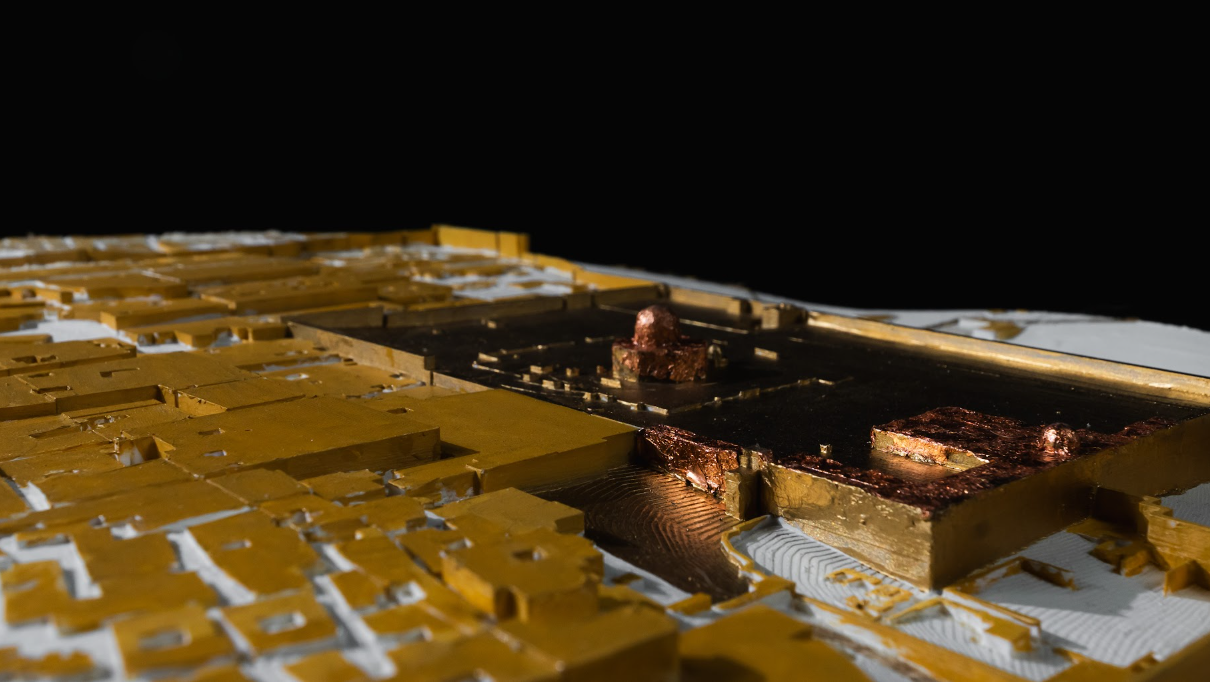
基地位於耶路撒冷舊城西牆兩側。東側聖殿山是伊斯蘭聖地,西側西牆廣場則是猶太聖地。然而過去,雙方都曾在西牆彼端存在過一段時間。此外,兩教對西牆的內外定義不同,能辨別兩側的只有11米高低差。
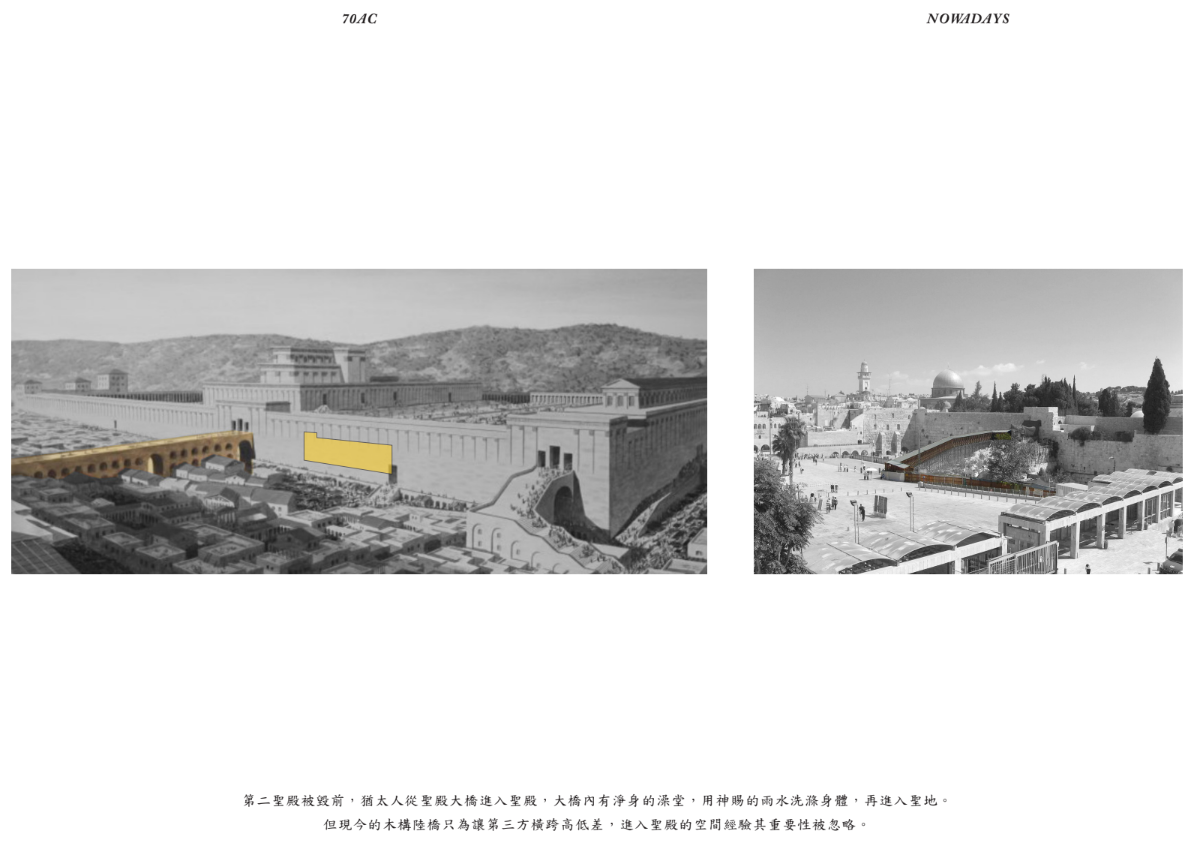
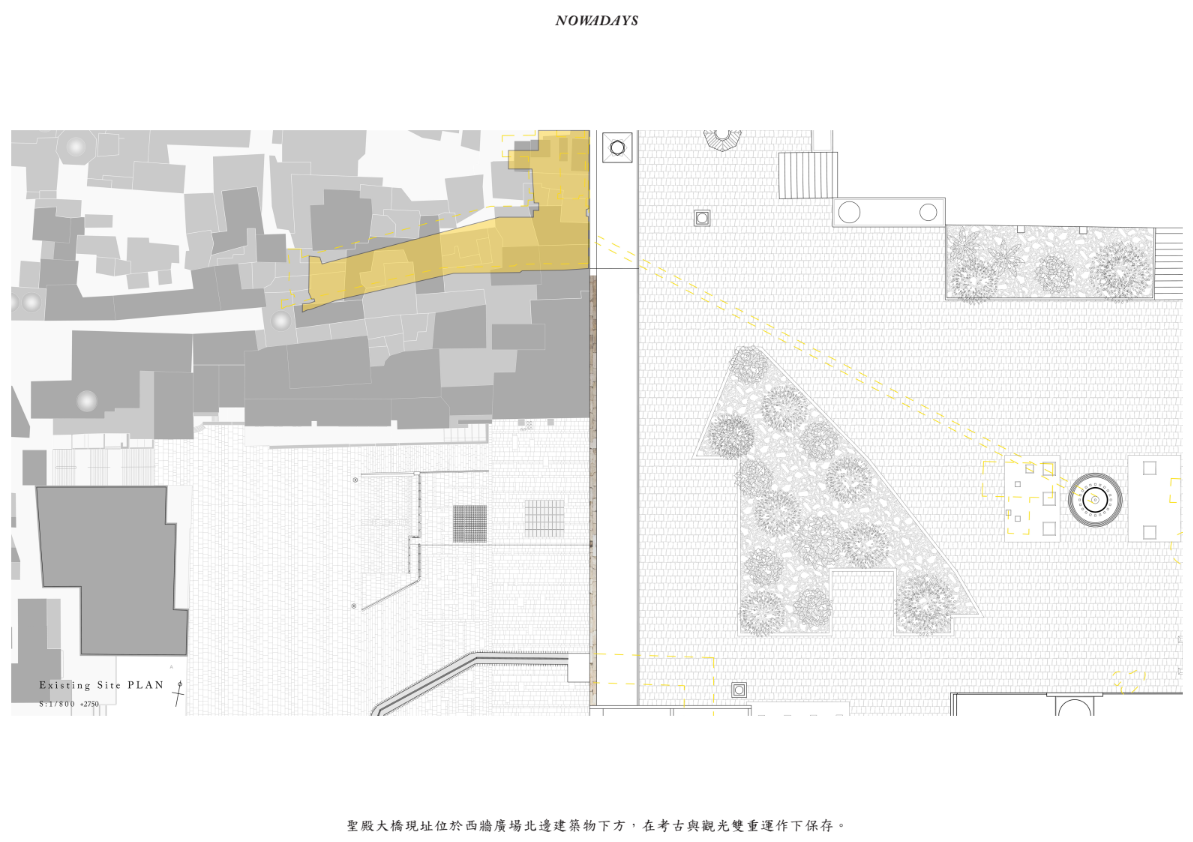
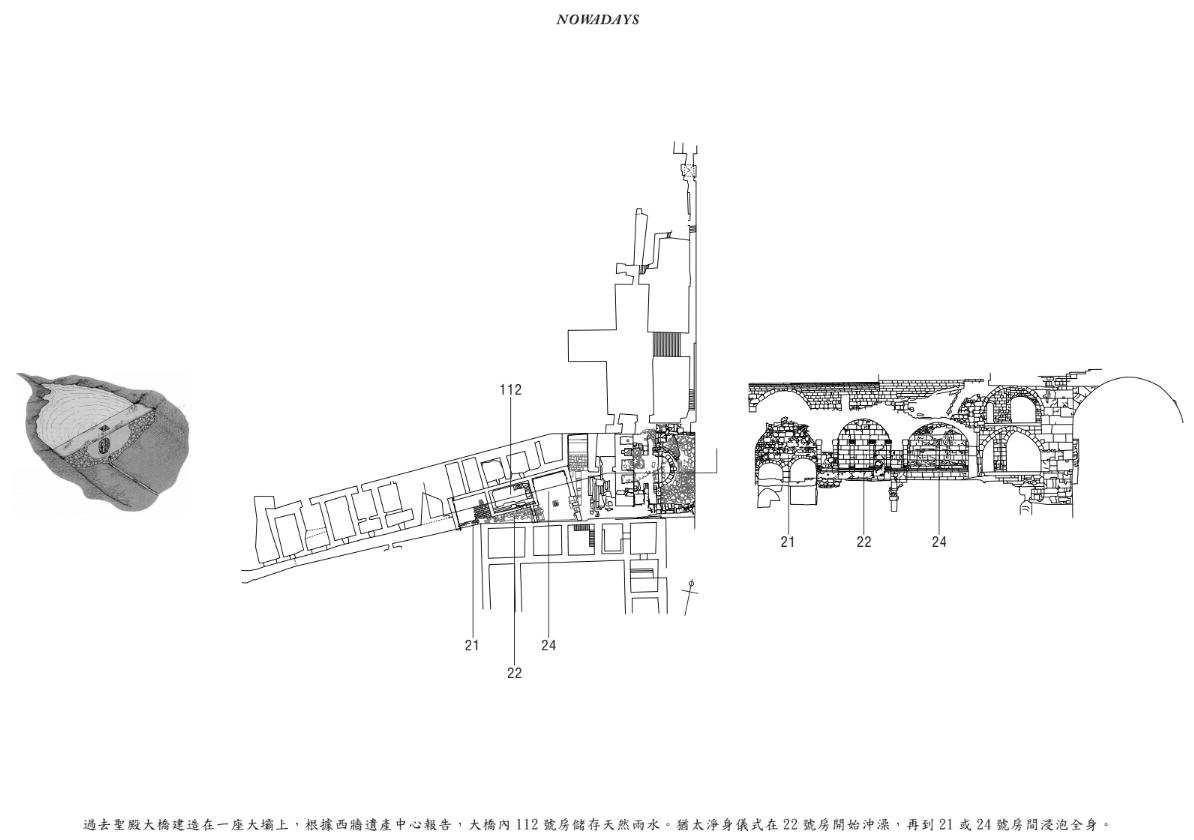
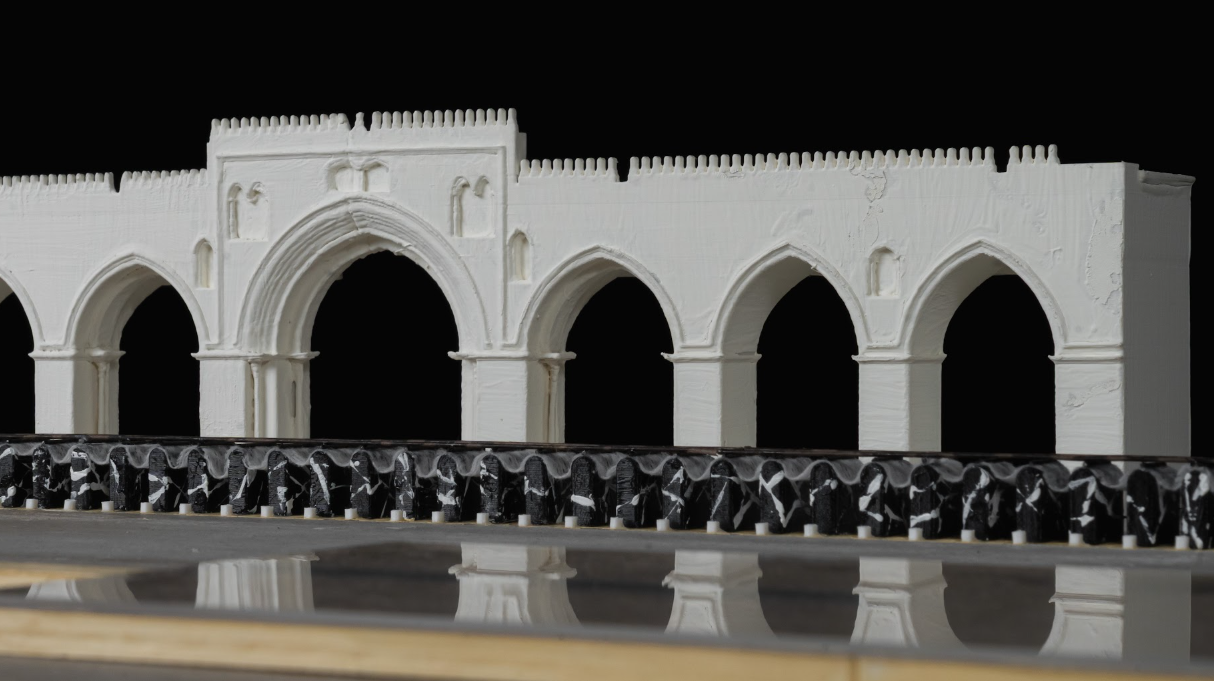
古時猶太人經由聖殿大橋進入聖殿,在橋內淨身後進入聖地。但現今木構陸橋僅讓旅者跨越高低差,進入聖殿的空間精神被遺忘。
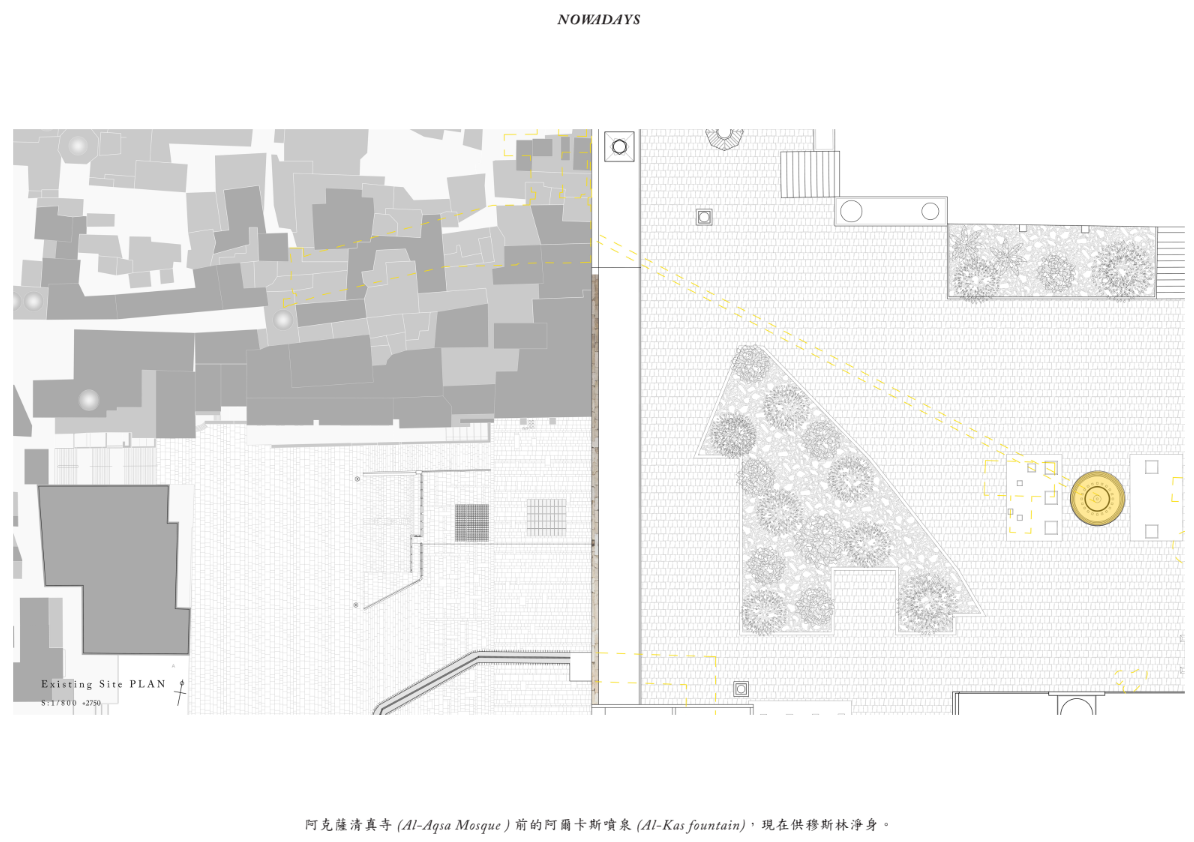
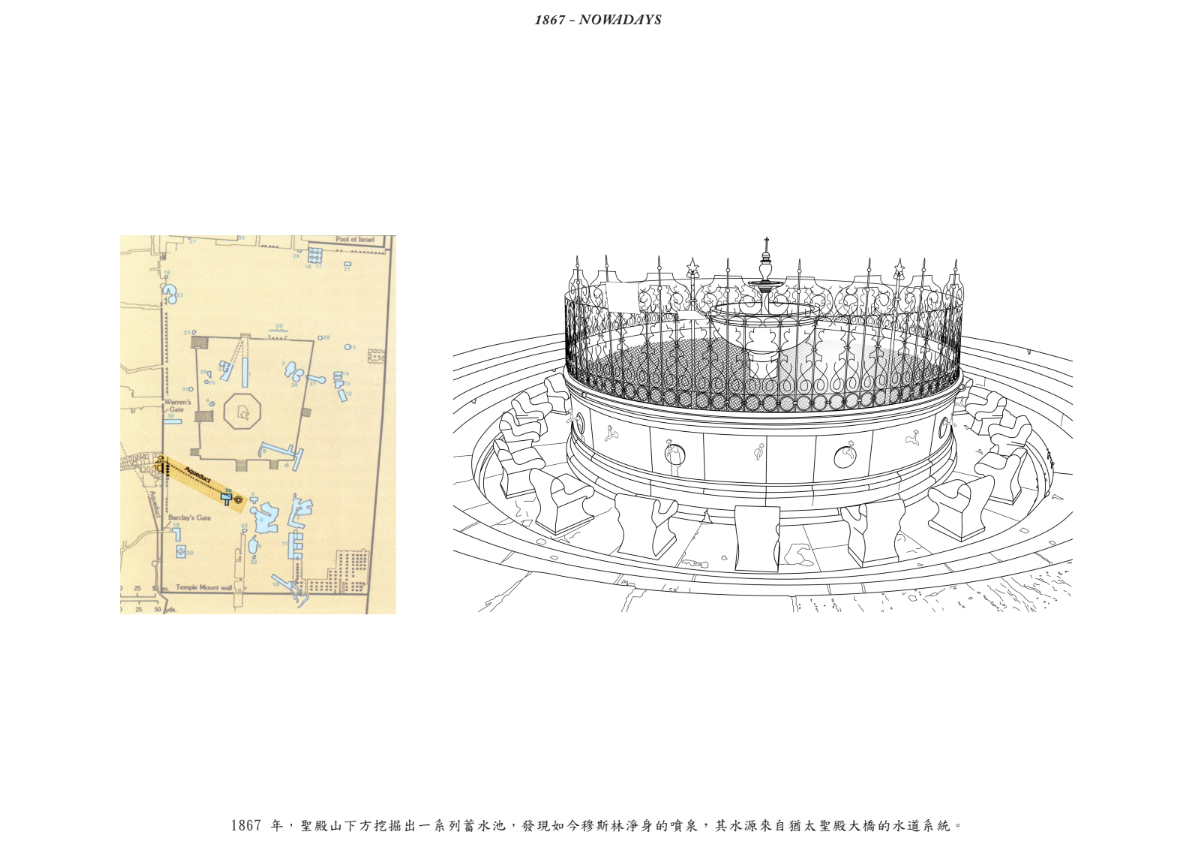
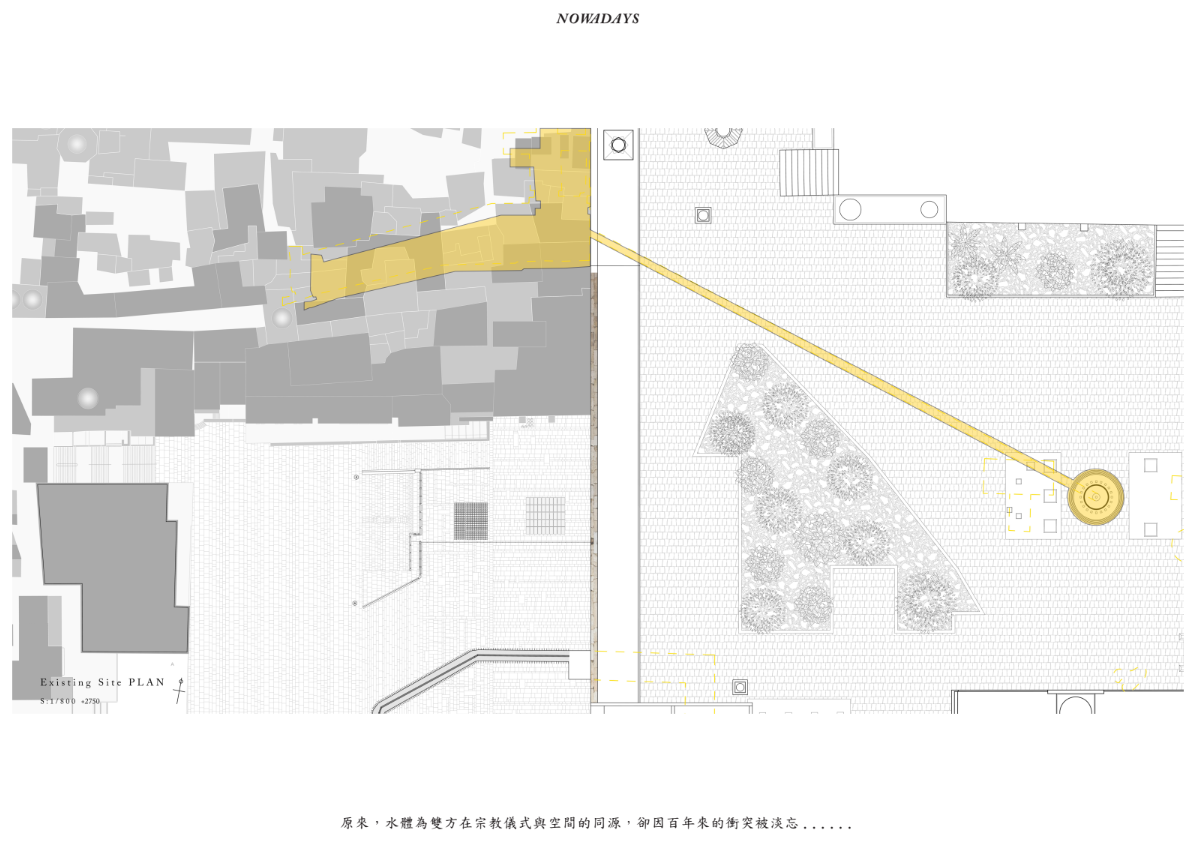
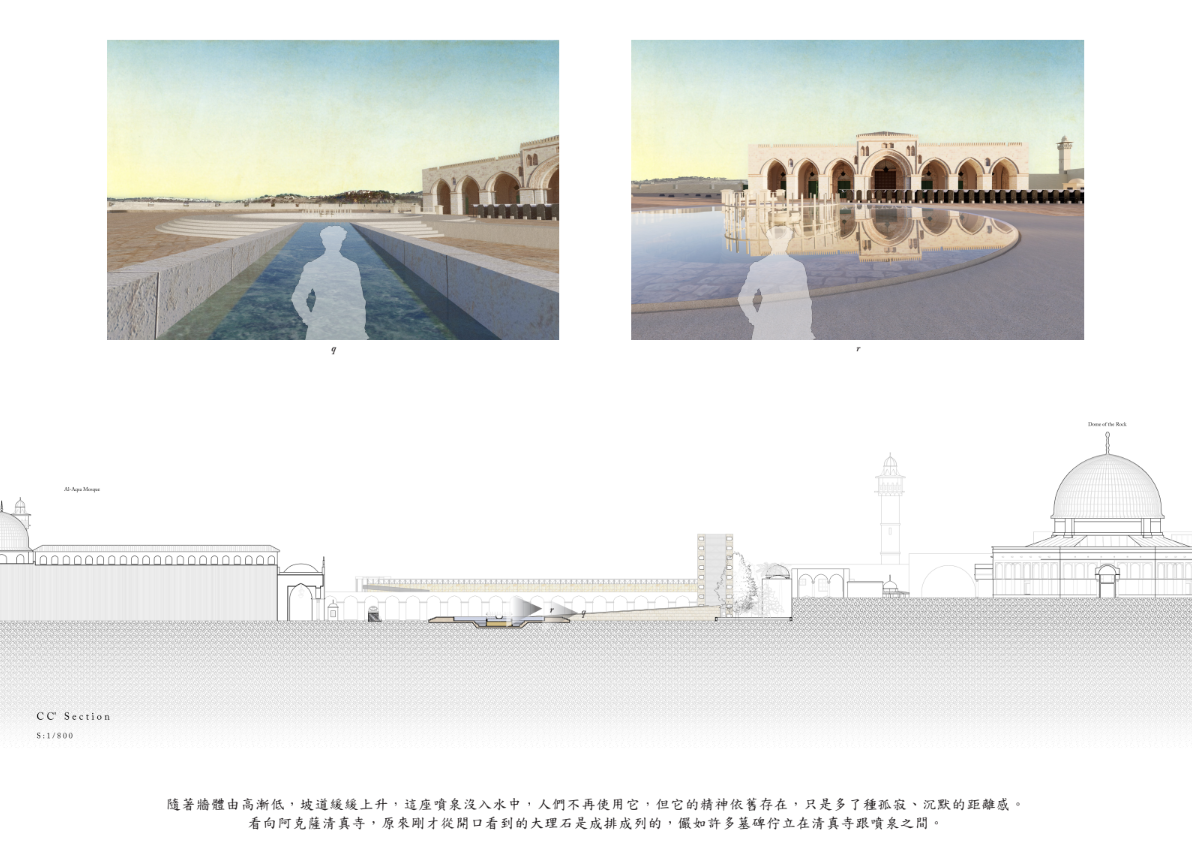
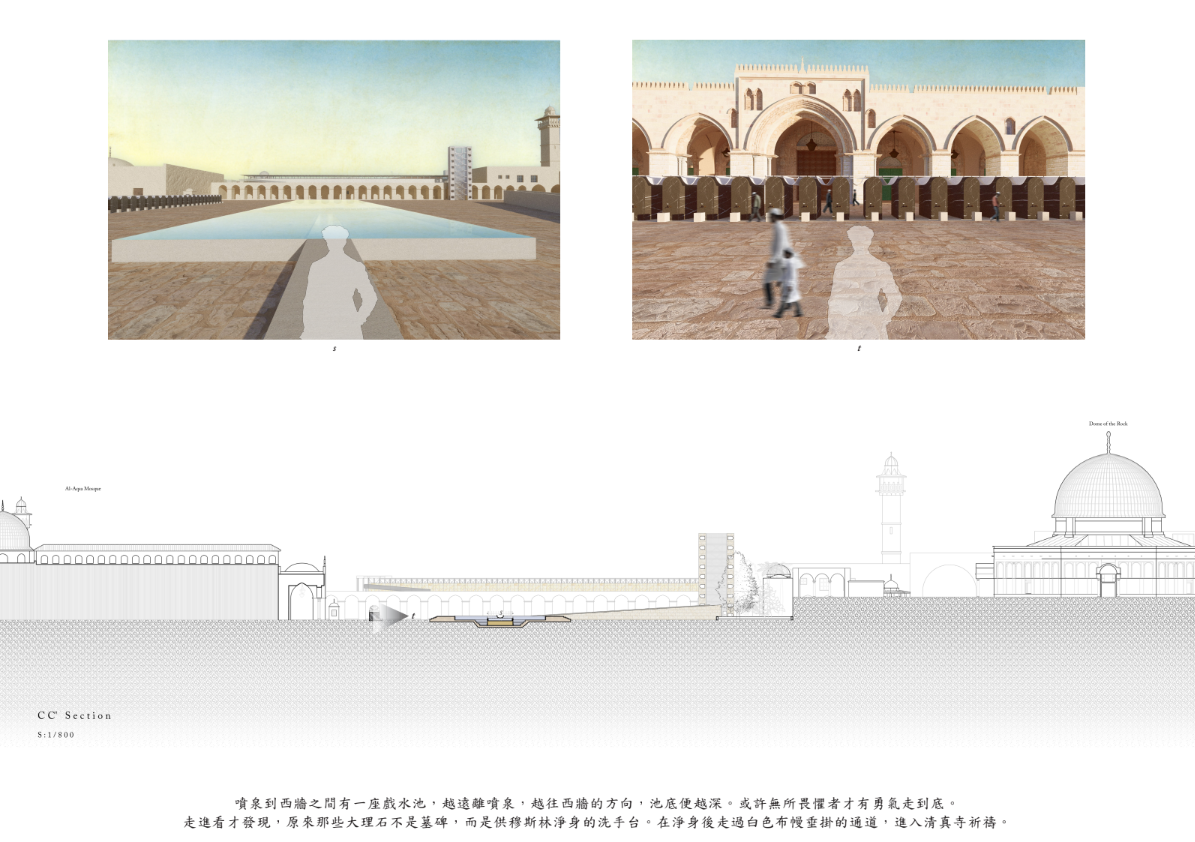
今日,清真寺前的噴泉供穆斯林淨身。1867年考古證實,當前穆斯林使用的噴泉水源來自猶太聖殿大橋的水道系統。原來水體是雙方宗教與空間的同源,卻因百年衝突被淡忘。
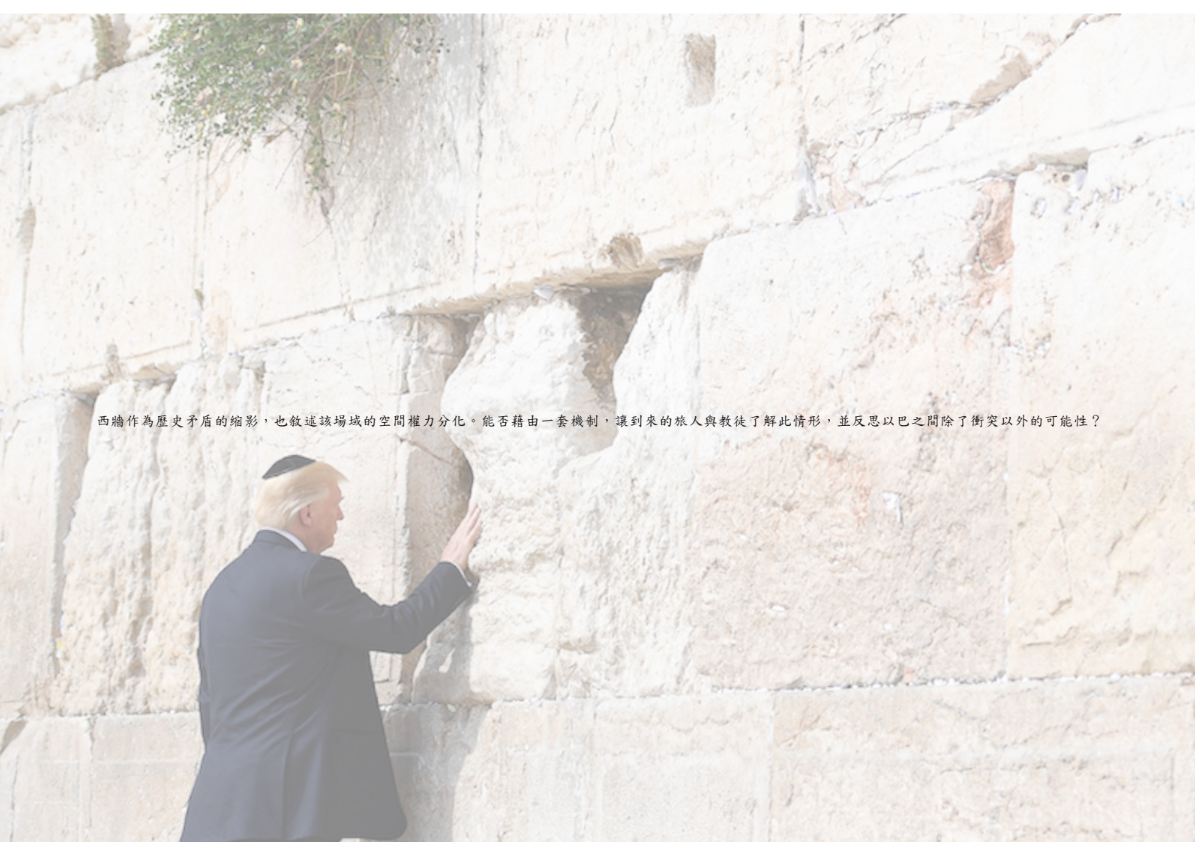
西牆象徵歷史矛盾與空間權力分化,能否藉由一套機制,讓到來的旅人與教徒了解並反思以巴除了衝突以外的可能性?
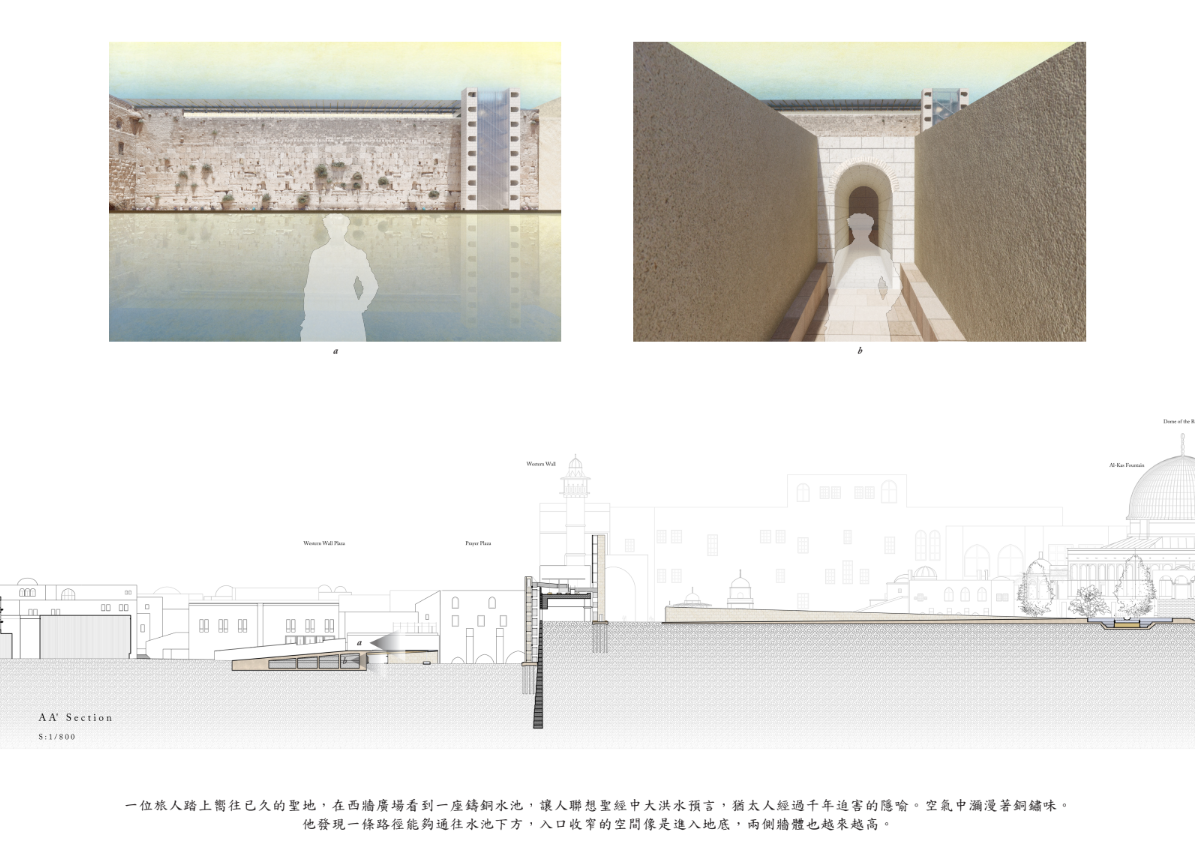
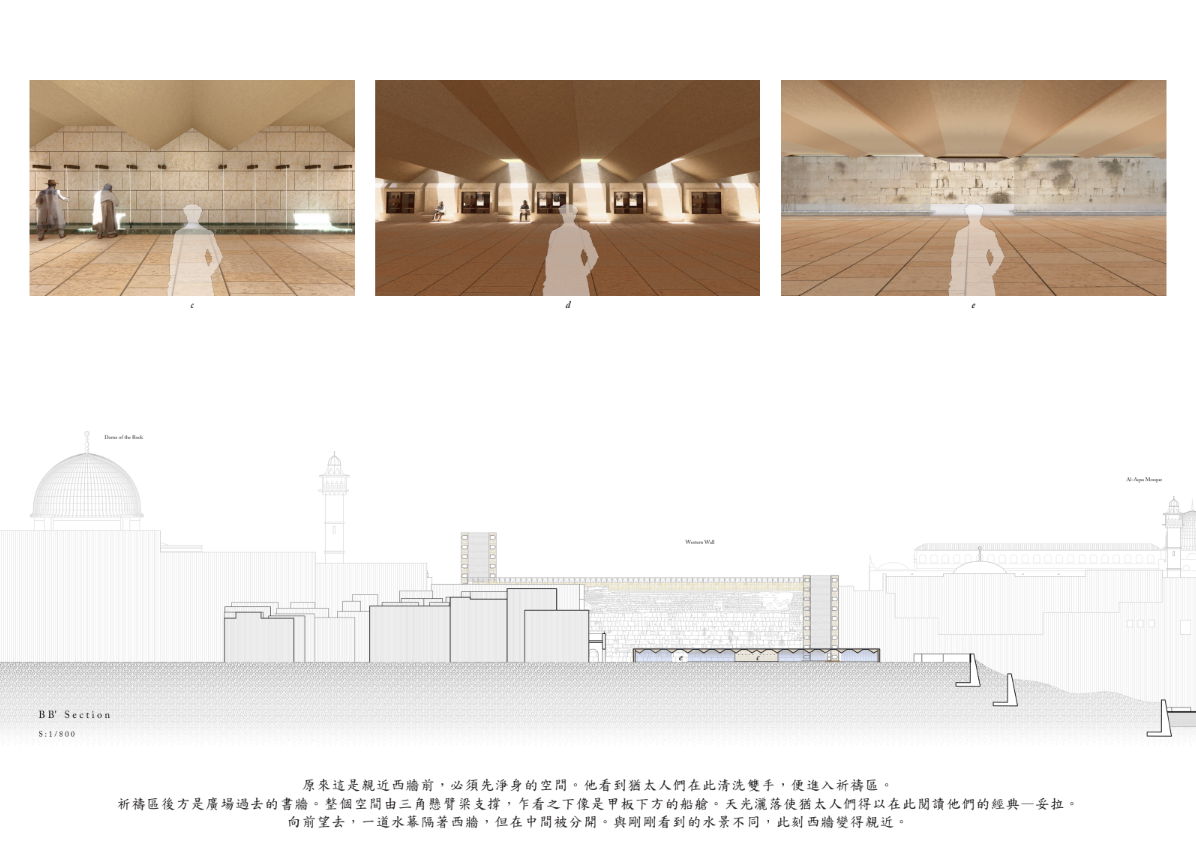
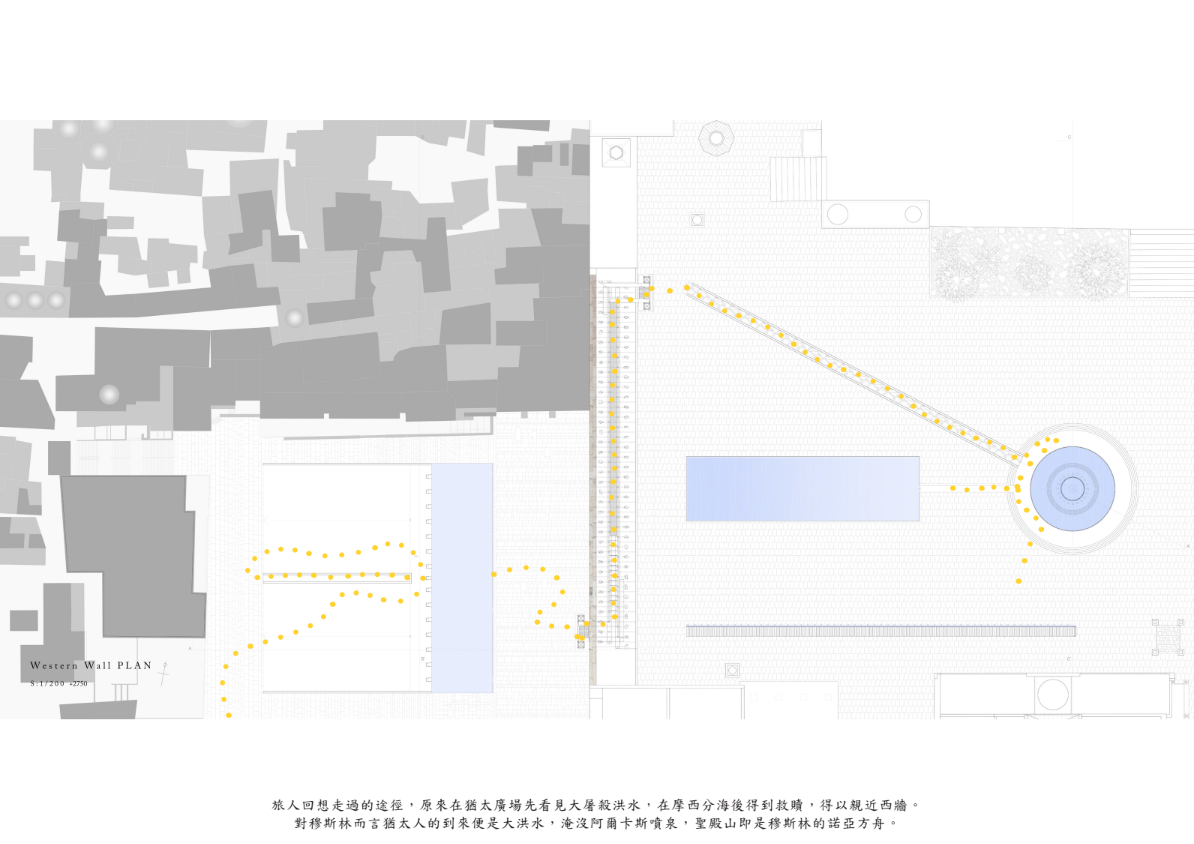
水體揭示信仰故事的同源:猶太人經歷大屠殺後的歷史創傷透過回到西牆而救贖,但穆斯林卻因猶太人的到來而被大洪水淹沒,聖殿山即是穆斯林的諾亞方舟。
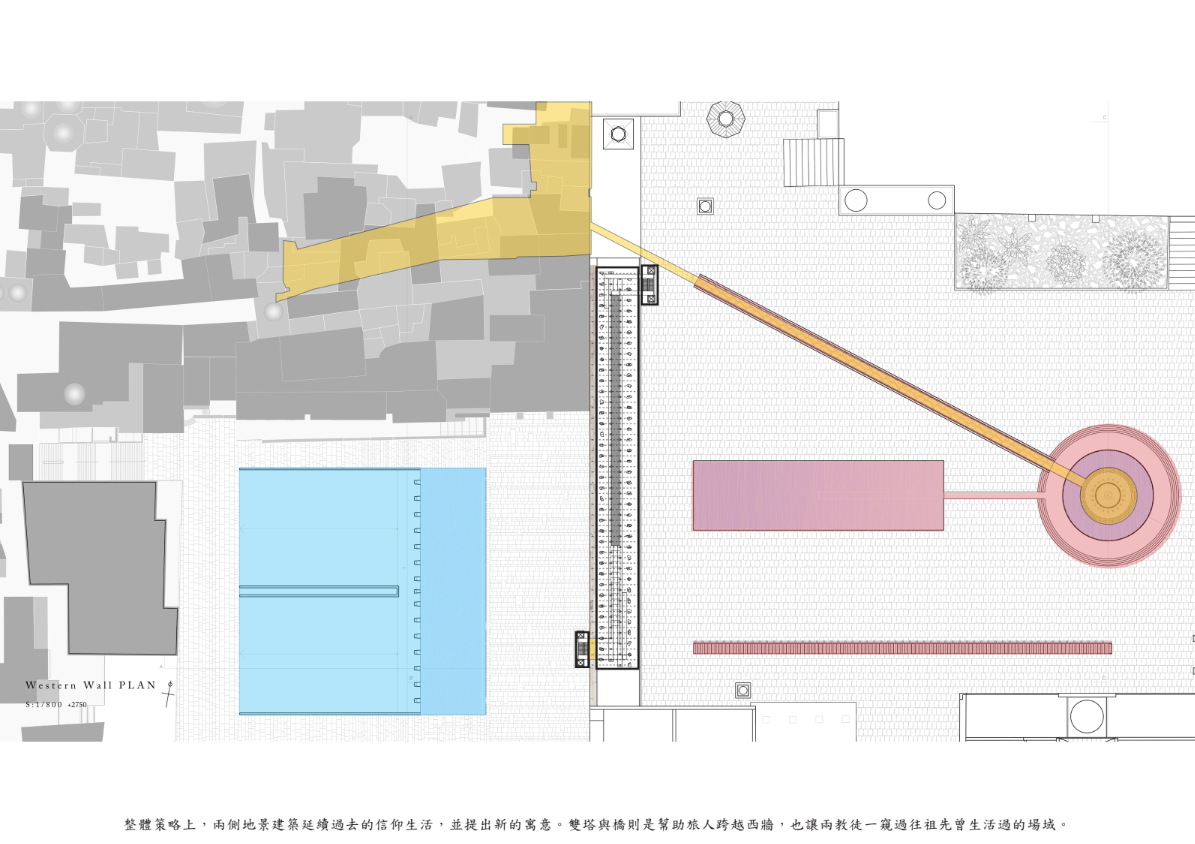
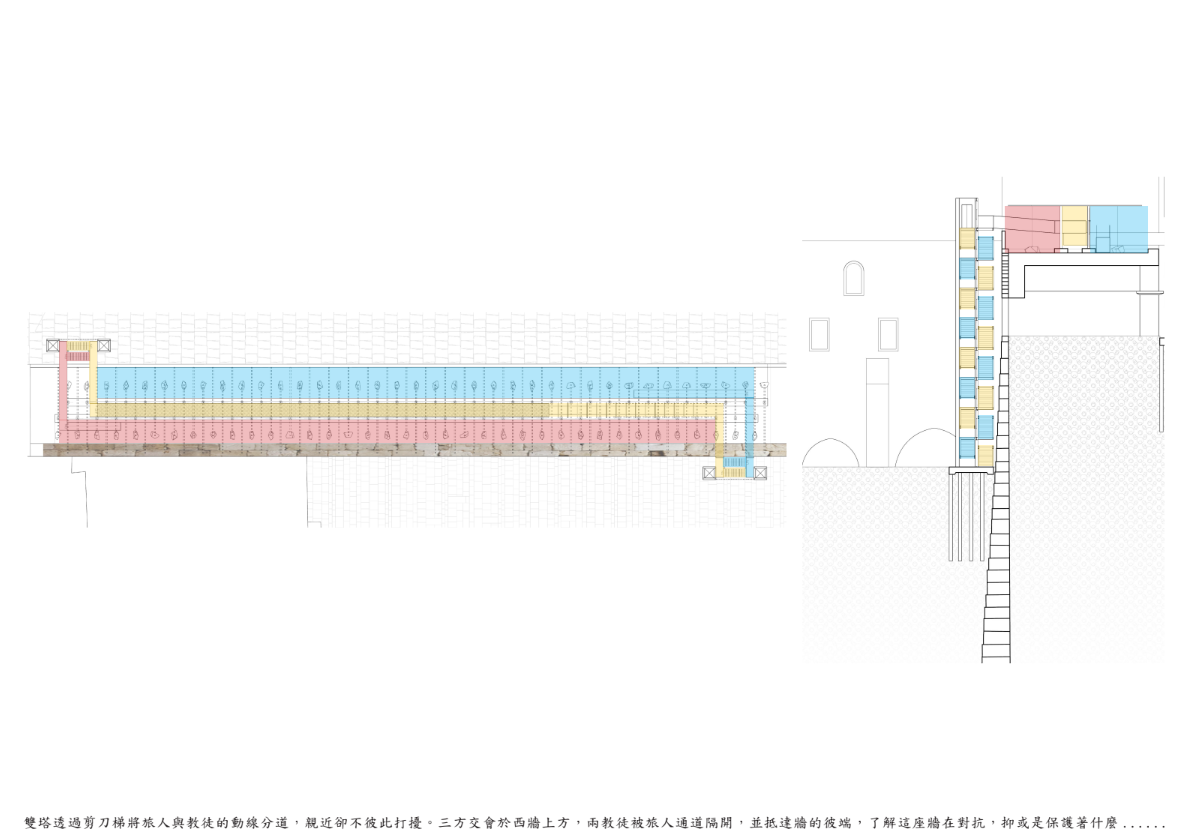
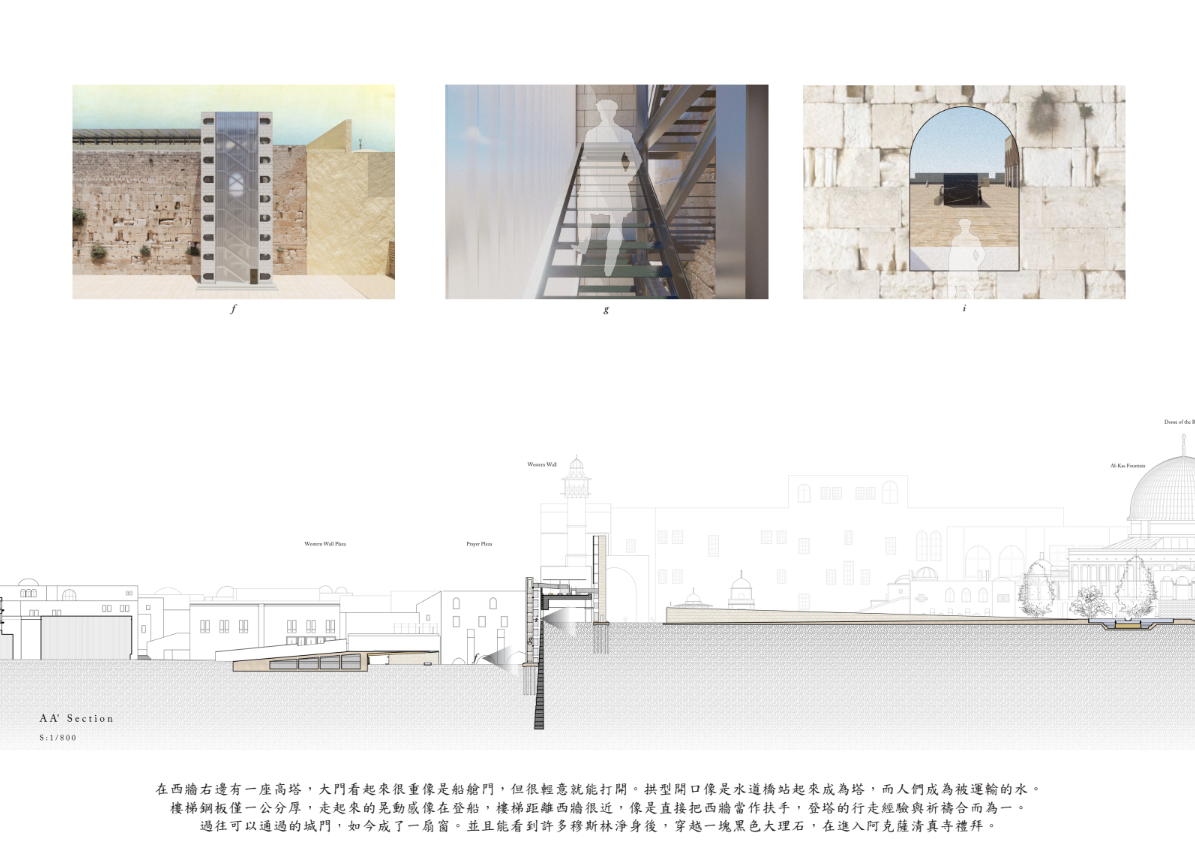
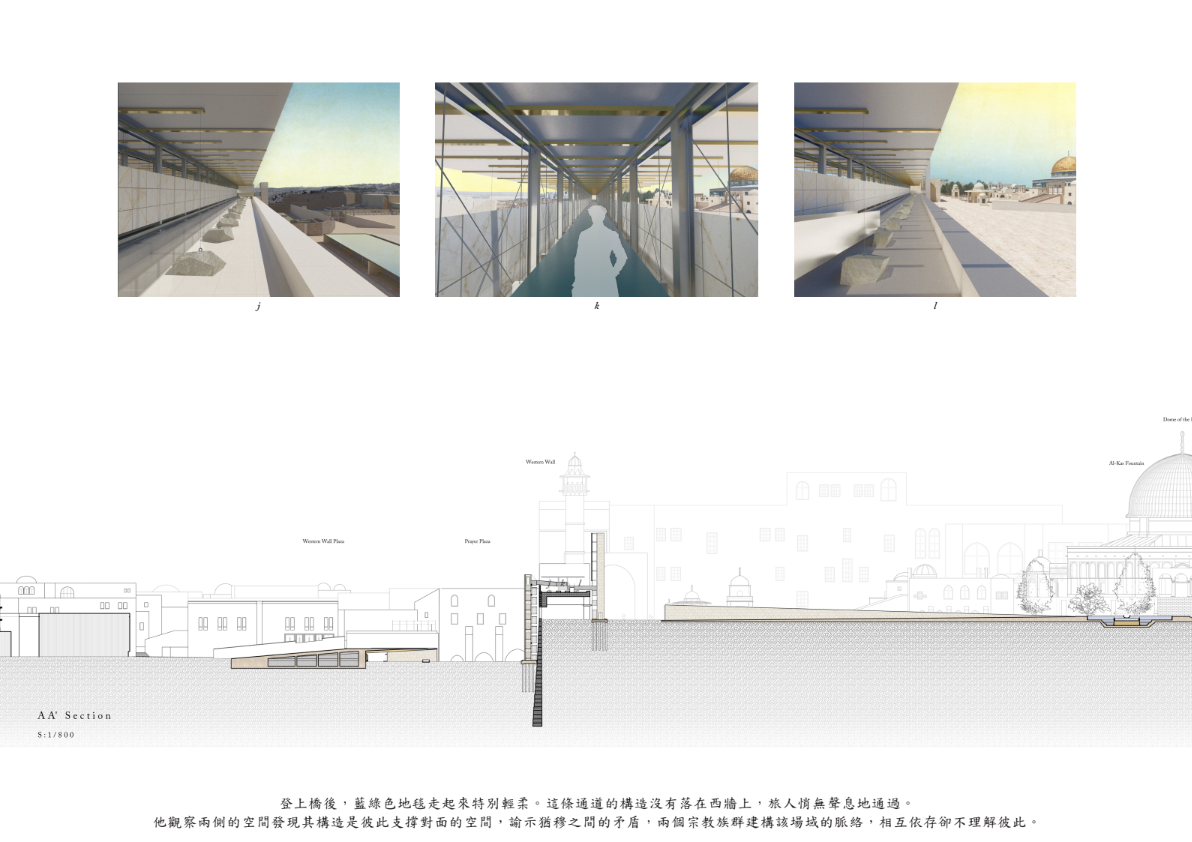
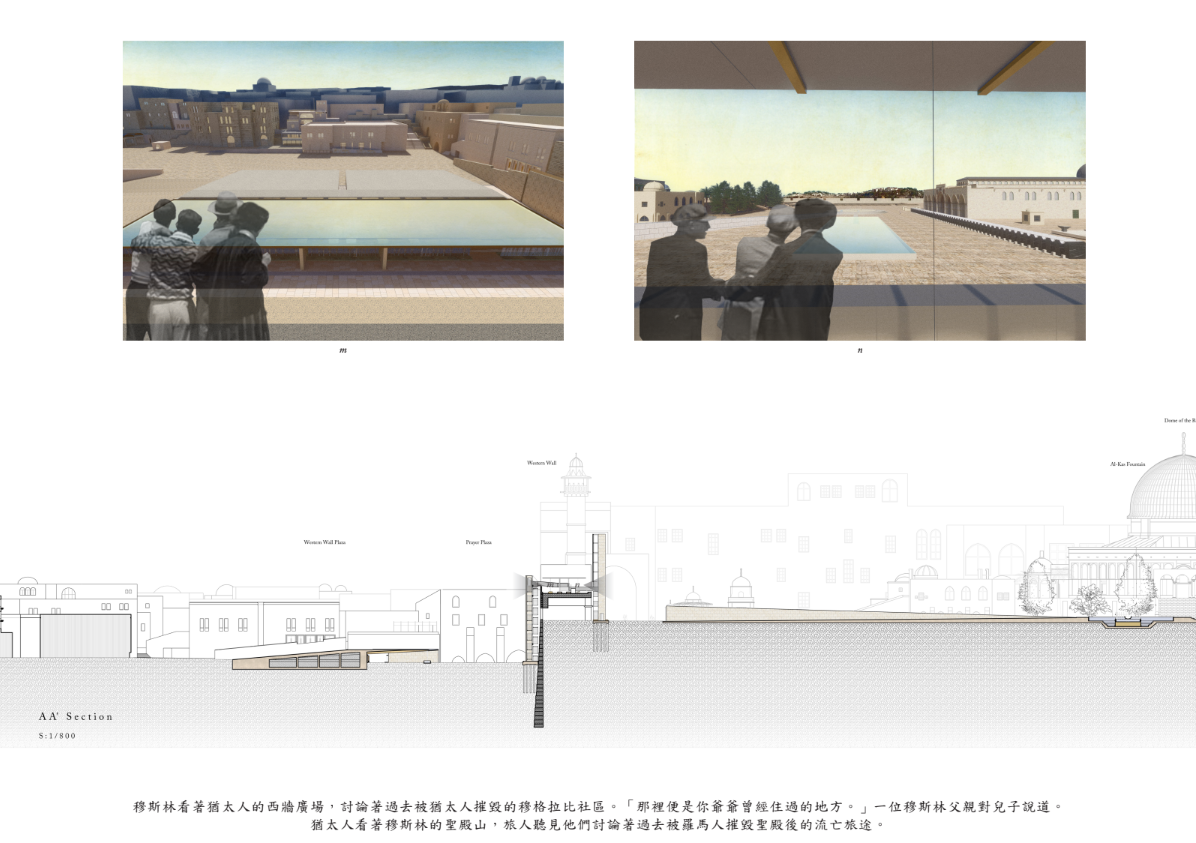
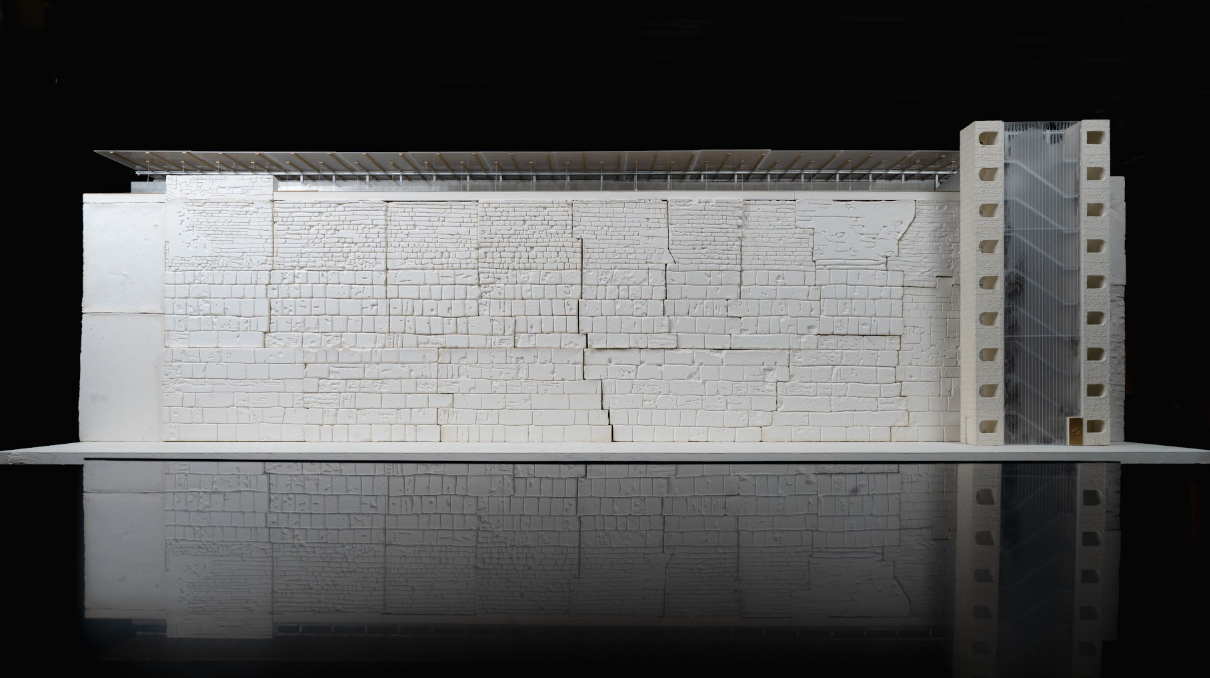
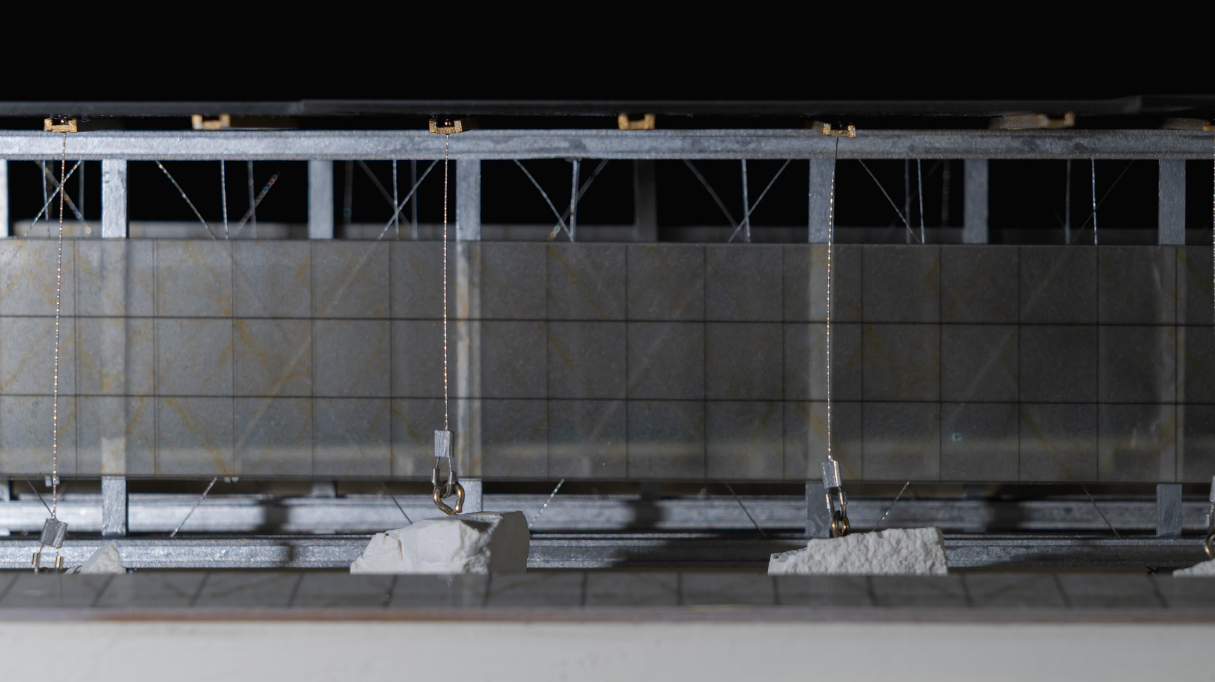
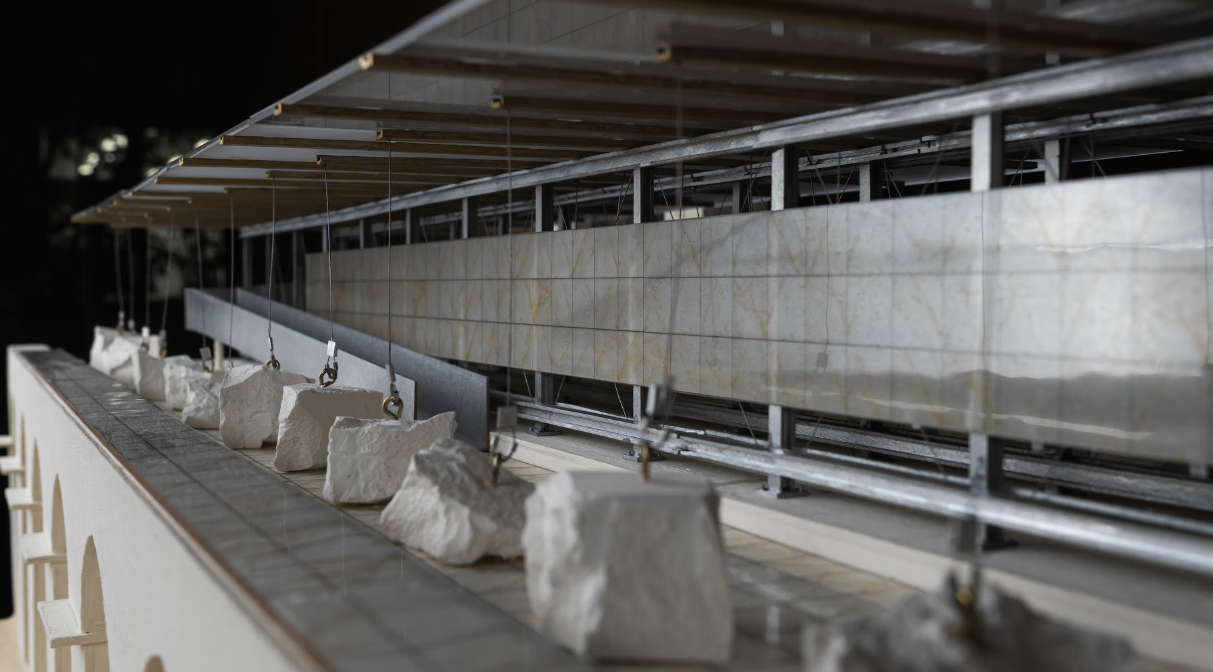
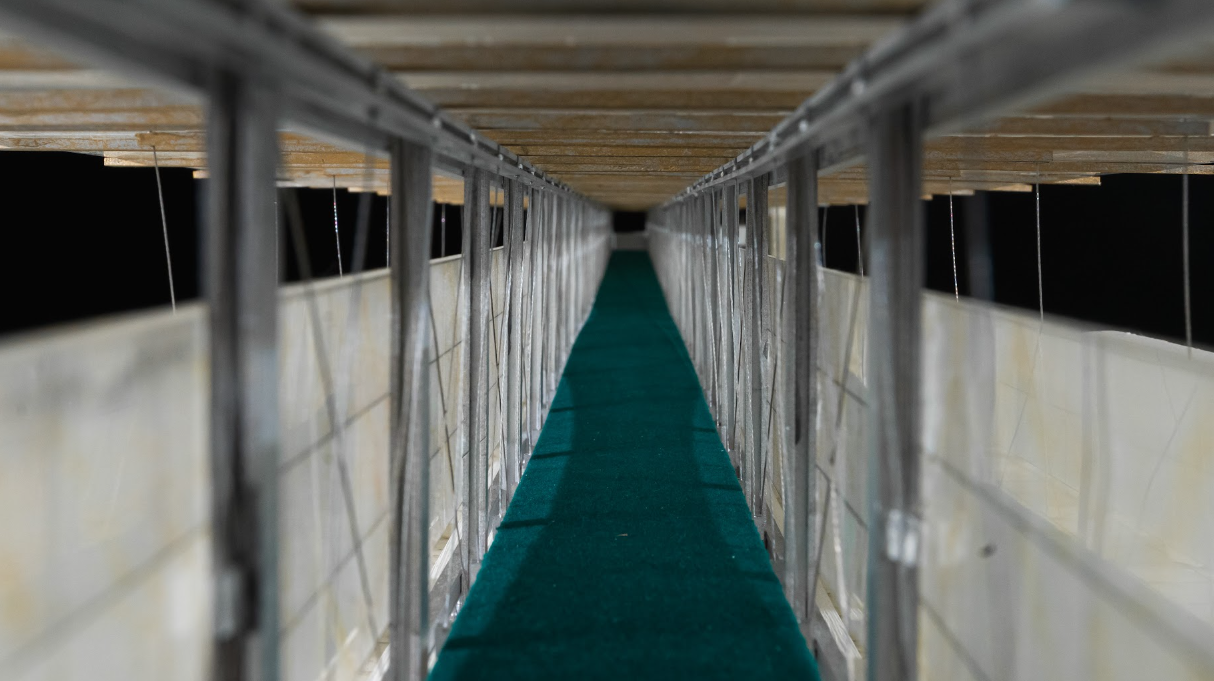
過去人們習慣仰望西牆的莊嚴,如今人們抵達前所未有的高度與西牆互動。雙塔與橋將兩教徒帶到牆的彼端,晃動感暗示登上方舟。三方交會於西牆上方,藉由剪刀梯和旅人通道的分道,感知對方卻不打擾。兩教徒看向自己祖先曾生活的場域,通道構造彼此交錯並支撐對面通道,詮釋兩教相依卻不互相理解的矛盾。
–
The site is located on both sides of the Western Wall in the Old City of Jerusalem. To the east lies the Temple Mount, a sacred site for Islam; to the west is the Western Wall Plaza, a holy site for Judaism. However, historically, both groups have occupied the area beyond the Wall at different times. Moreover, the two religions define the interior and exterior of the Western Wall differently, and the only distinction between the two sides is an 11-meter elevation difference.
In ancient times, Jewish worshippers would enter the Temple via the Temple Bridge, undergoing ritual purification inside the bridge before stepping into the sacred space. Today, the wooden bridge merely allows visitors to cross the elevation gap, while the spiritual meaning of entering the holy site has been forgotten.
Currently, a fountain in front of the mosque is used by Muslims for ritual purification. Archaeological findings in 1867 confirmed that the water source of this fountain originates from the same aqueduct system of the Jewish Temple Bridge. The water, once a shared origin of sacredness for both religions and spaces, has been forgotten due to a century of conflict.
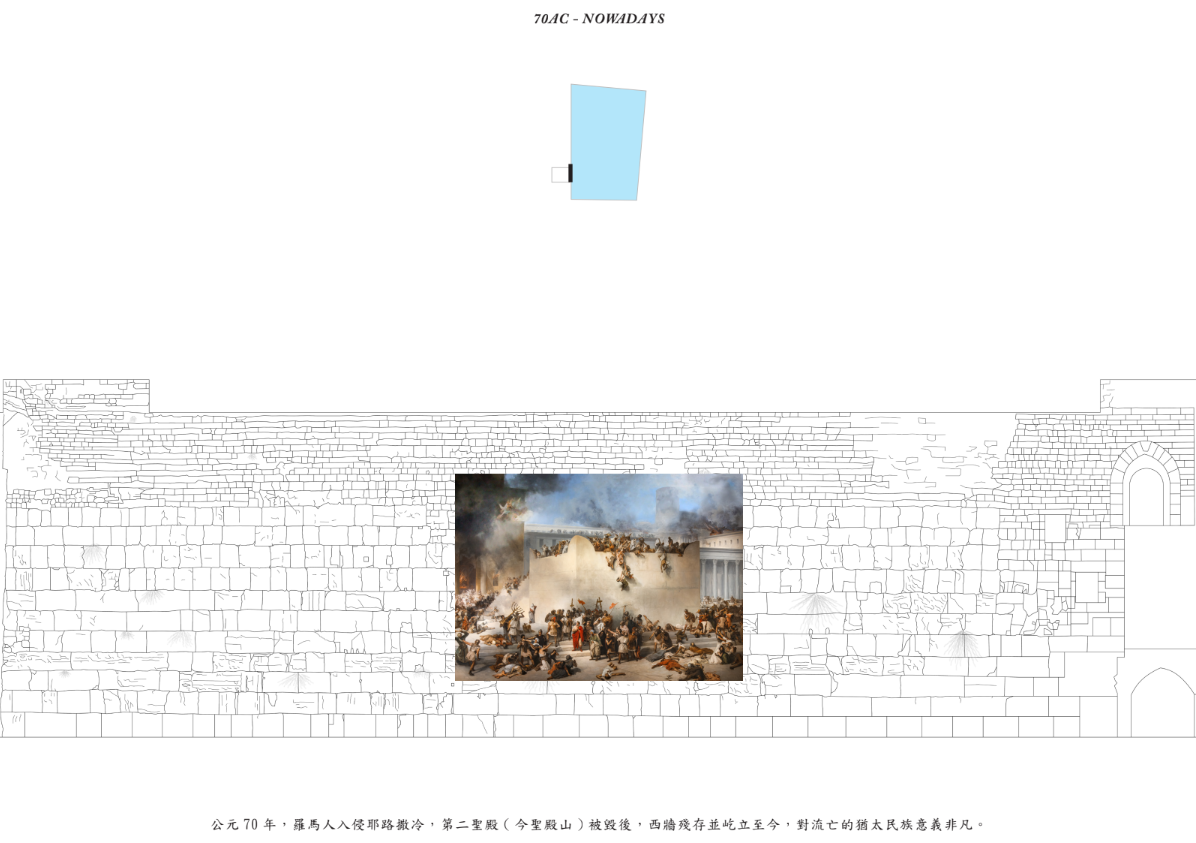
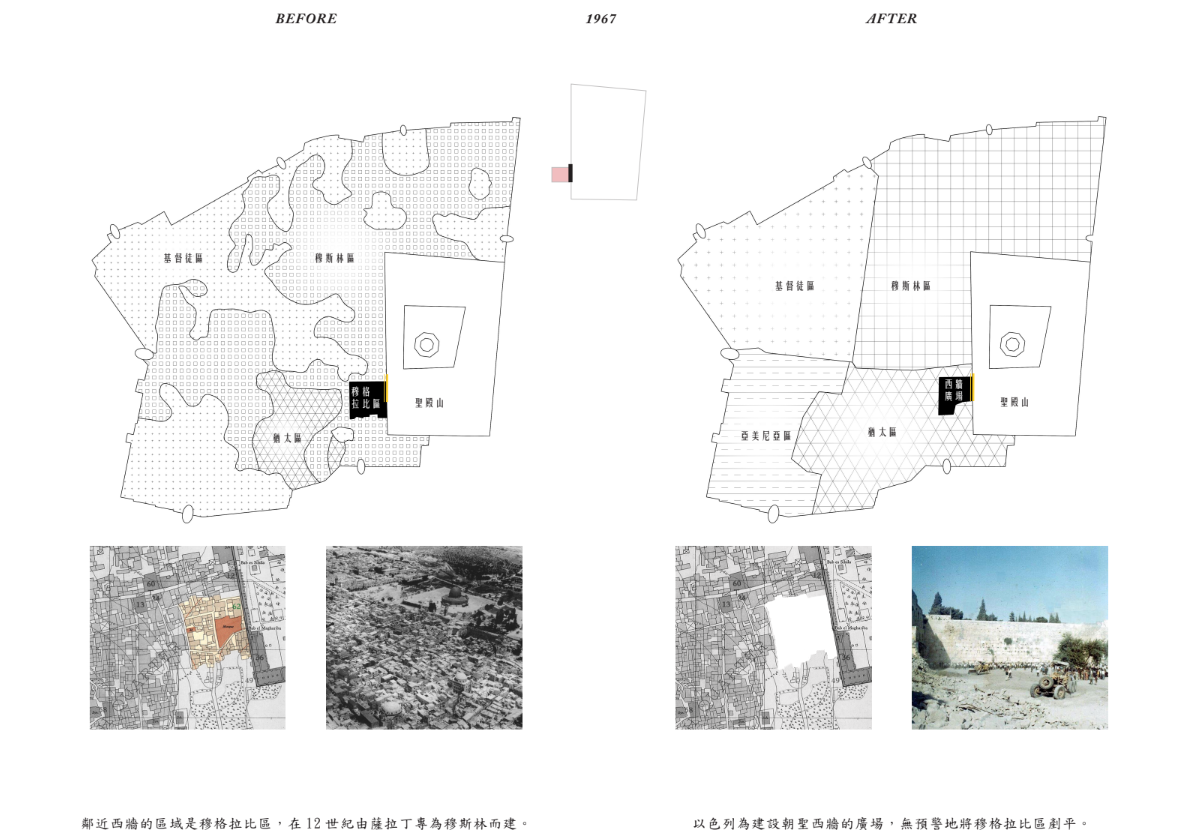
The Western Wall symbolizes historical tension and spatial division of power. Is it possible to establish a mechanism through which arriving visitors and worshippers might understand and reflect on possibilities beyond the Israel-Palestine conflict?
Water reveals the shared origin of these faith narratives: for Jews, the trauma of the Holocaust finds redemption in the return to the Western Wall, whereas for Muslims, the arrival of the Jews represents a great flood that submerges them — and the Temple Mount becomes their Noah’s Ark.
In the past, people would gaze up at the Wall in reverence; today, they arrive at an unprecedented height and interact with it directly. Twin towers and a bridge bring worshippers from both religions to the other side of the Wall, where a sense of swaying evokes the feeling of boarding the Ark. The three groups converge above the Western Wall, where separated paths — a scissor staircase and a passage for travelers — allow each to perceive the presence of the other without intrusion. Worshippers gaze at the place where their ancestors once lived, while the interwoven structure of the paths physically supports each other, symbolizing the paradox of mutual dependence without mutual understanding between the two religions.