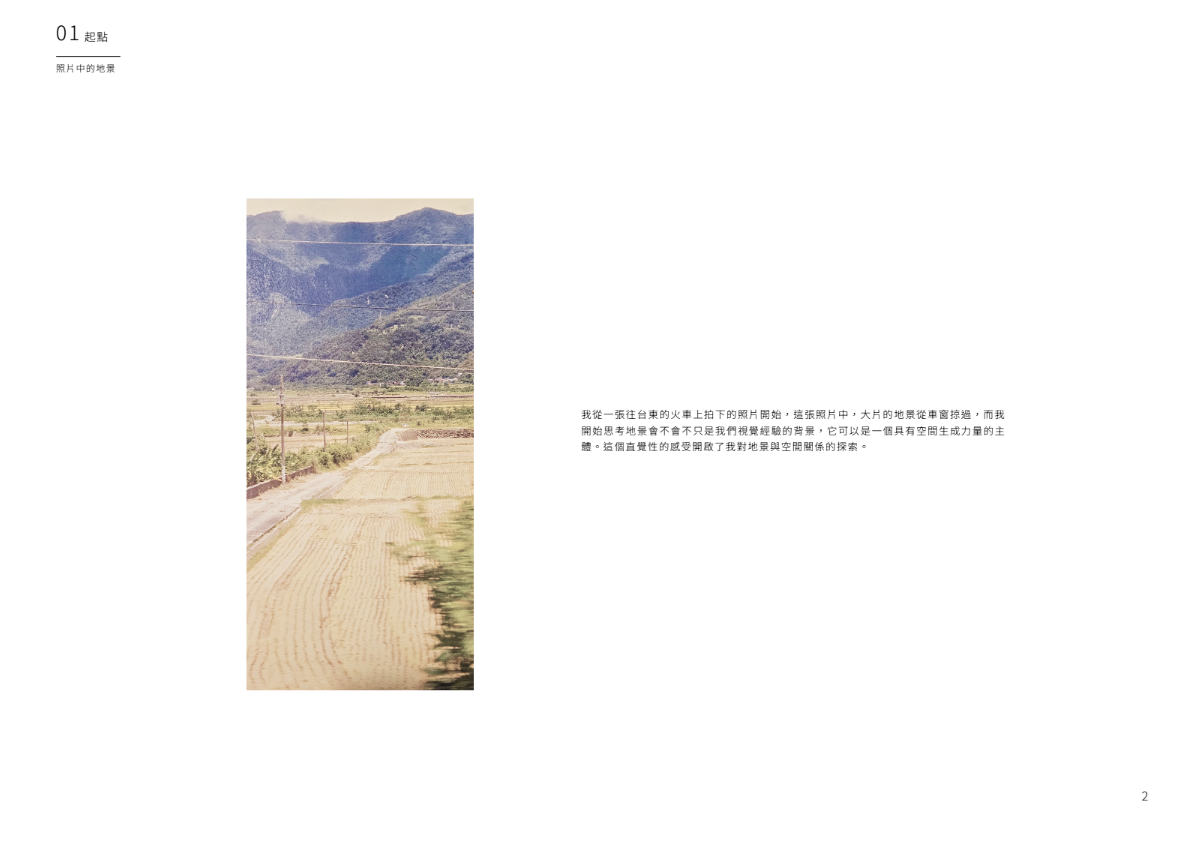
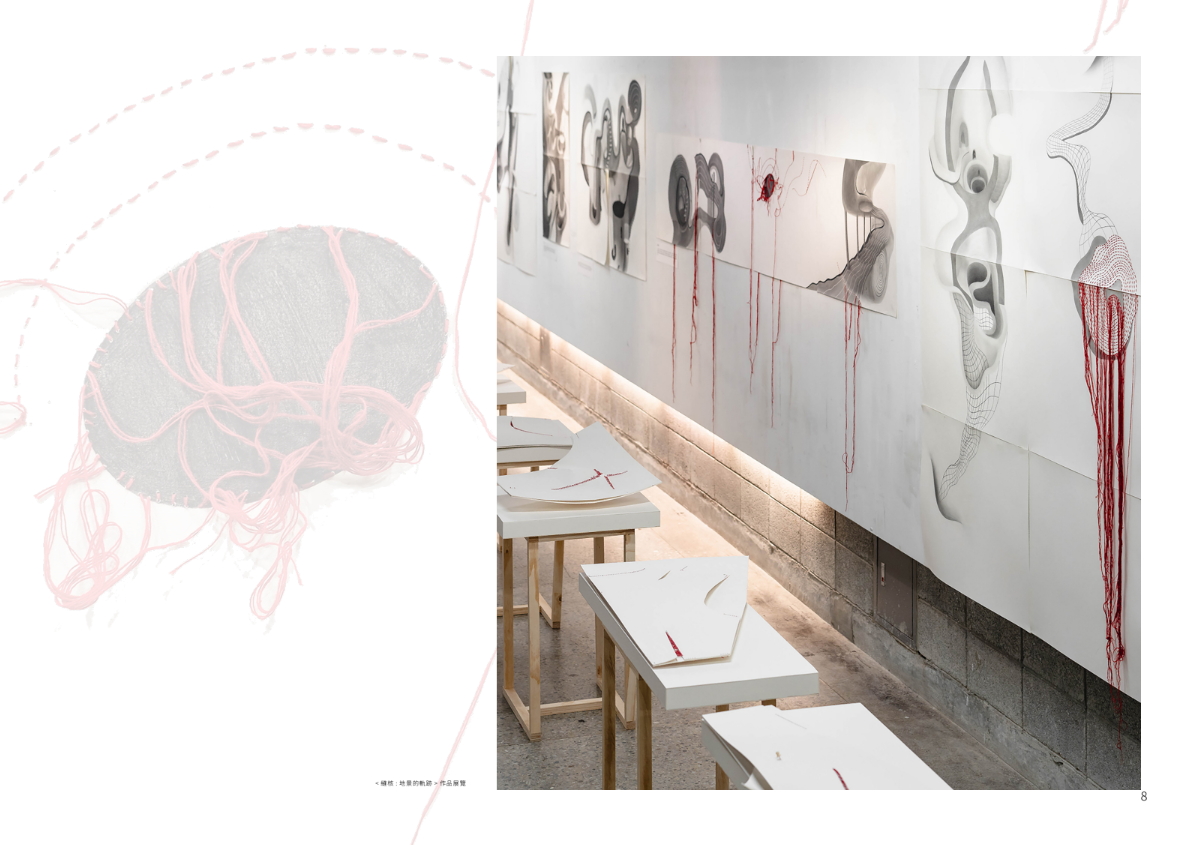
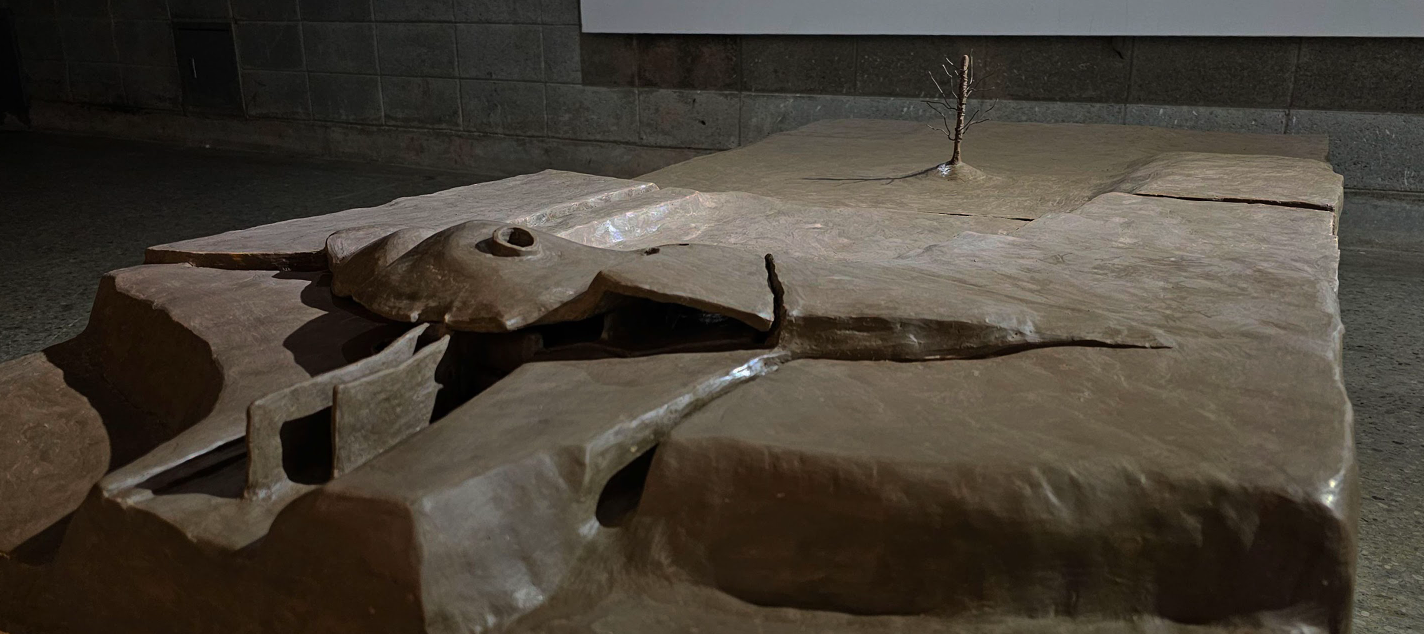
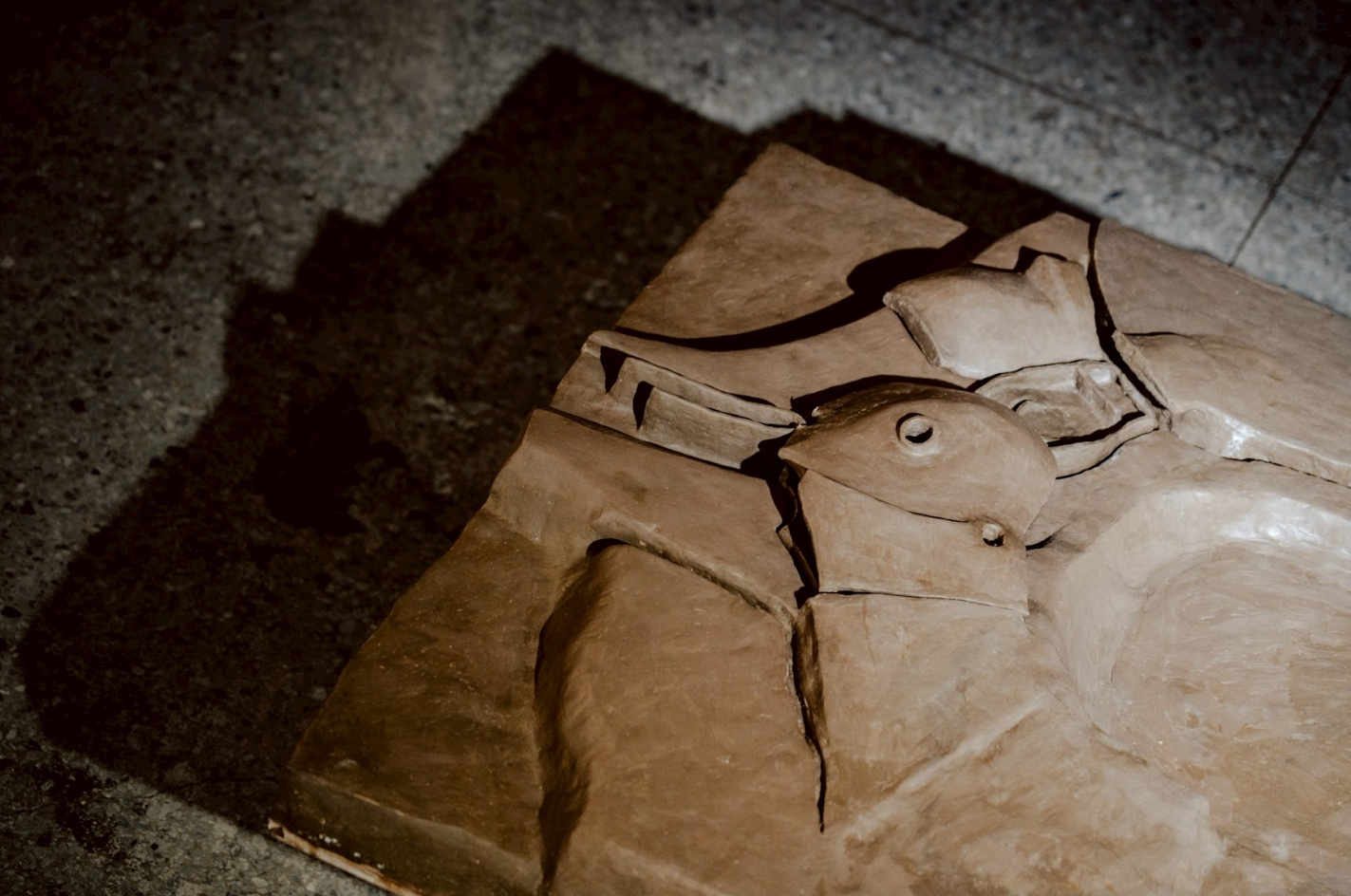
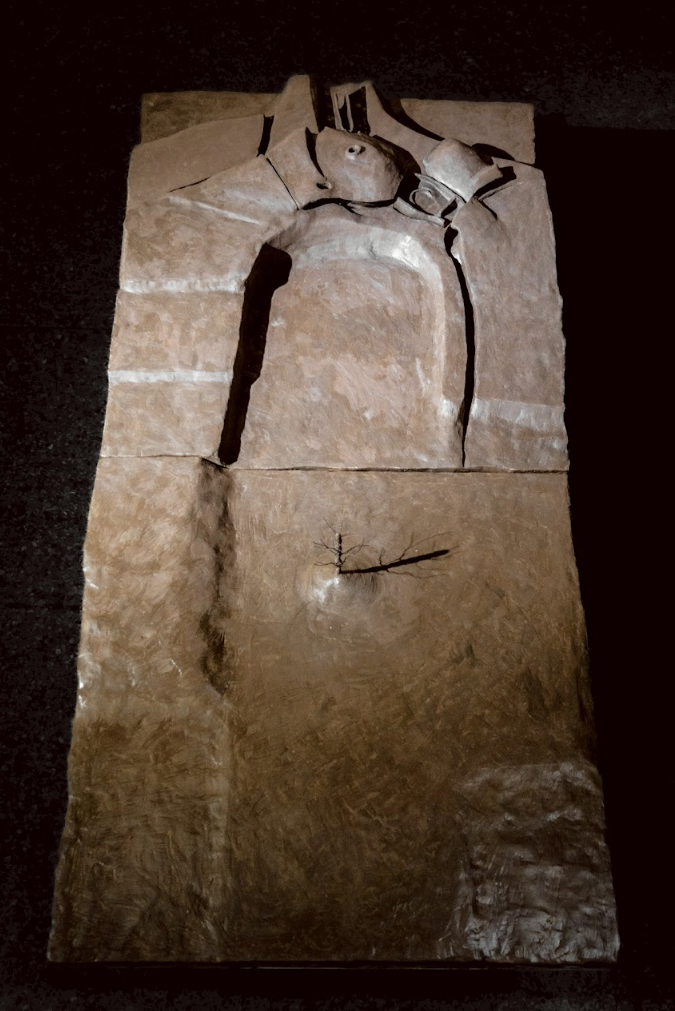
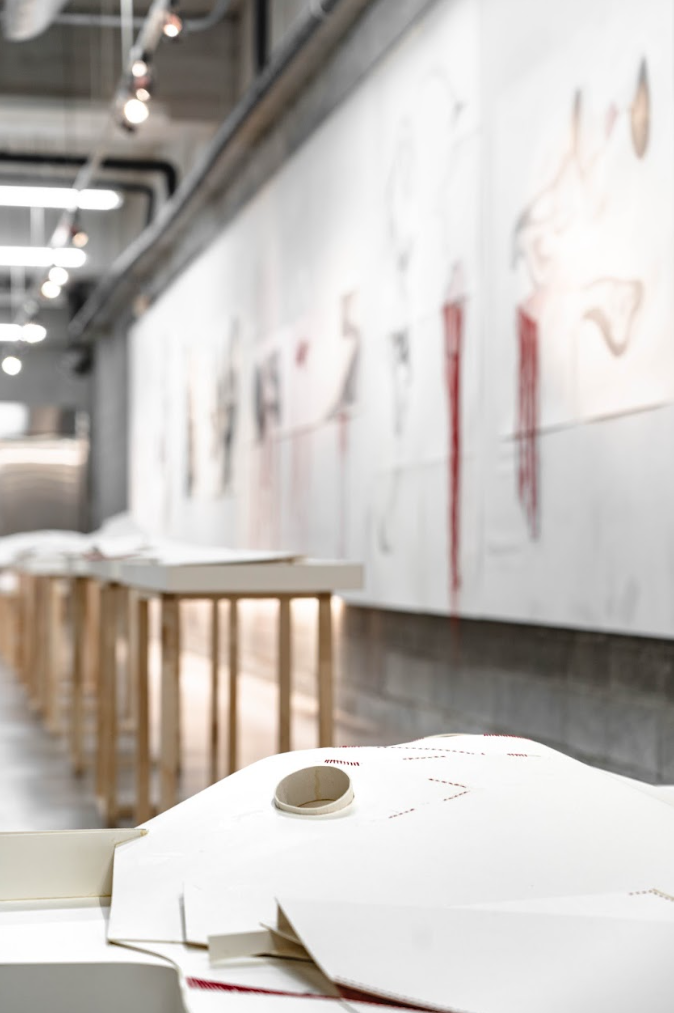
一切的起點來自一張火車上拍下的照片,大片地景從車窗掠過,我開始思考:地景是否不只是我們視覺經驗的背景,而是一個具有生成空間能力的主體?於是我從「土地」作為切入點,將其視為一個有生命力的身體-歷經地質擠壓、自然堆疊與人為介入,地表留下裂縫、斷裂與隆起,這些痕跡並非結束,而是潛在空間的開端,是未被打開的空隙。
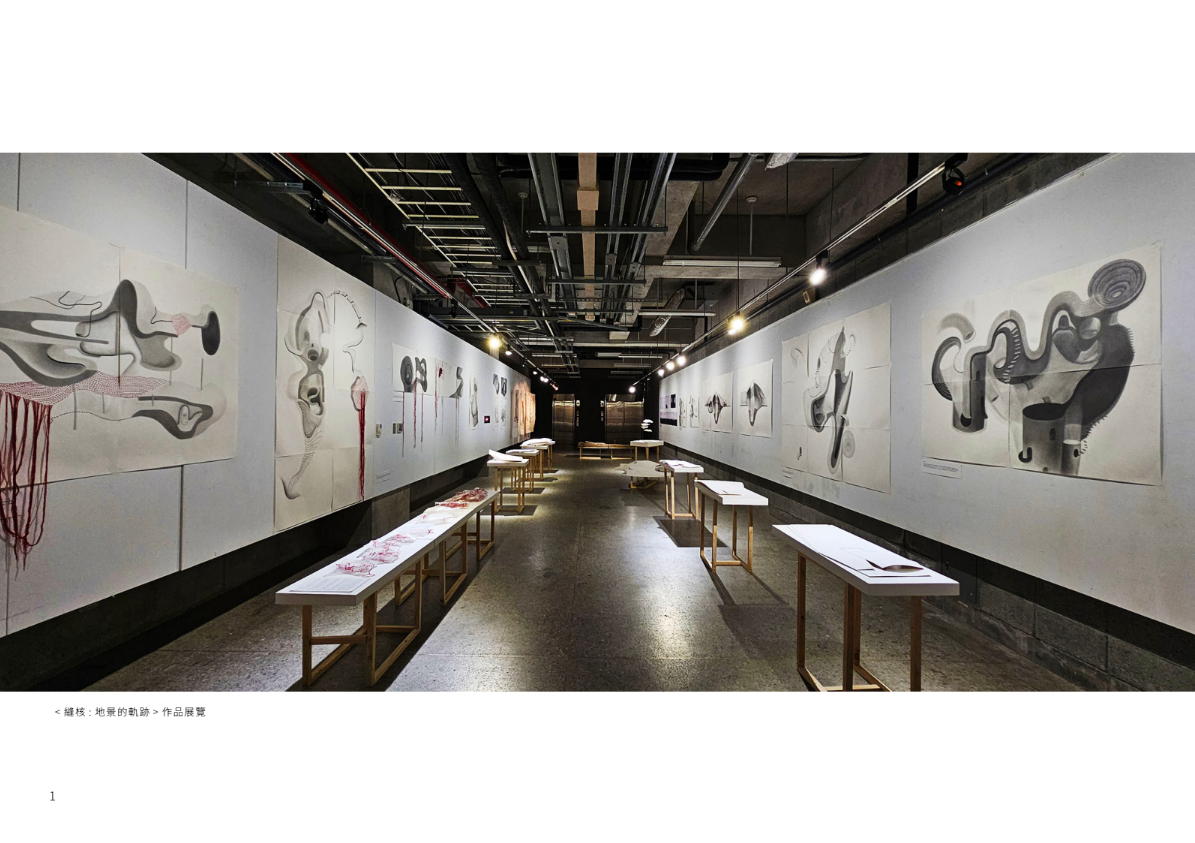
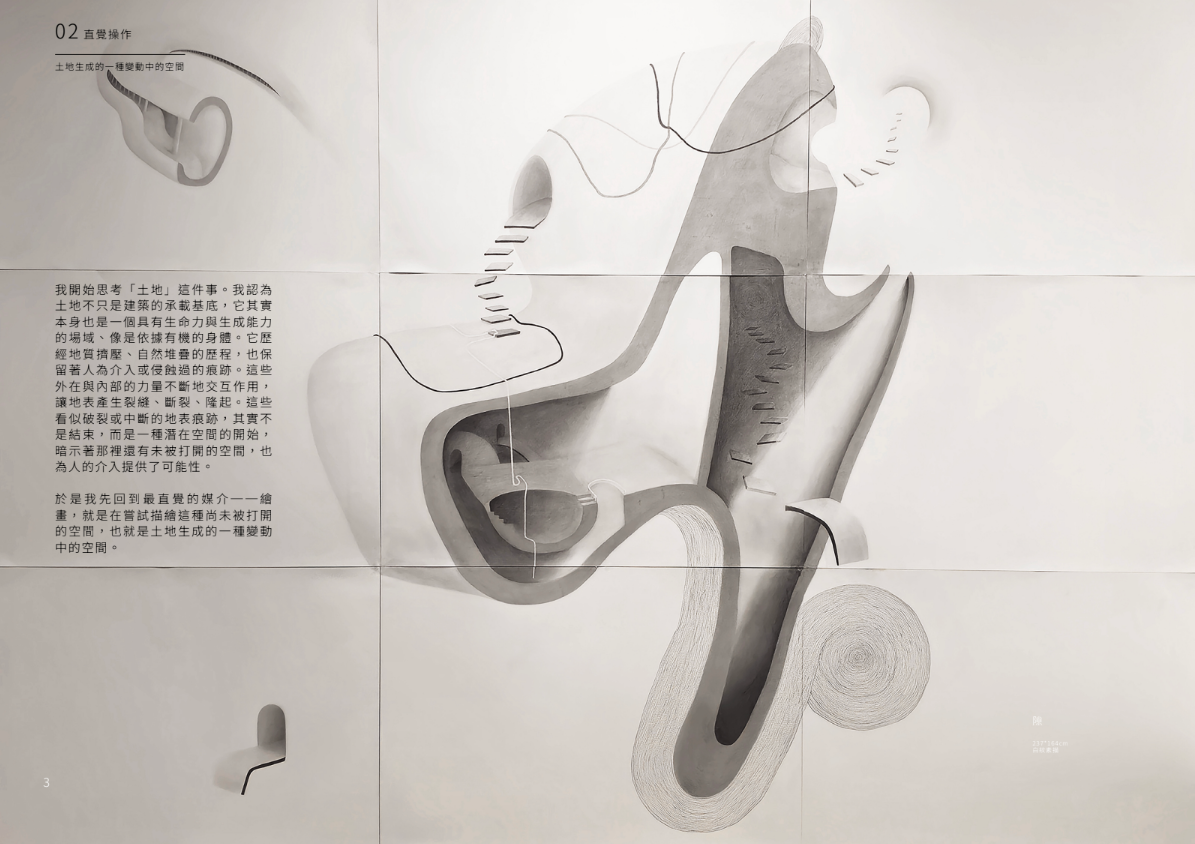
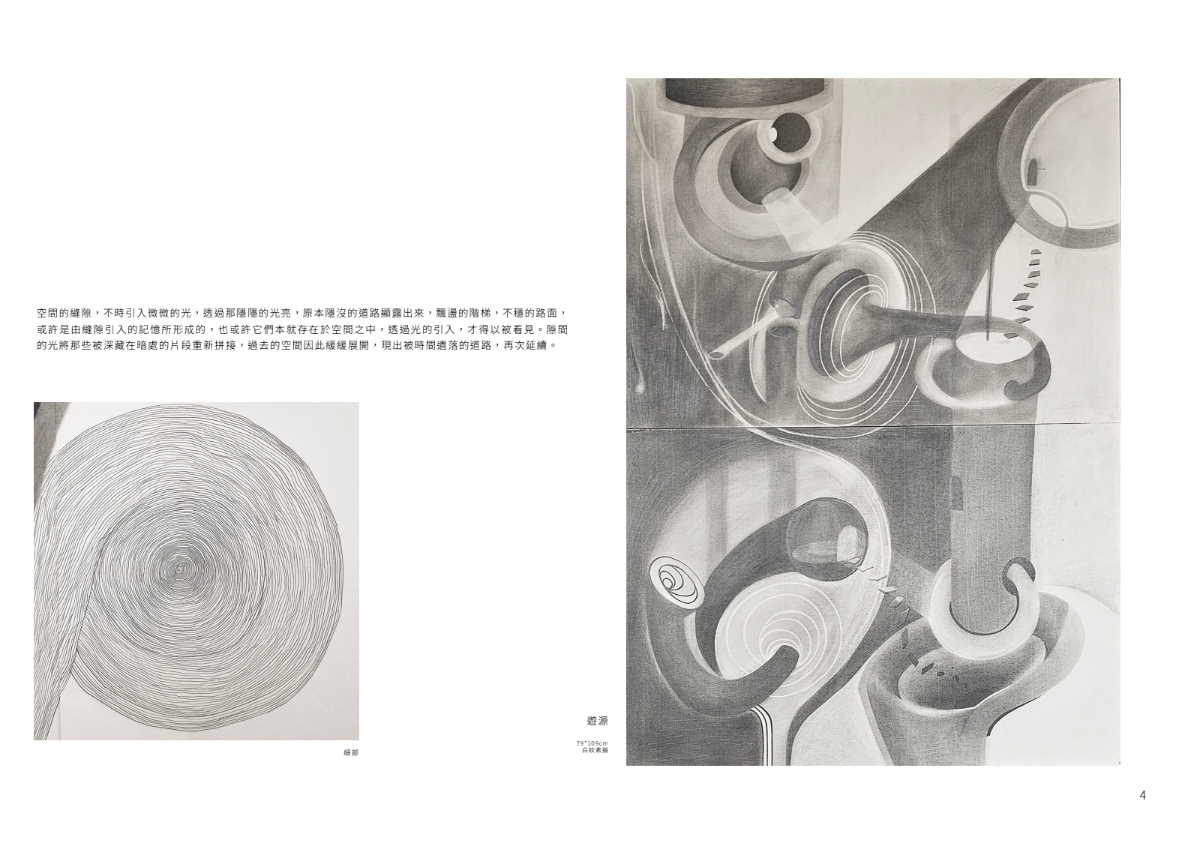
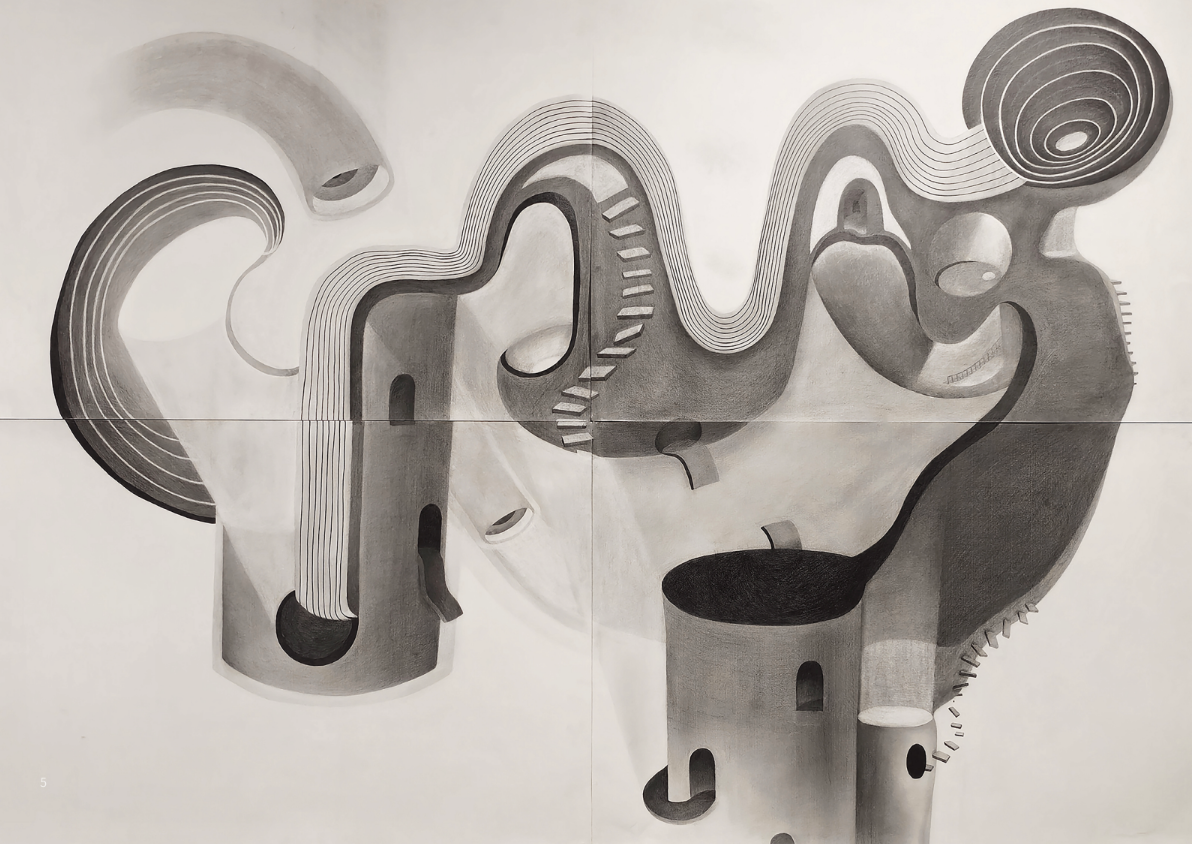
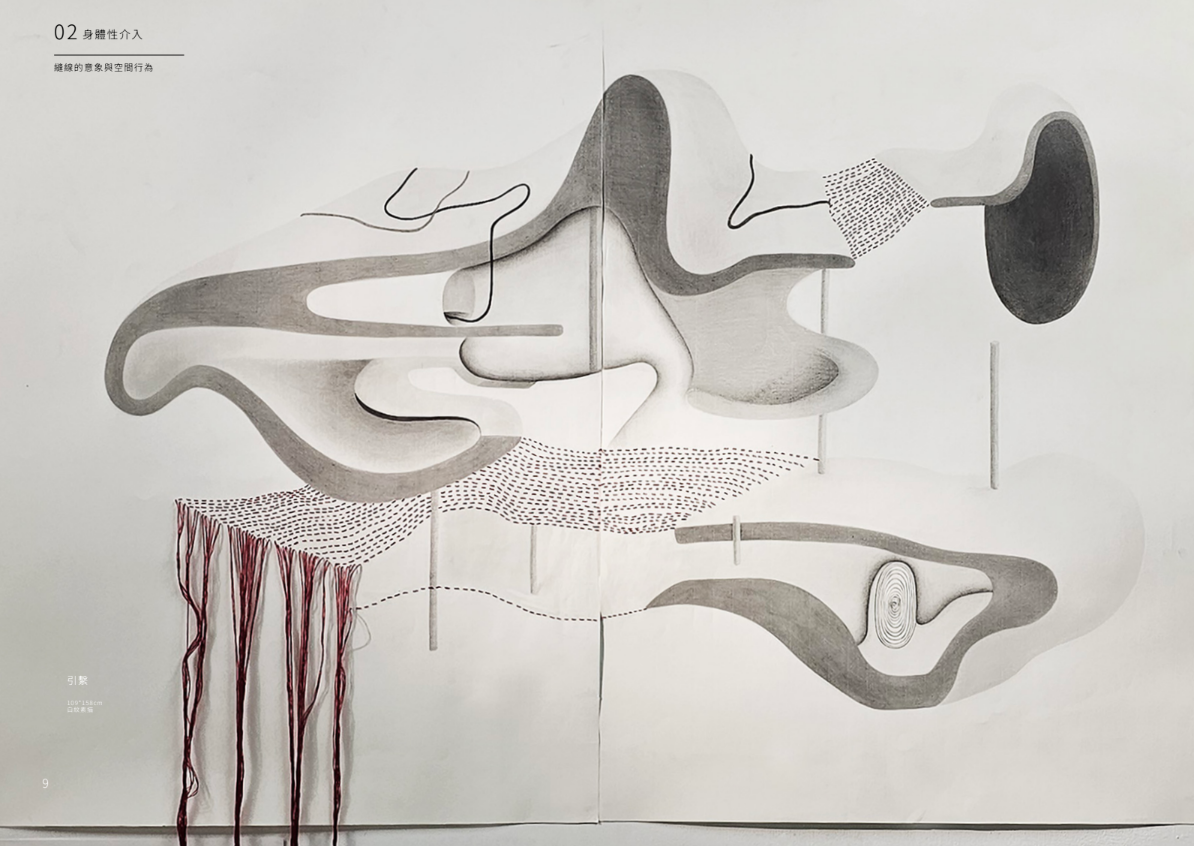
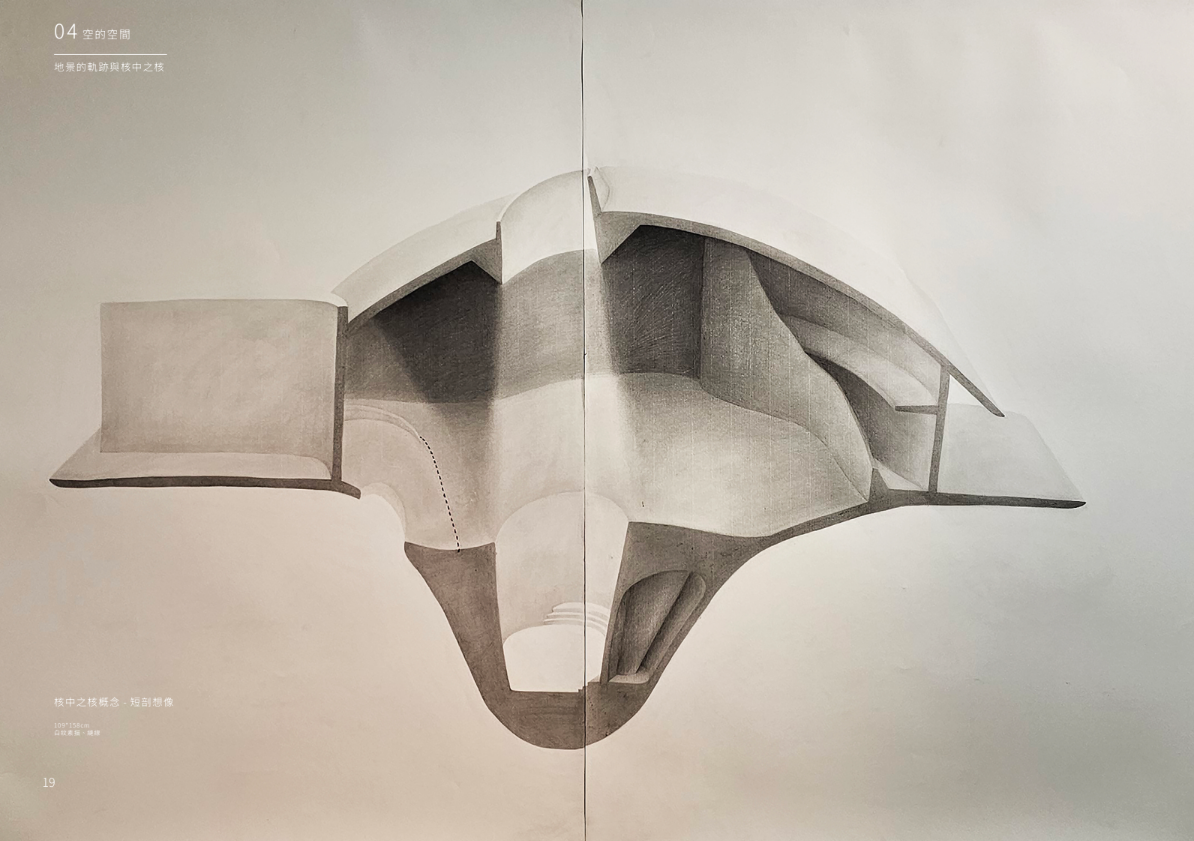
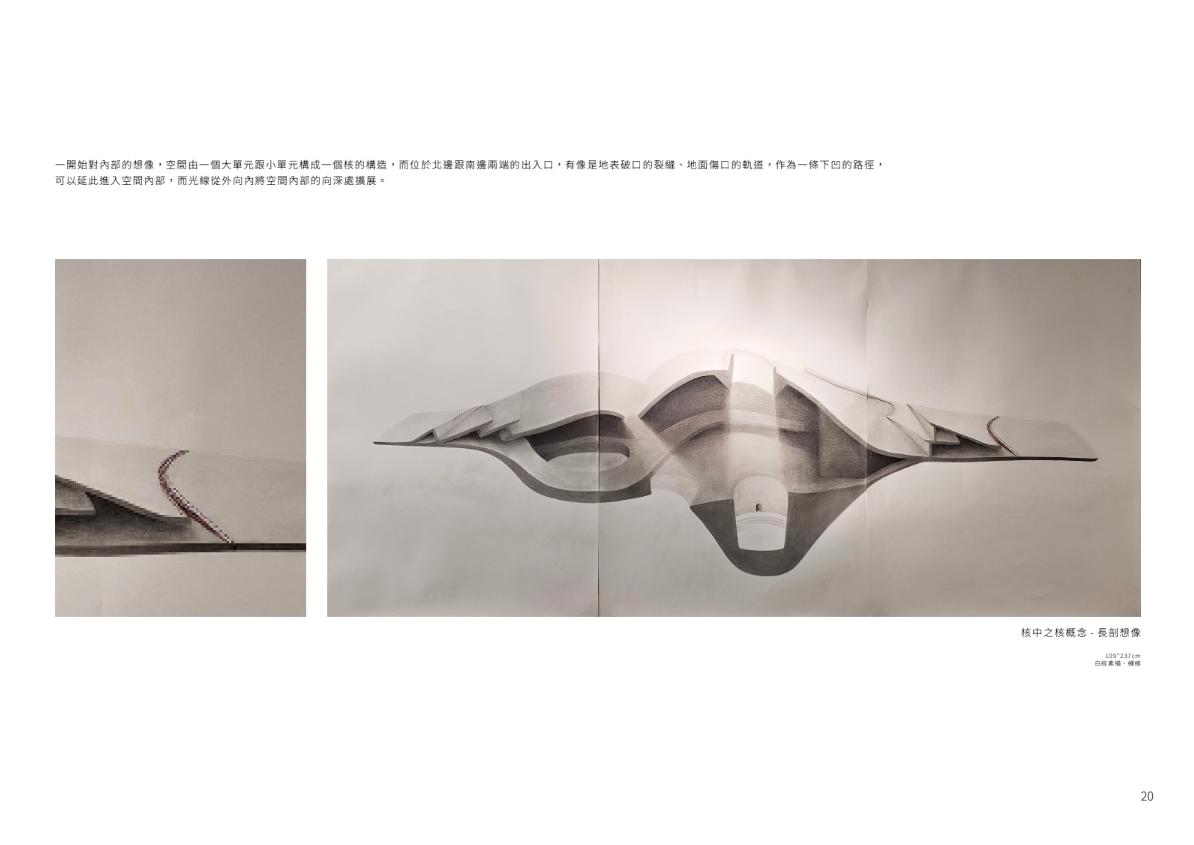
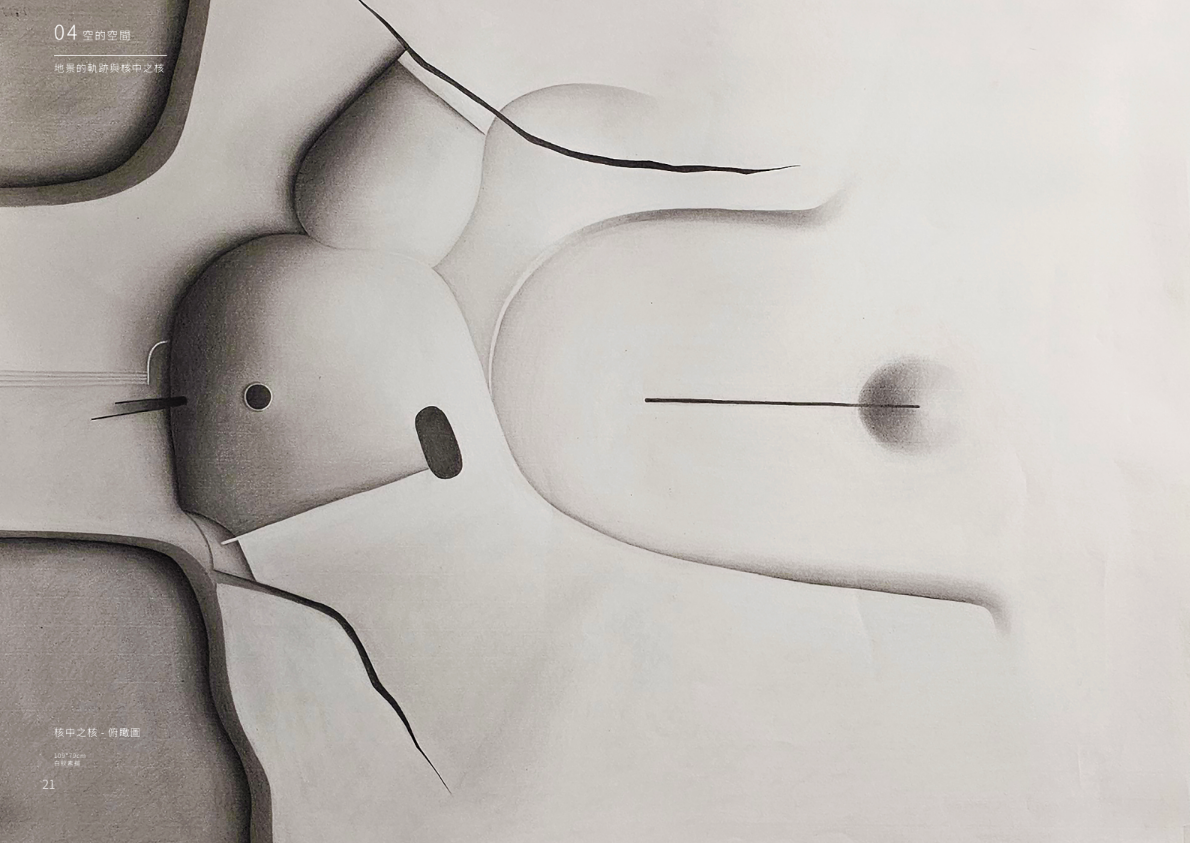
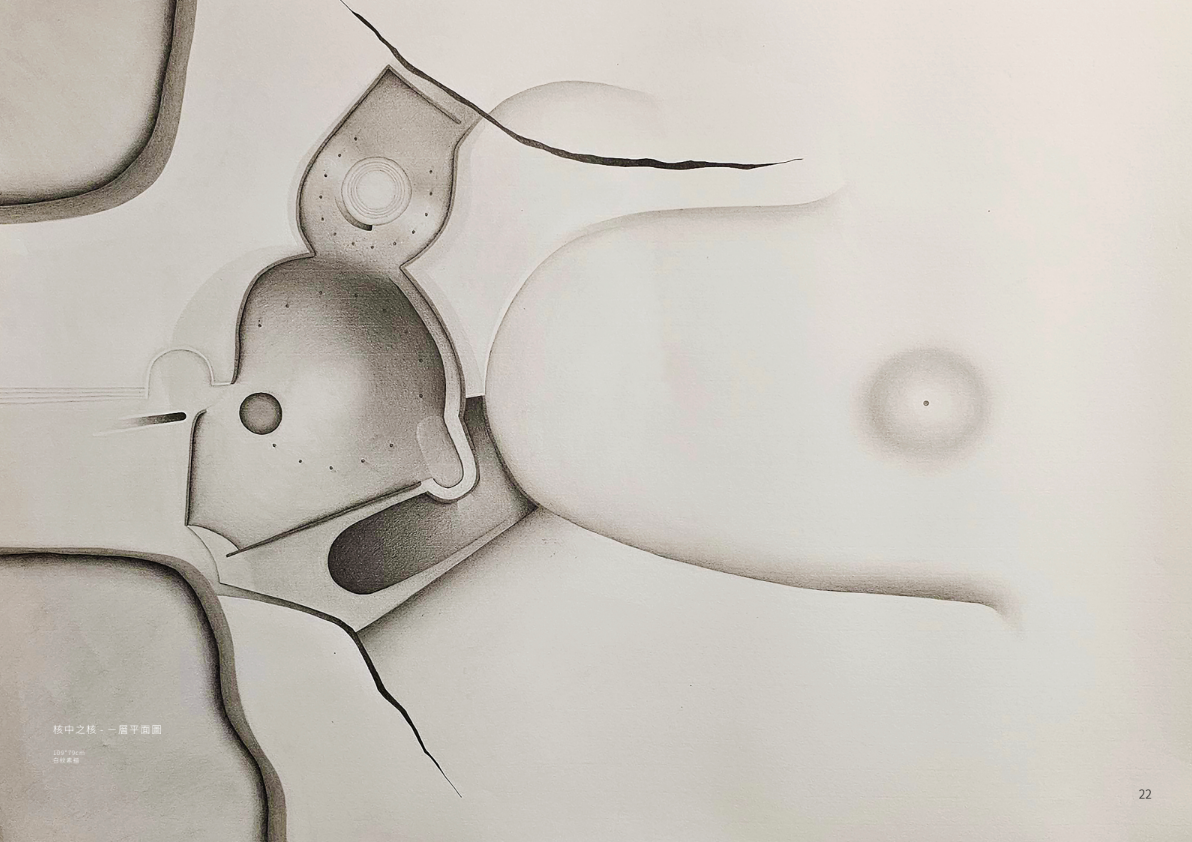
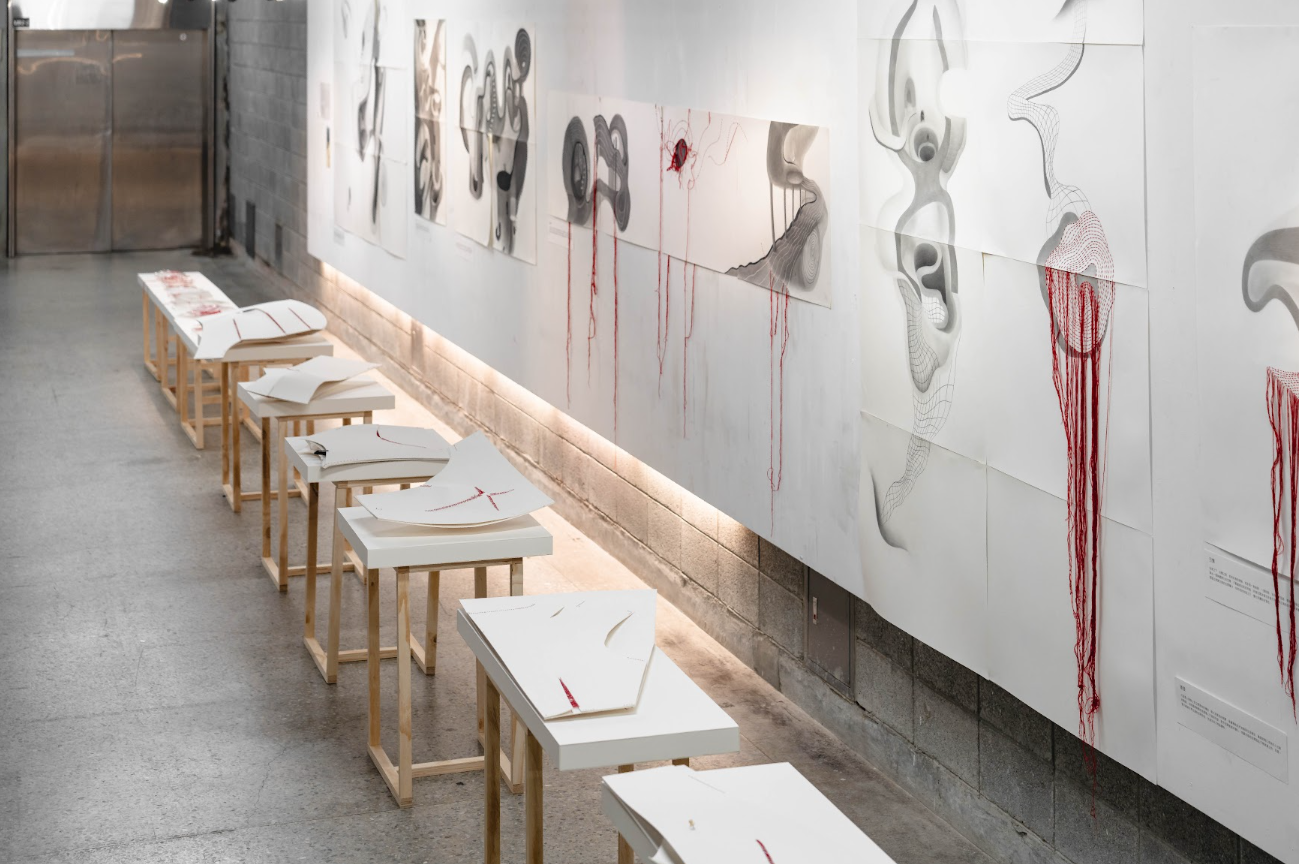
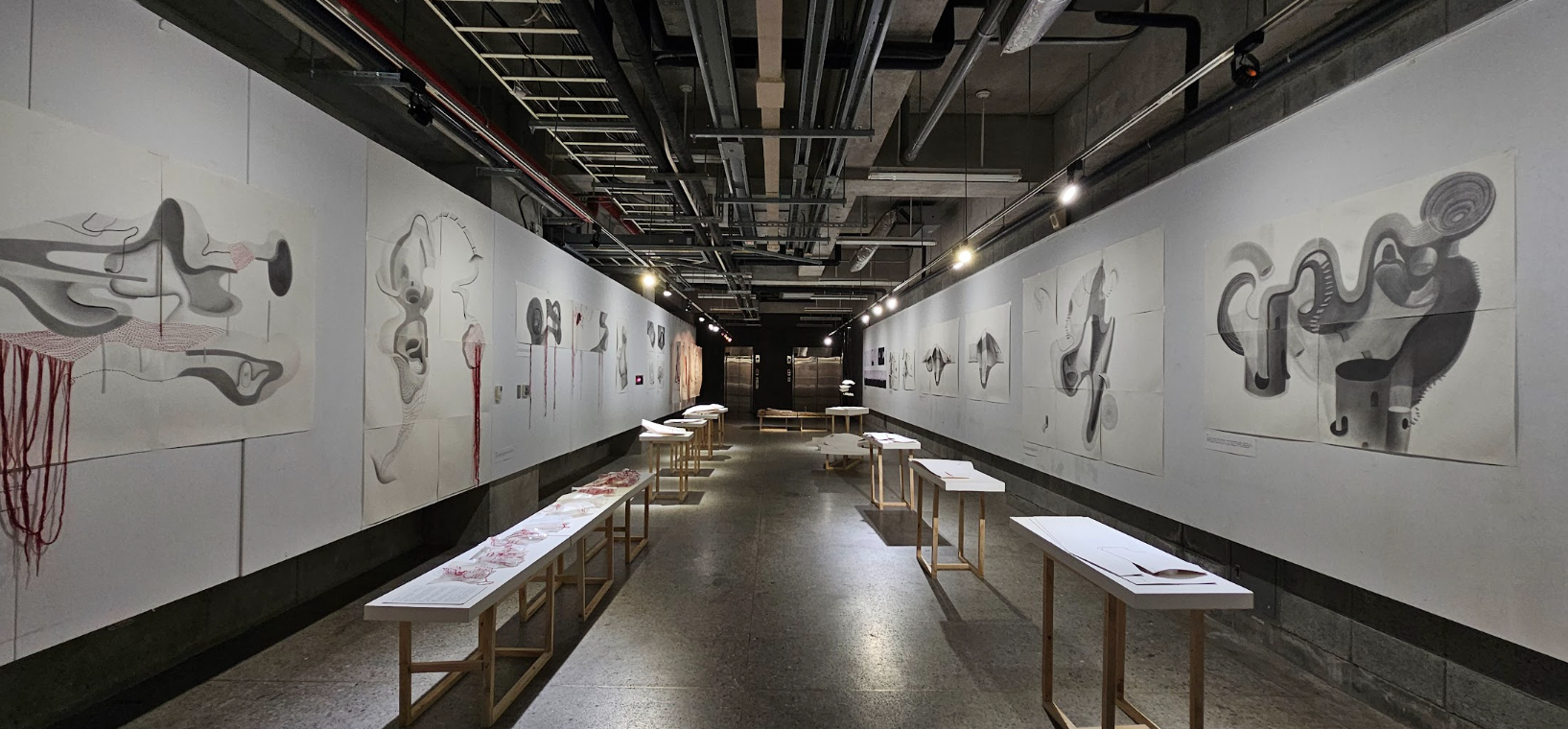
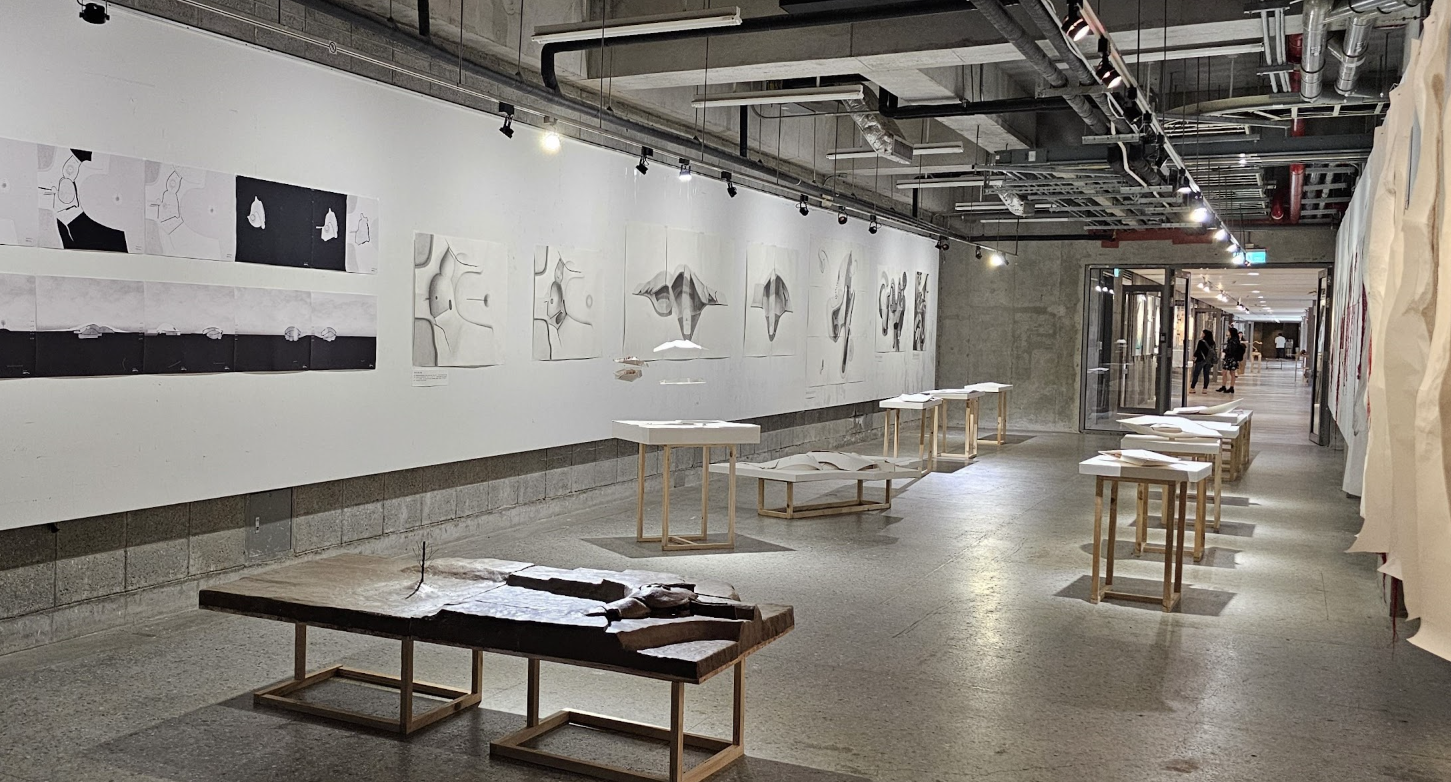
我從繪畫出發,試圖捕捉這種變動中的空間直覺。畫面中有光線穿透與流動軌跡的交錯,如同某種尚未成形、仍在生成中的空間雛型。觀者在觀看時,視線會自然被導引進入畫面深處,像是在尋找某個可進入的空間可能。
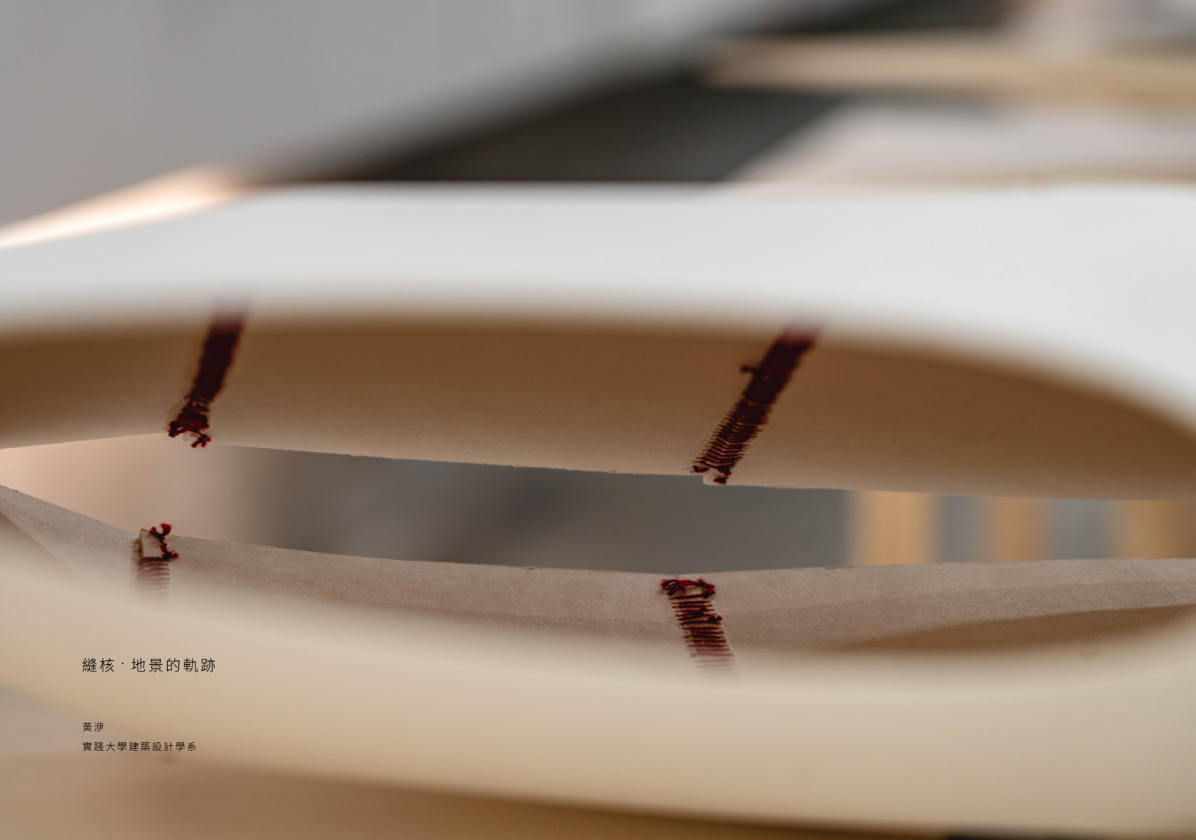
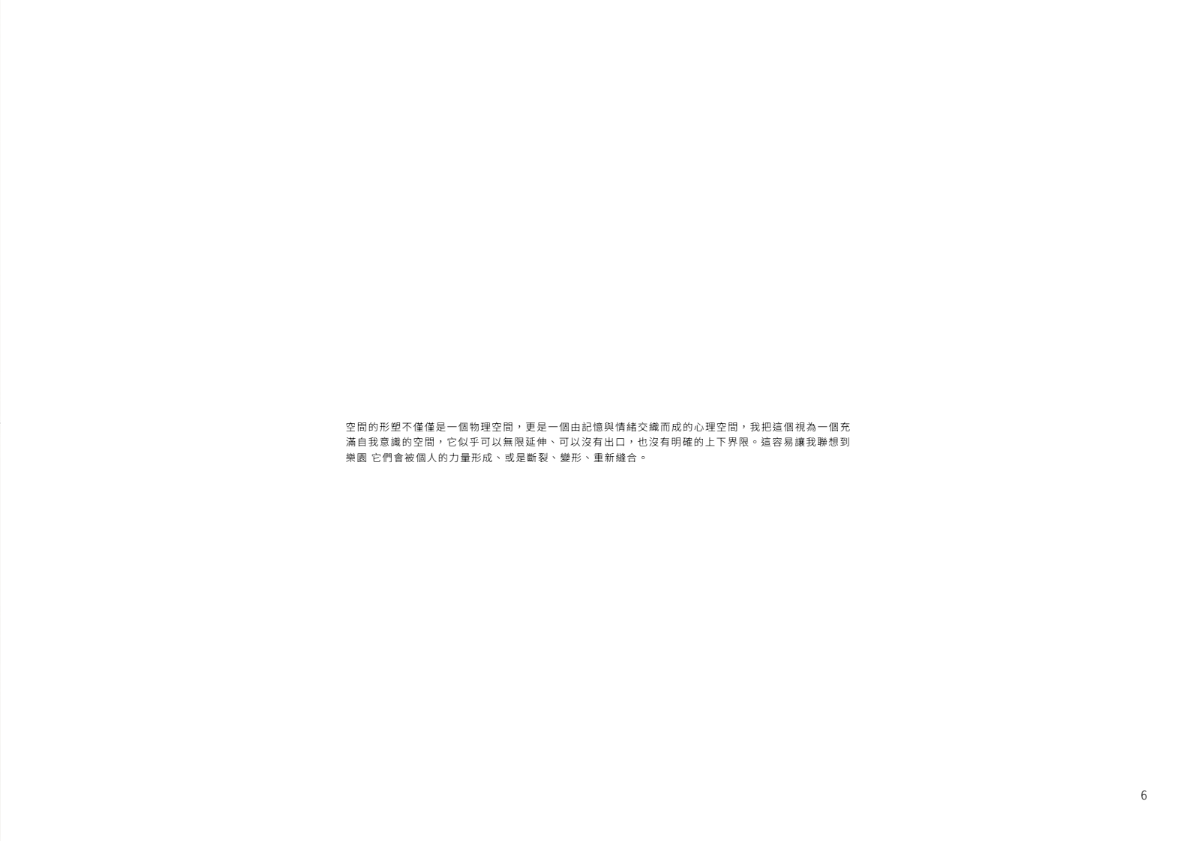
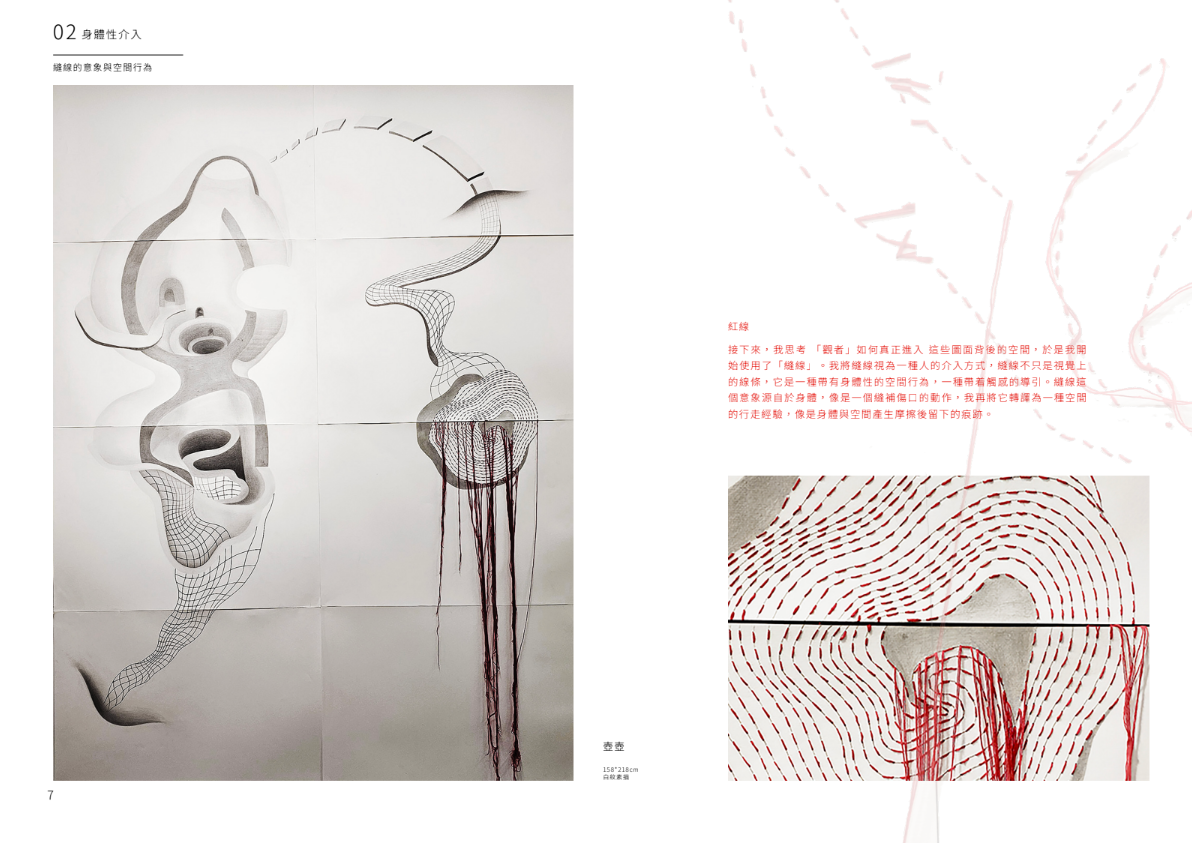
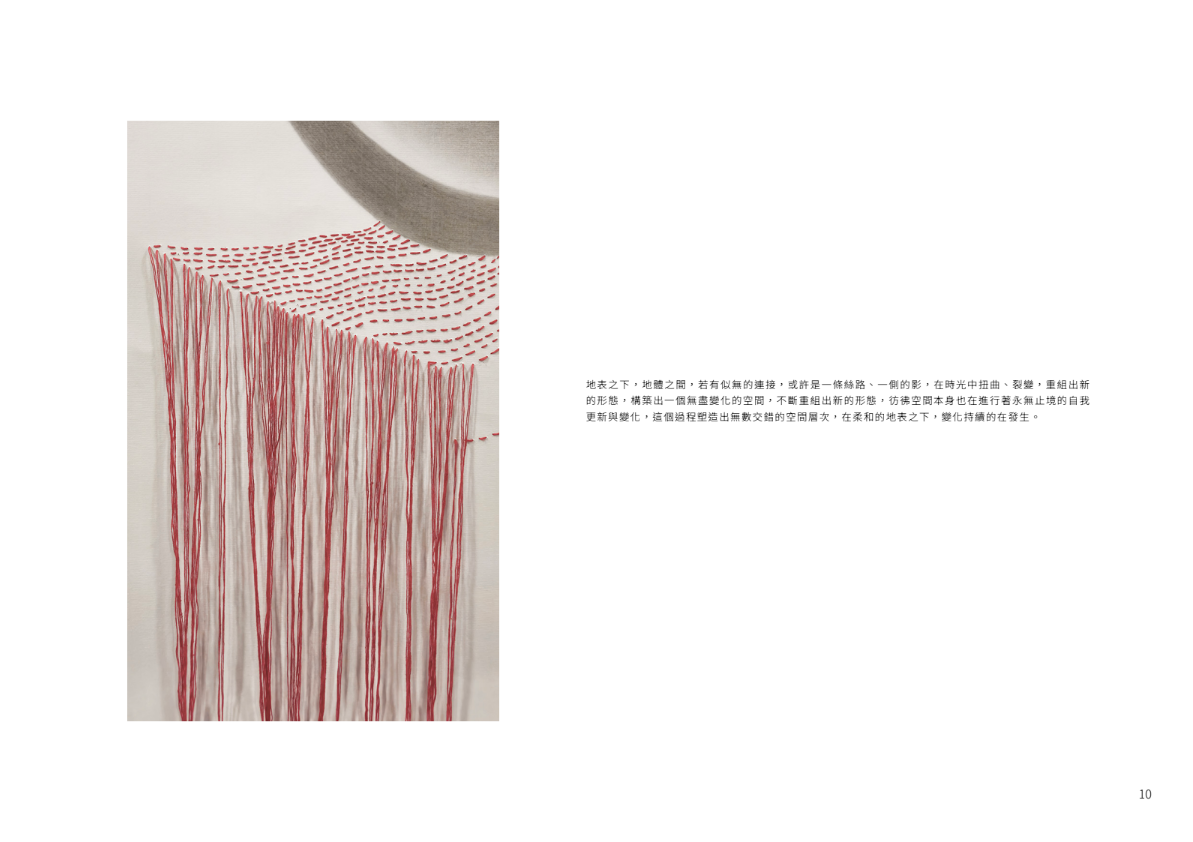
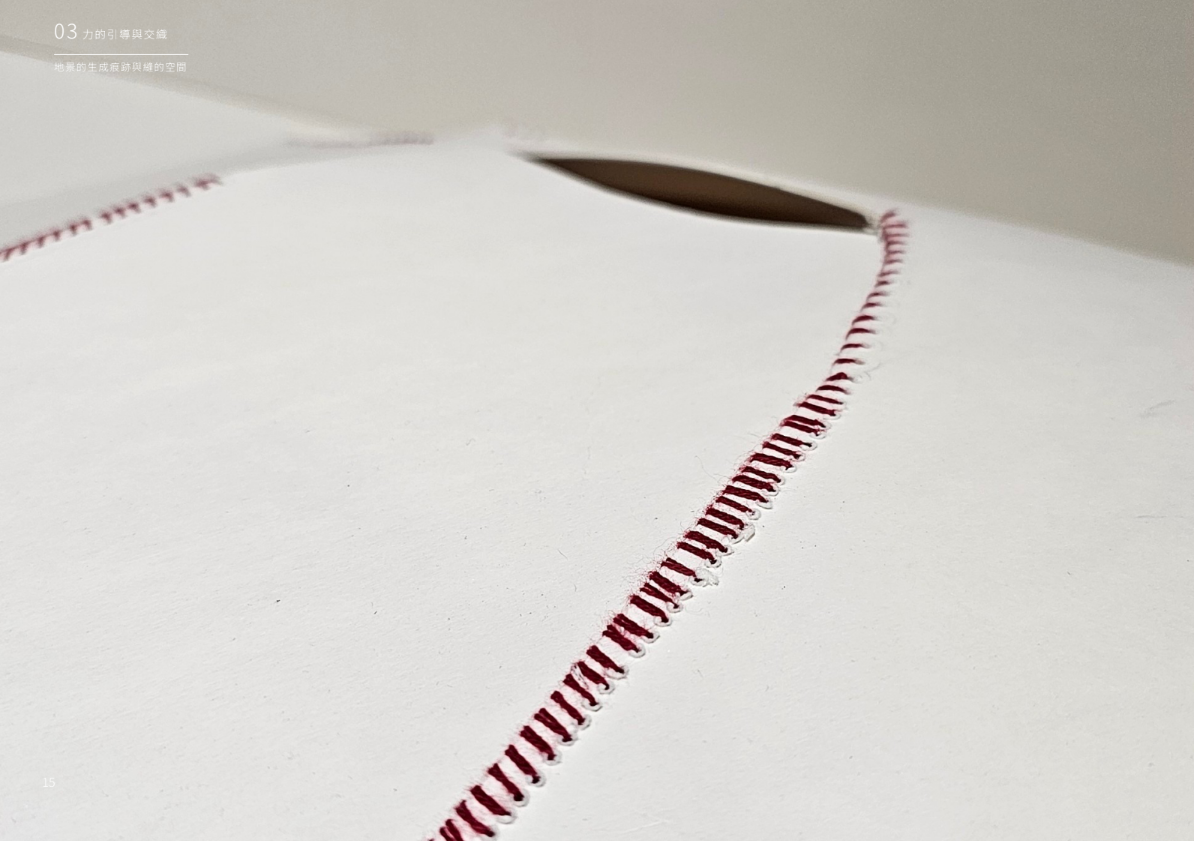
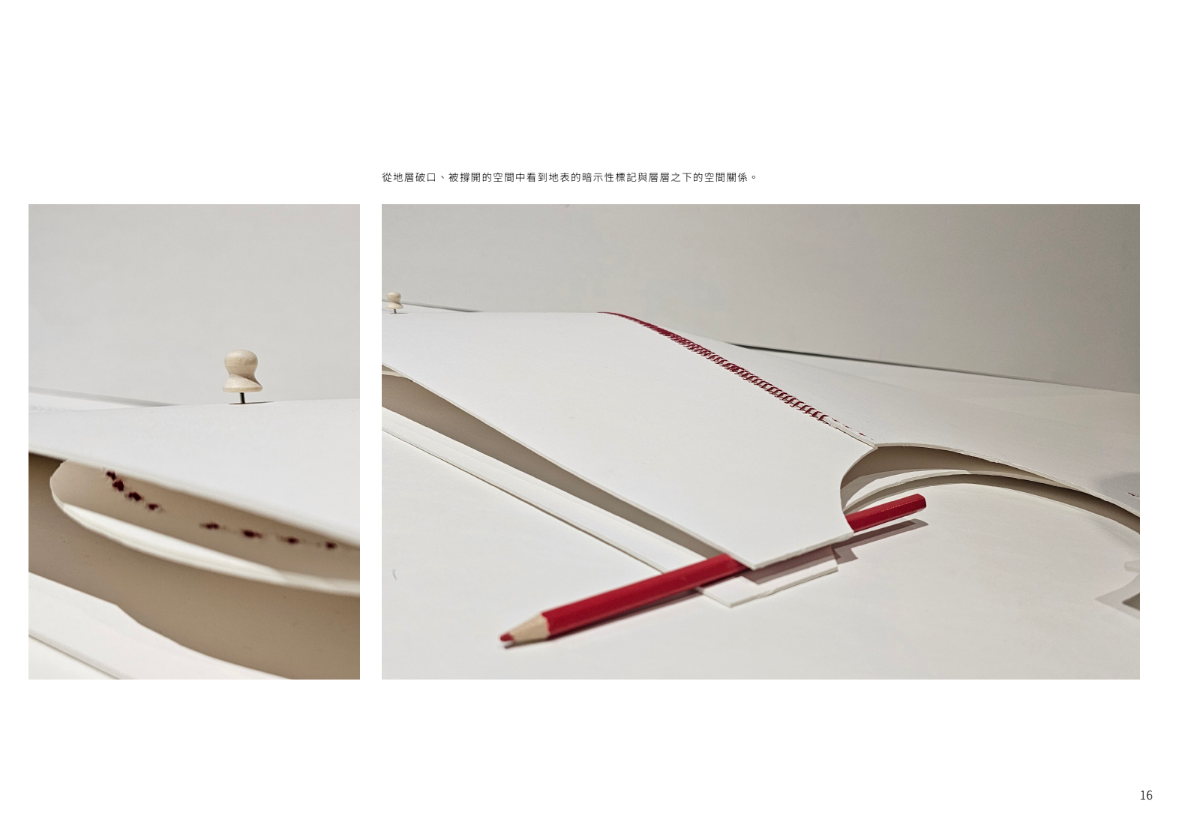
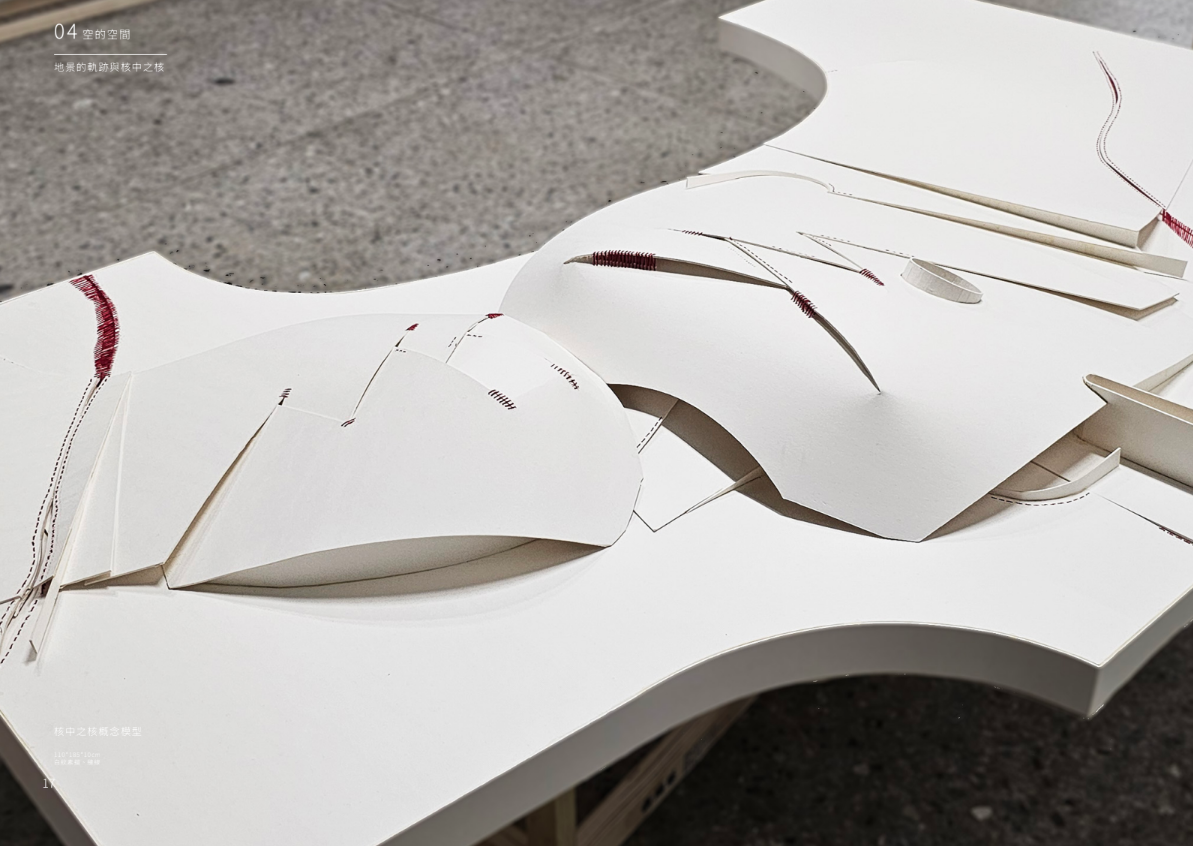
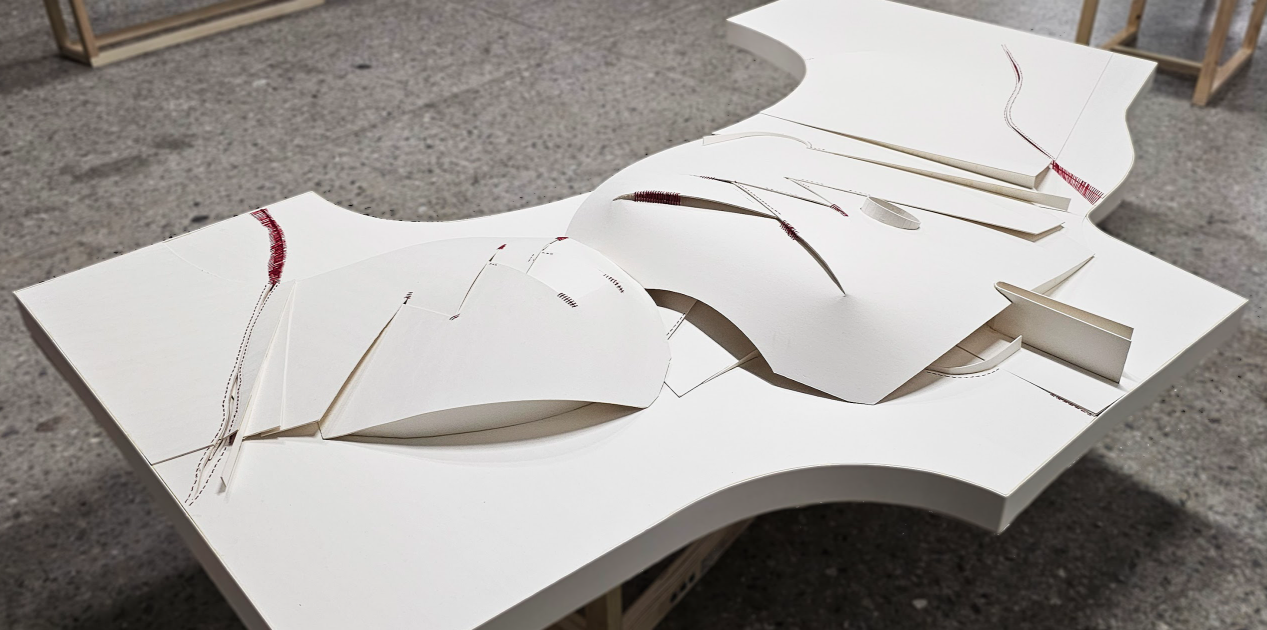
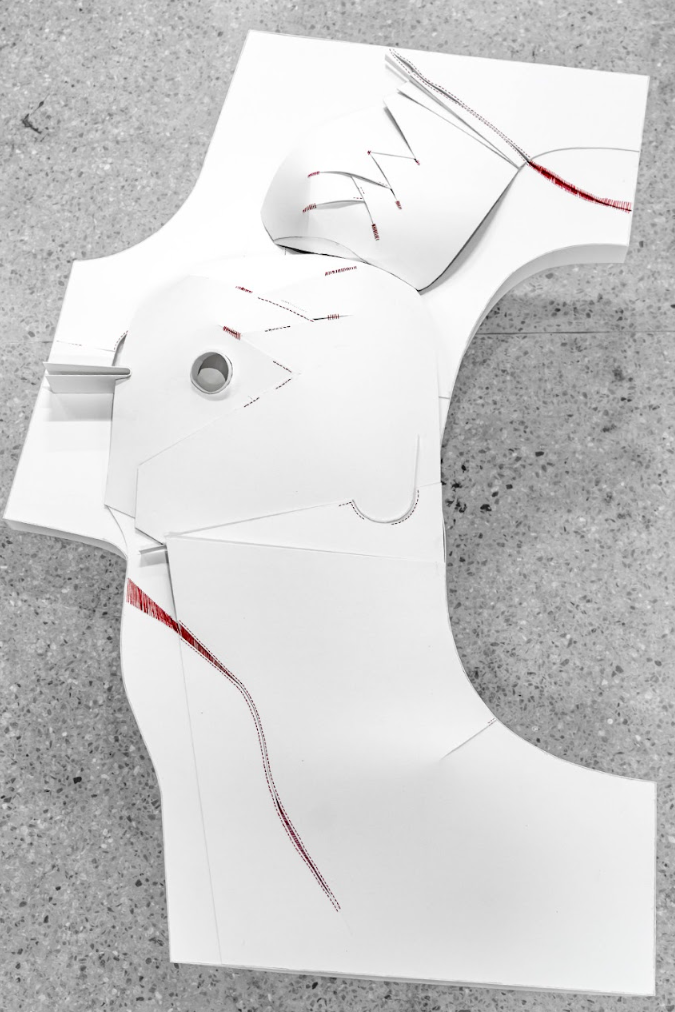
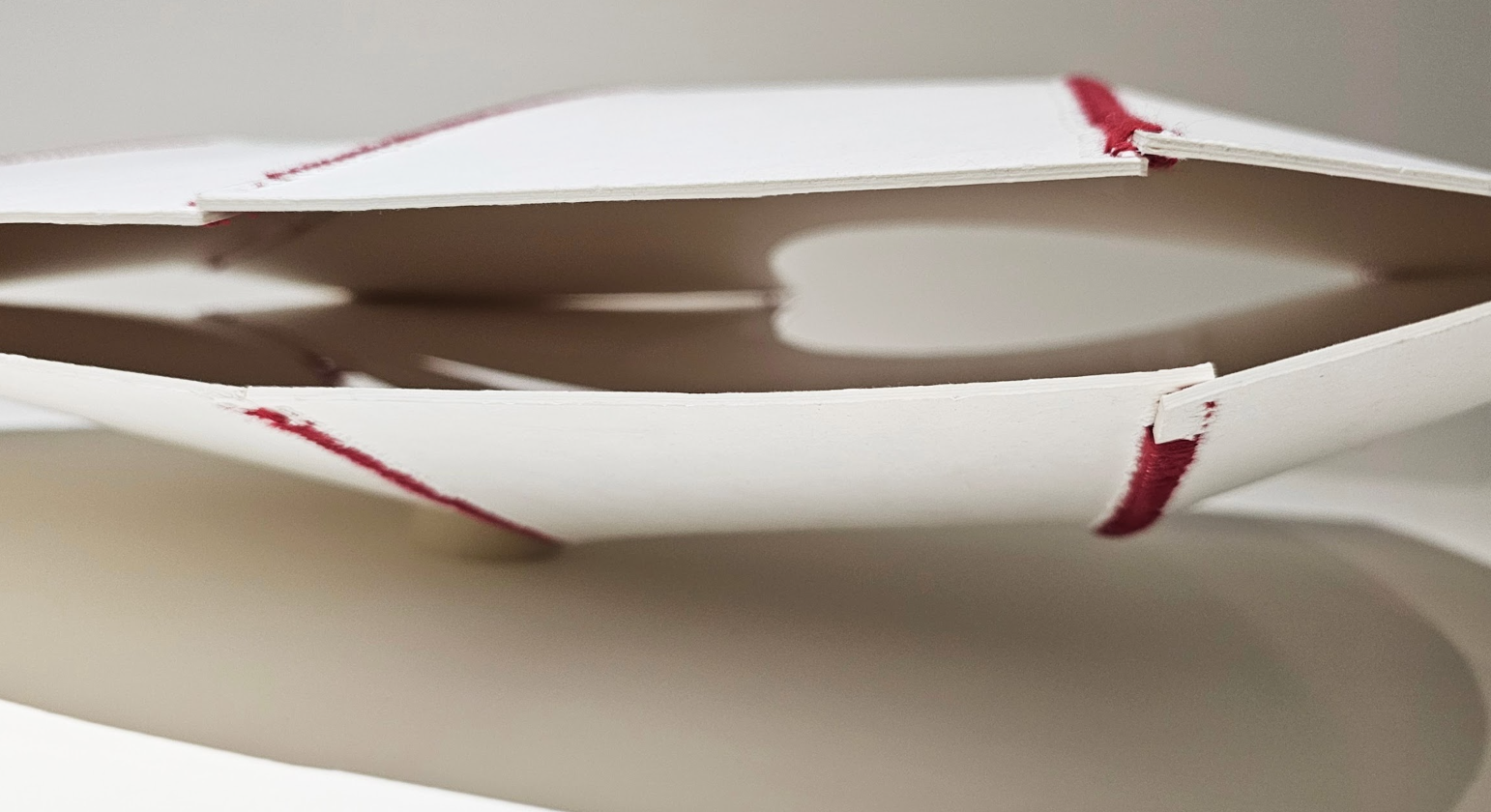
接著引入「縫線」的概念,作為身體介入空間的行動痕跡。縫線既來自縫補傷口的直覺動作,也像是一種觸覺導引,暗示身體如何進入、穿越與感知空間。
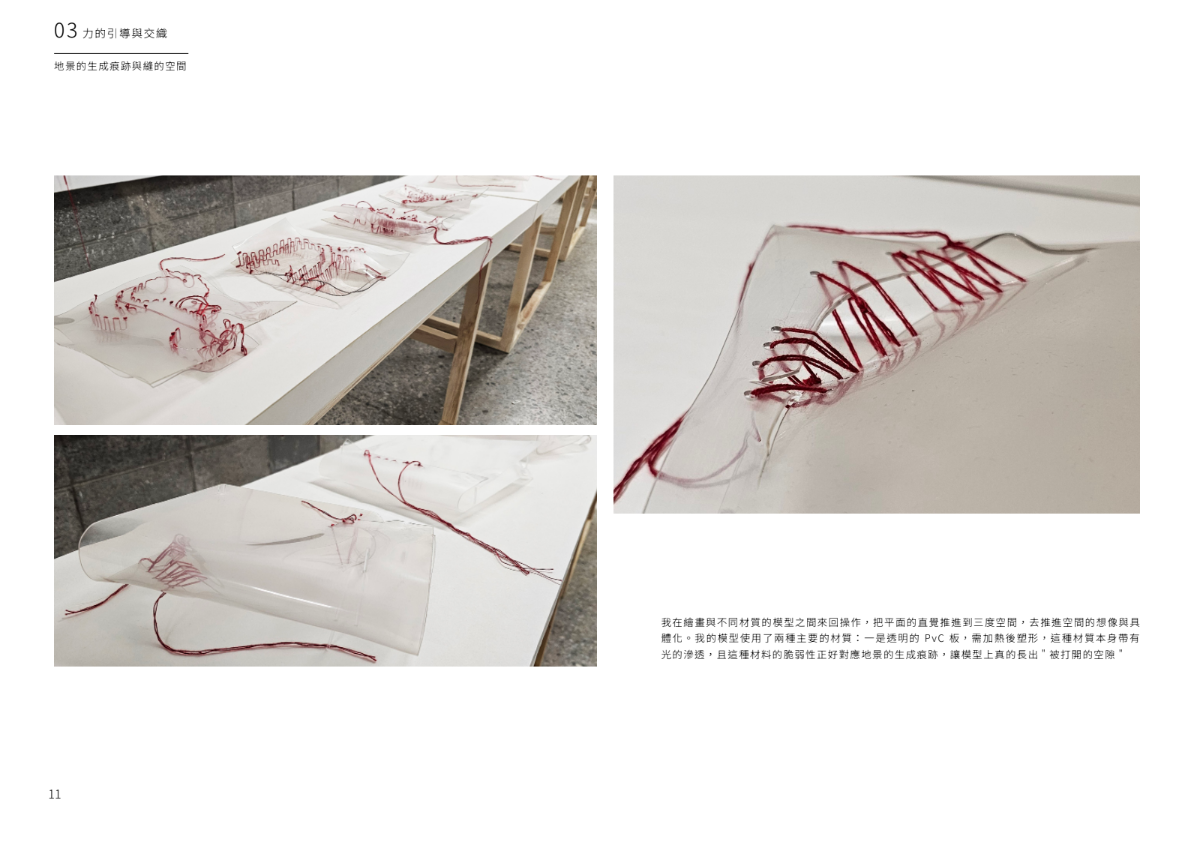
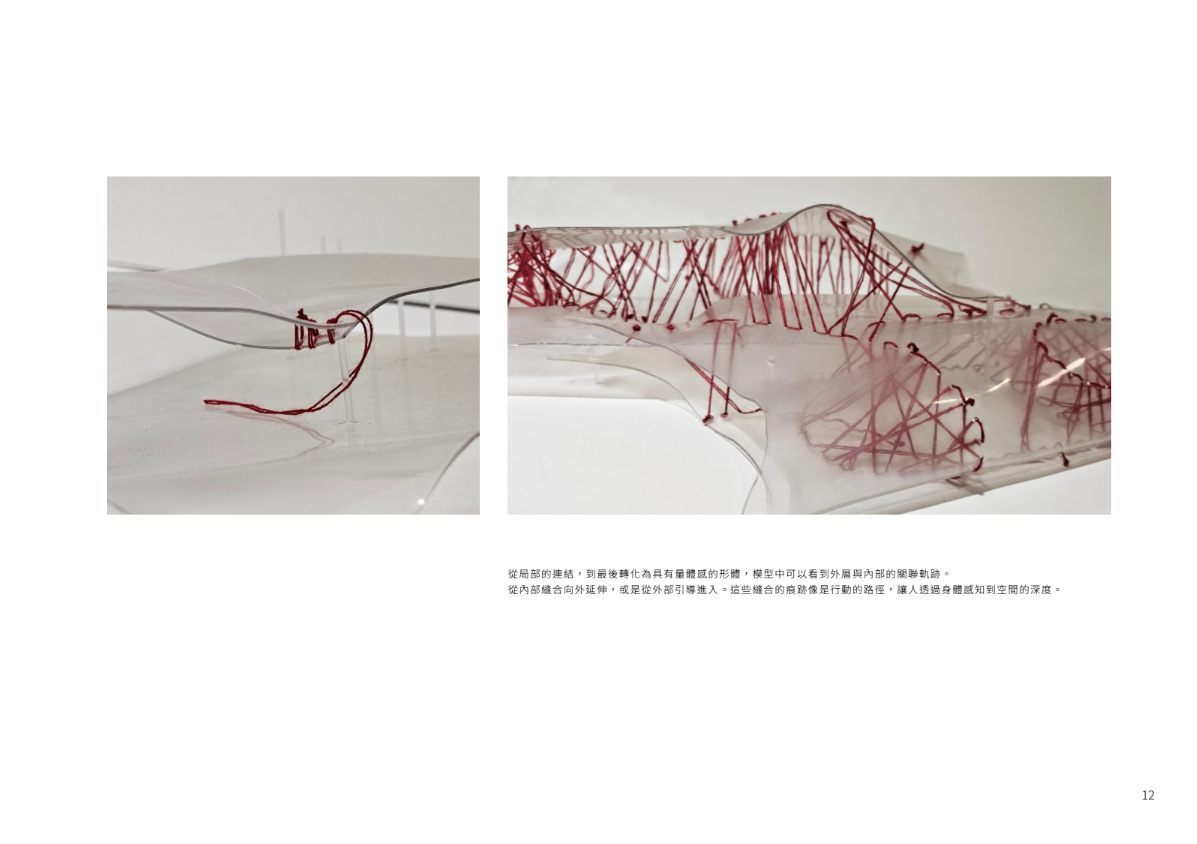
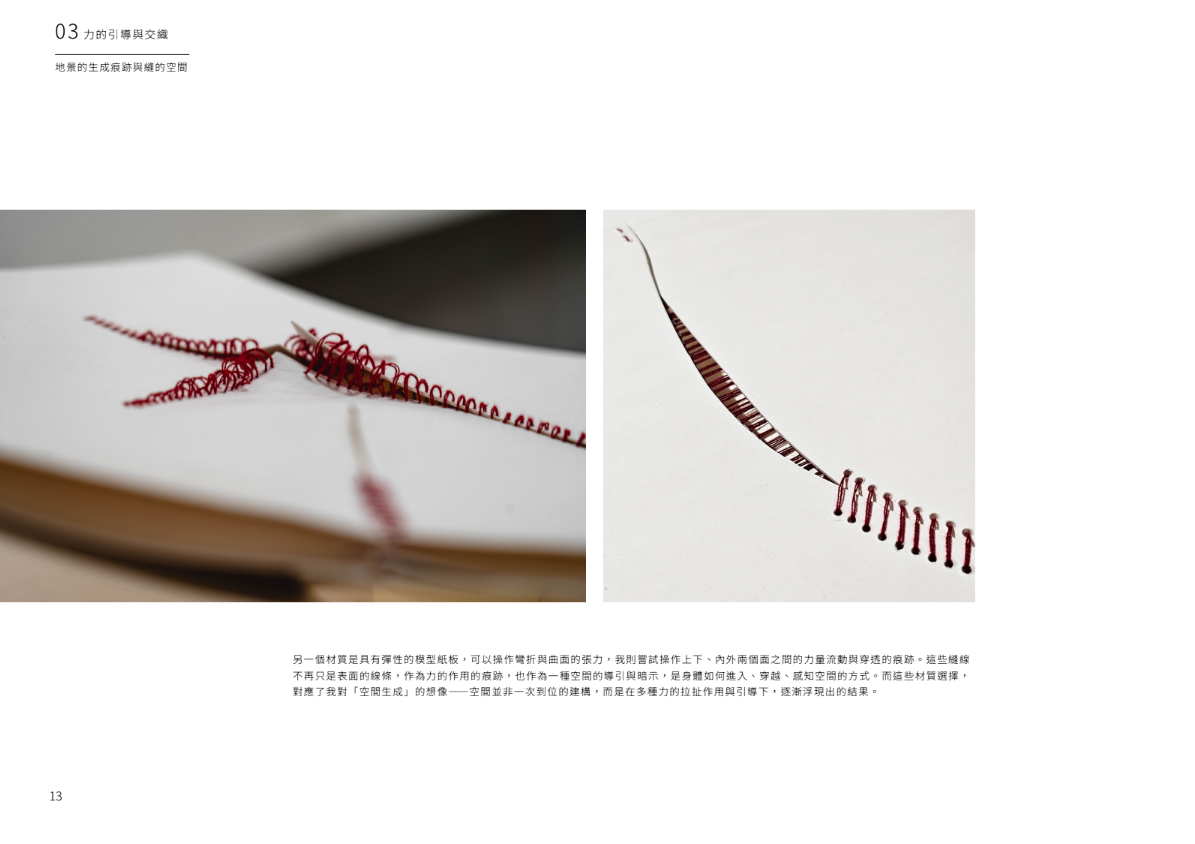
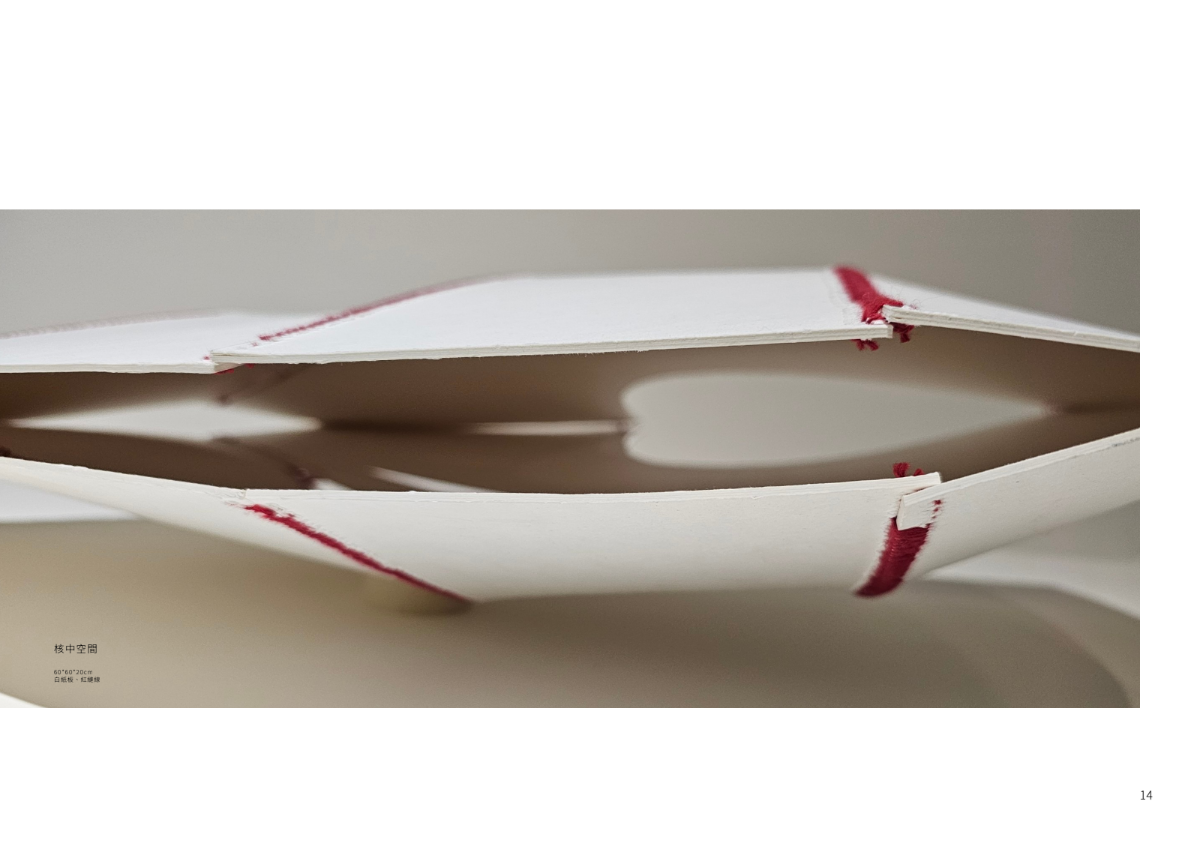
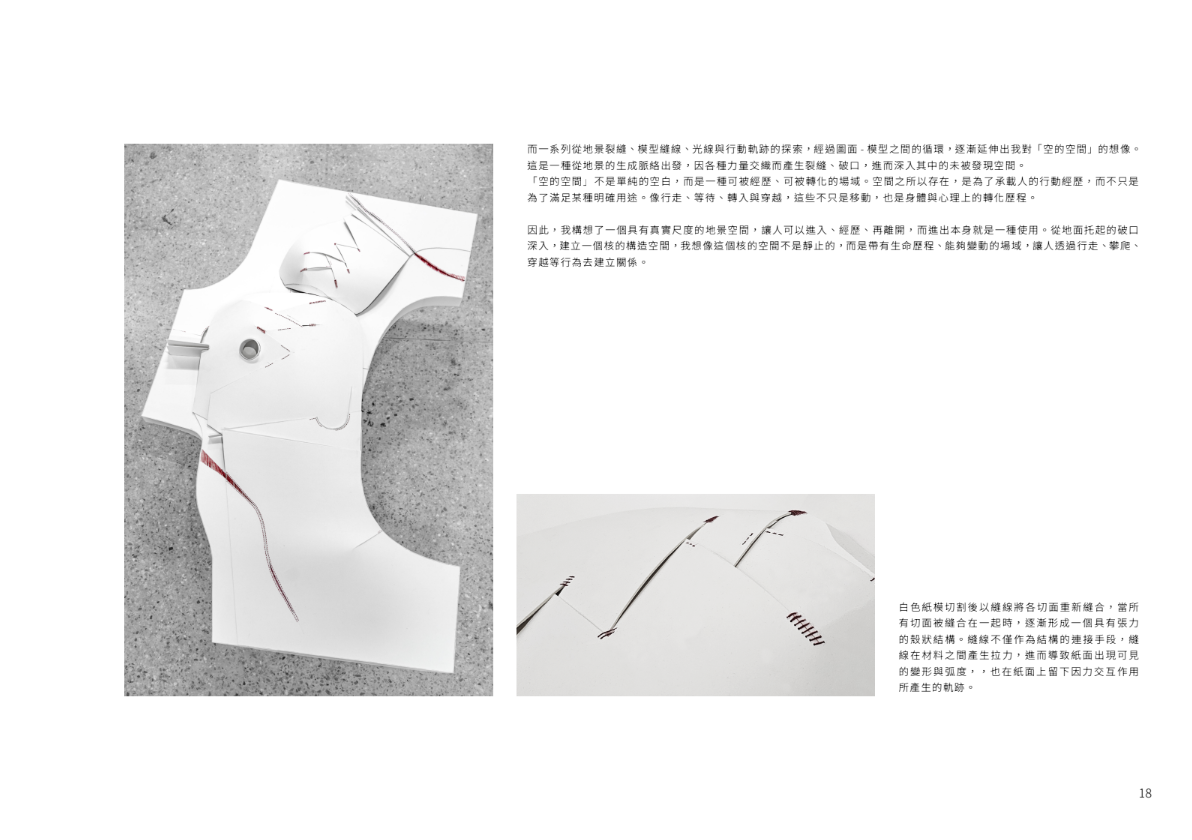
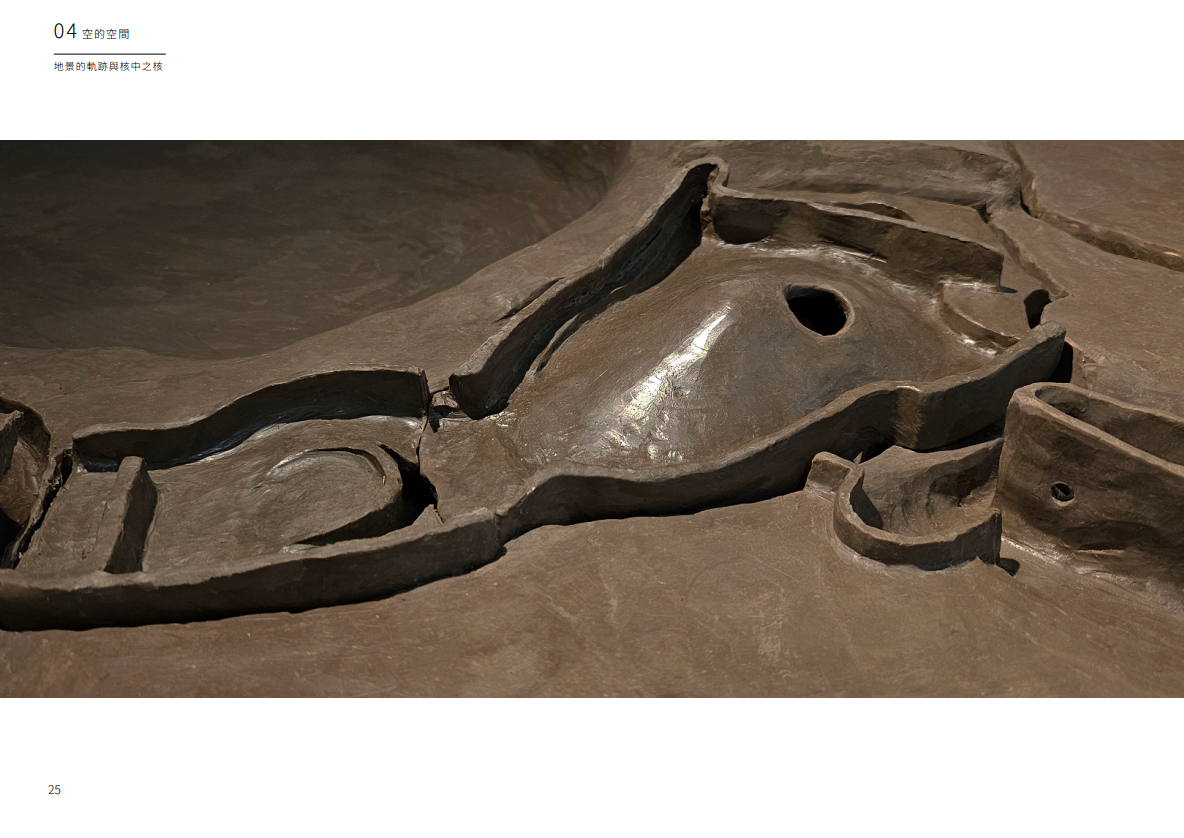
我使用PVC與紙板兩種材質來轉譯這些空間構想。其材質的脆弱與透光性對應地景的裂縫與滲透,而紙板的彈性則讓我操作空間上下、內外之間的張力與摩擦。縫線不再只是表面構圖,而成為身體與空間互動後留下的痕跡。
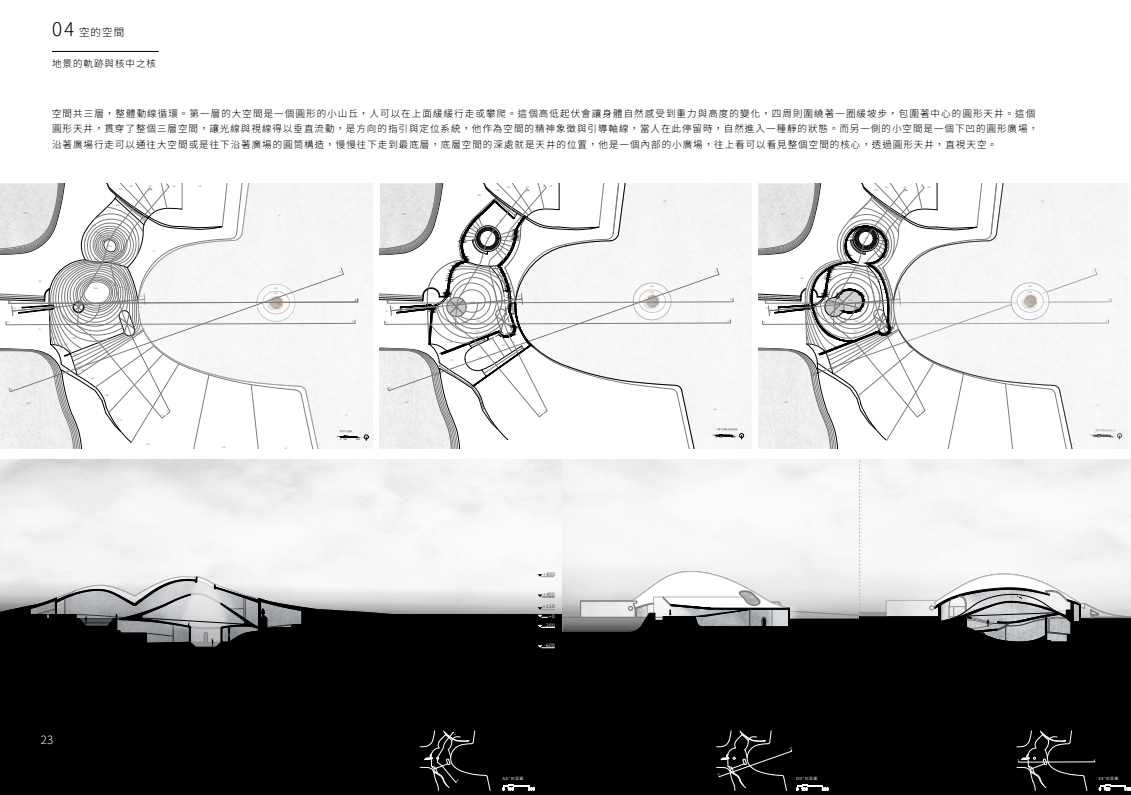
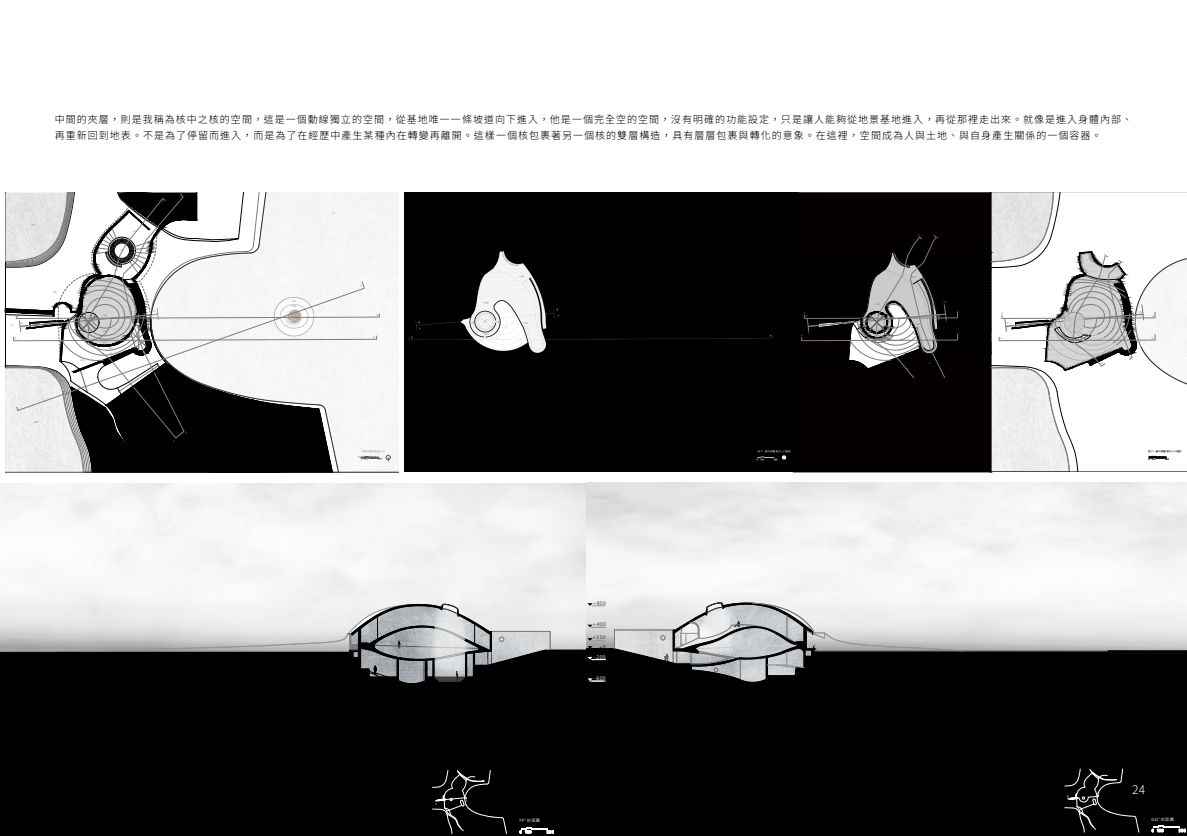
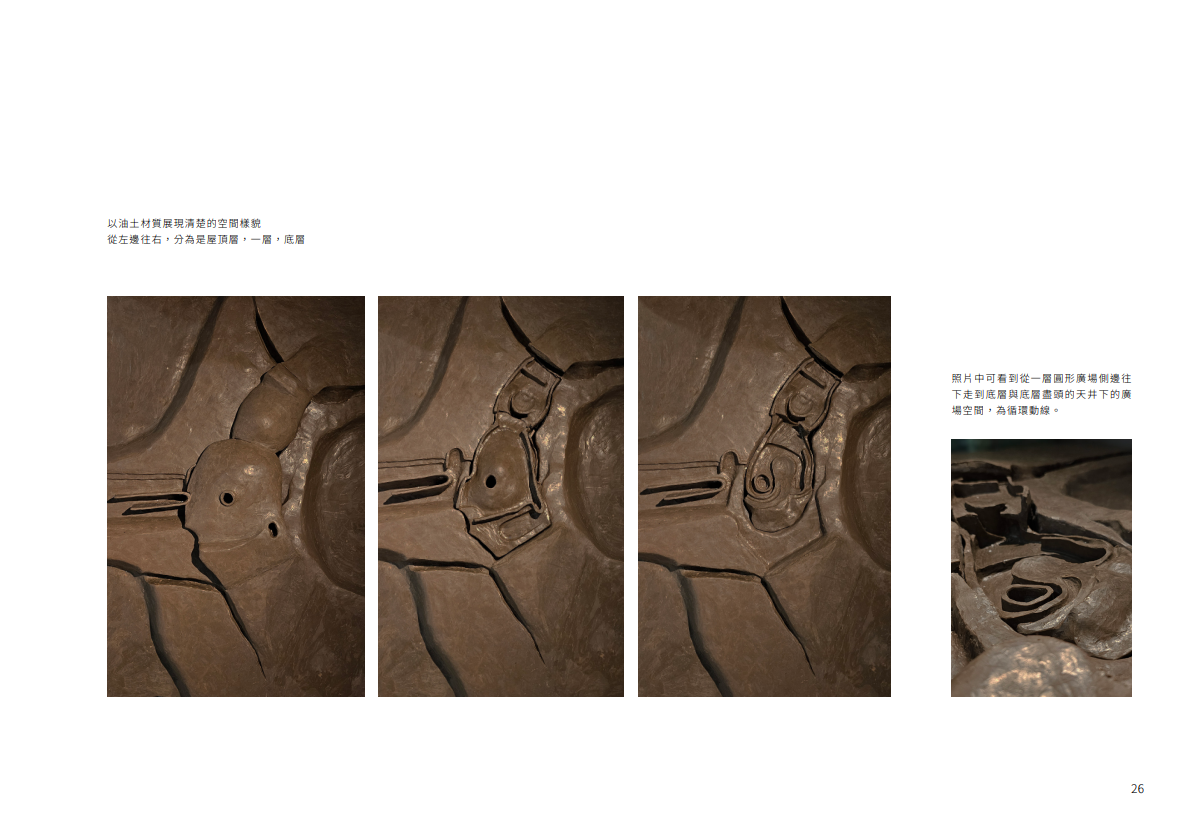
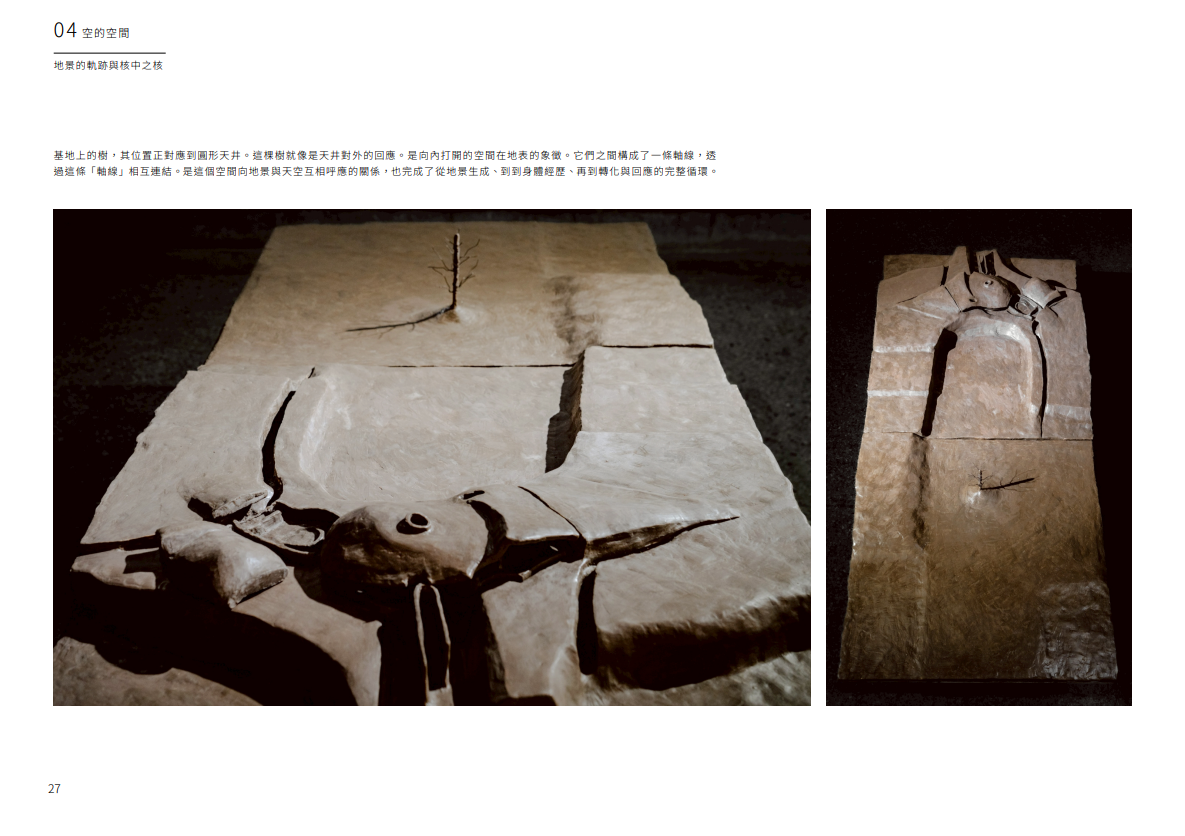
圖面與模型來回之間,逐步形構出「空的空間」的想像——一種可被身體經歷、心理轉化的場域。空間不是為了功能而存在,而是為了承載行走、穿越、停留等感知歷程的容器。
–
Suturing the Core — Tracing the Landscape
The project began with a photo taken from a moving train—vast landscapes swept past the window, prompting a question: Can landscape be more than a passive visual backdrop? Can it actively generate space?
Starting from the idea of land as a living body—shaped by geological pressure, natural layering, and human intervention—I explored how cracks, fractures, and upheavals on the surface become openings for potential space.
Through drawing, I captured this spatial intuition in flux—where light pierces through and traces flow, forming proto-spaces still in the making. These images invite the viewer’s gaze to enter, as if seeking a space to inhabit.
I then introduced the concept of suture—both as a gesture of healing and a tactile guide. It suggests how the body moves through, touches, and senses space.
Using PVC and cardboard, I translated these ideas into physical form. The fragility and translucency of materials echo the landscape’s cracks and permeability. The elasticity of cardboard allows tension and friction between interior and exterior, above and below.
Sutures become not just surface marks but traces of the body’s interaction with space. Between drawings and models, an imagination of “empty space” emerged—not defined by function, but by movement, crossing, and presence. A space to be felt, traversed, and transformed.