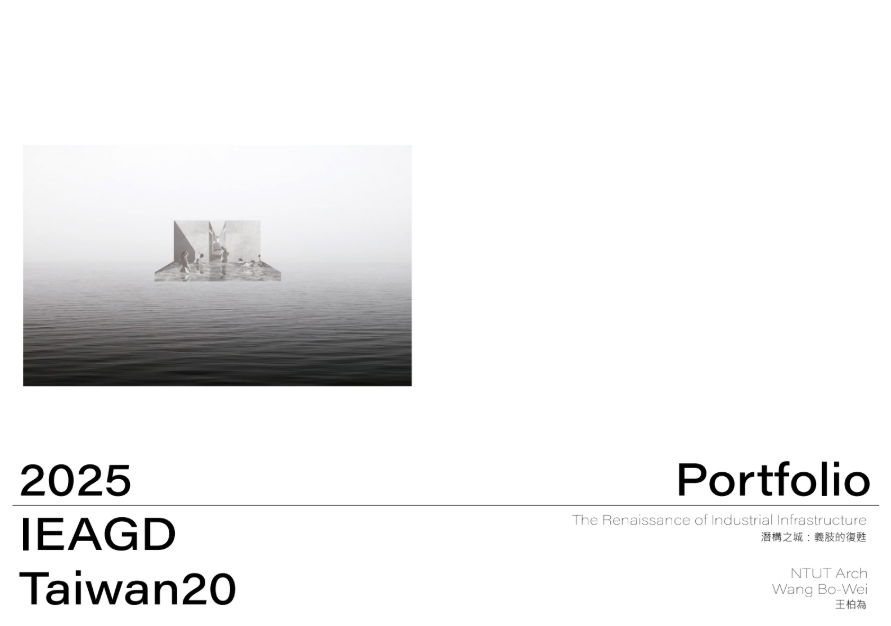
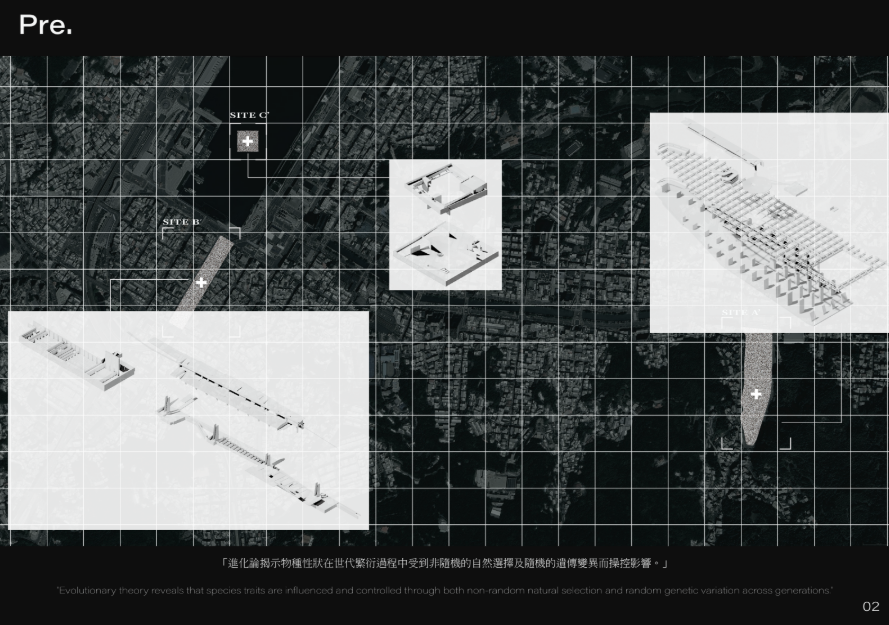
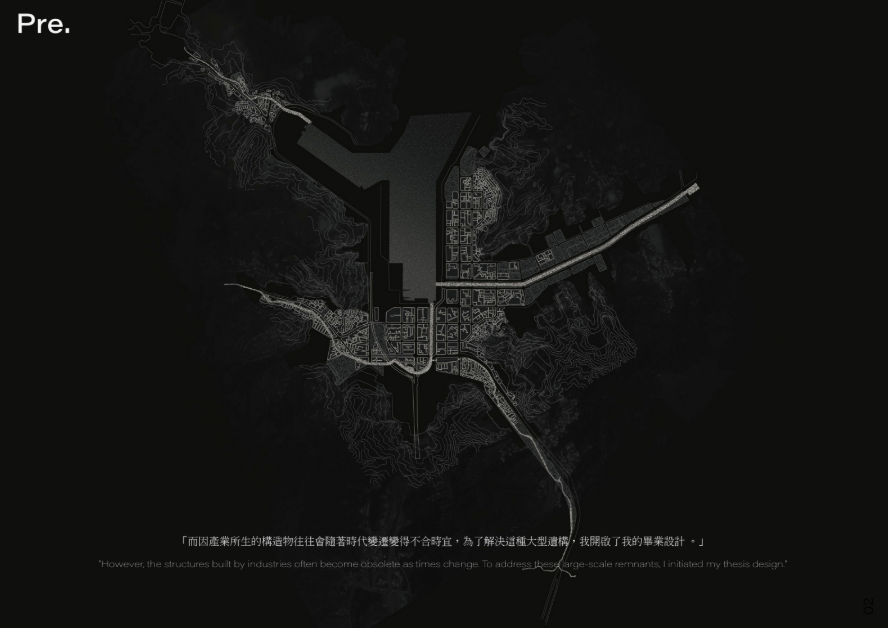
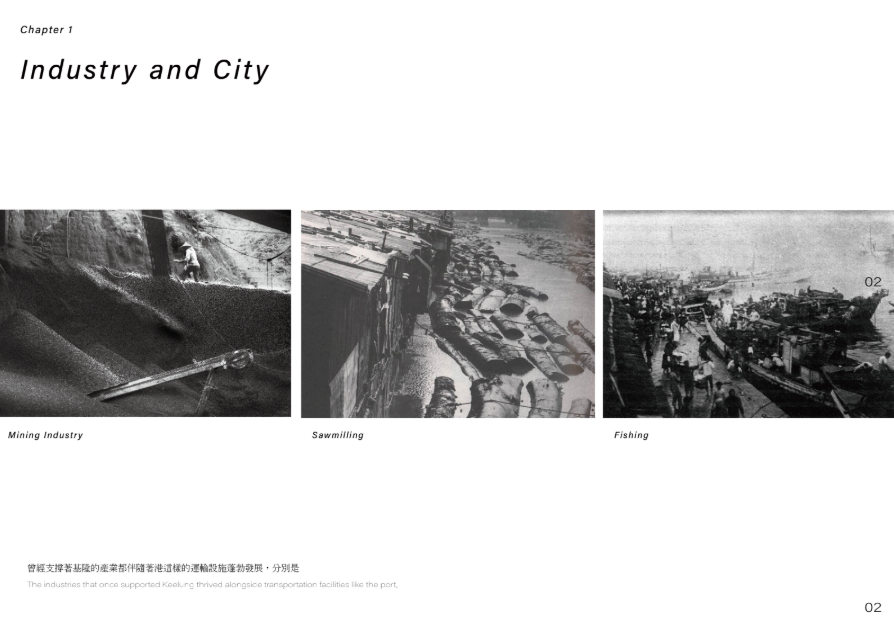
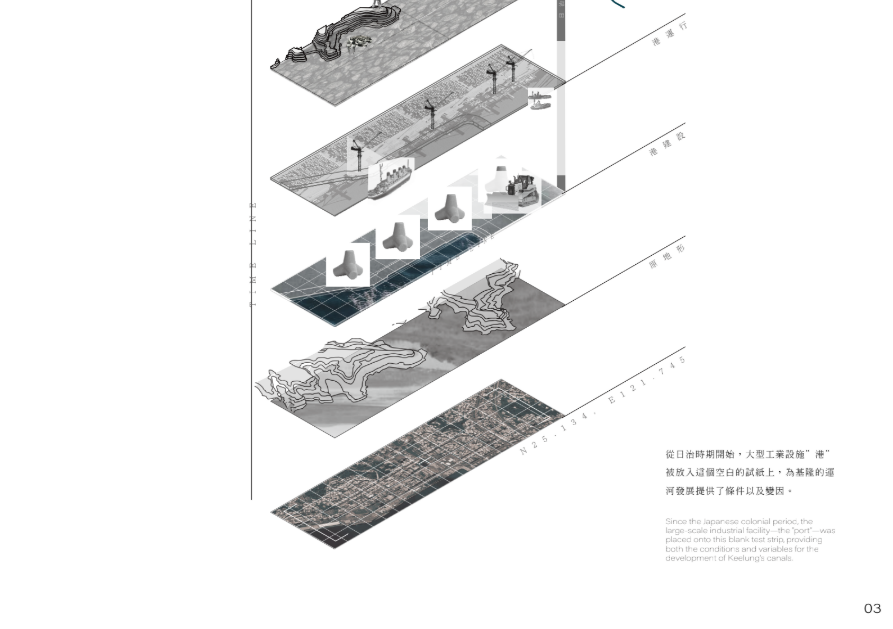
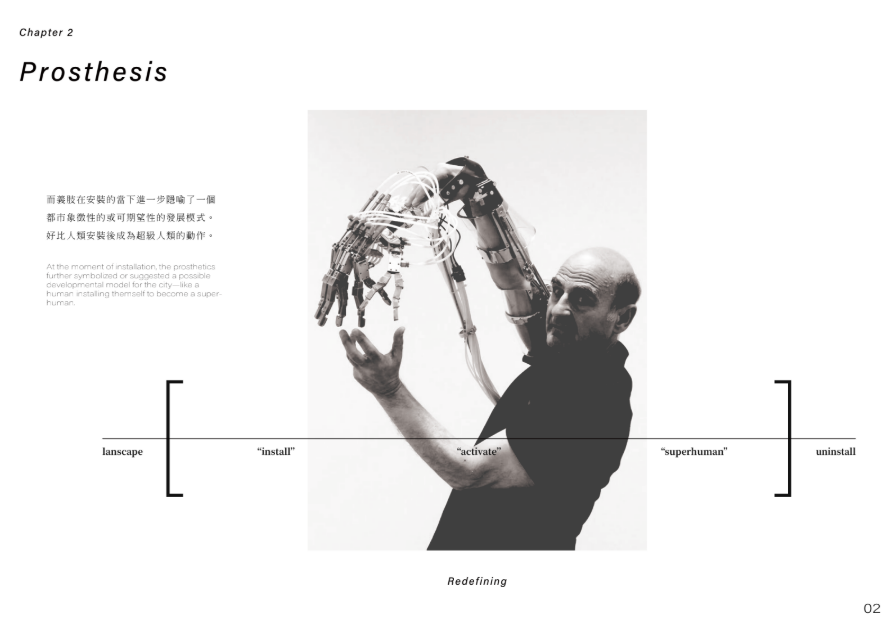
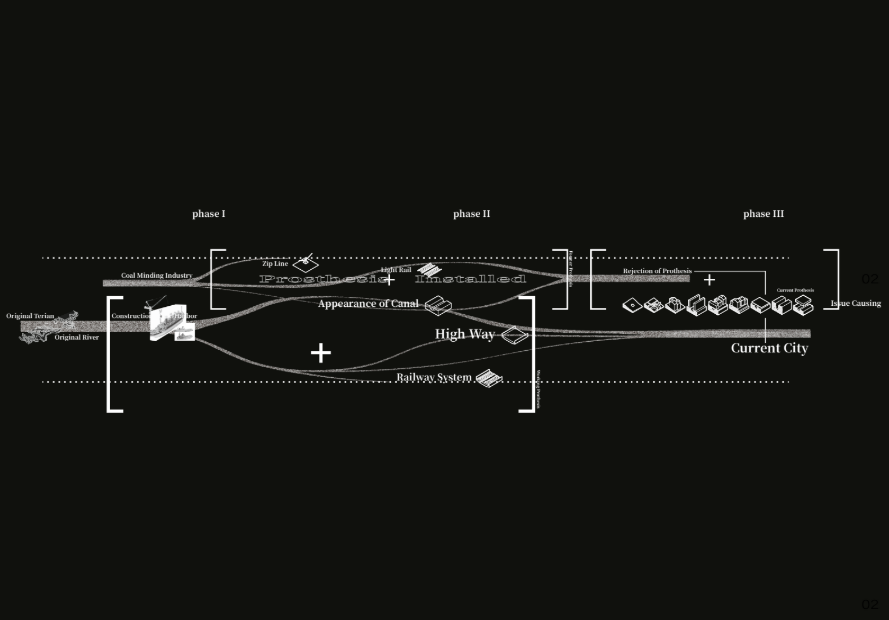
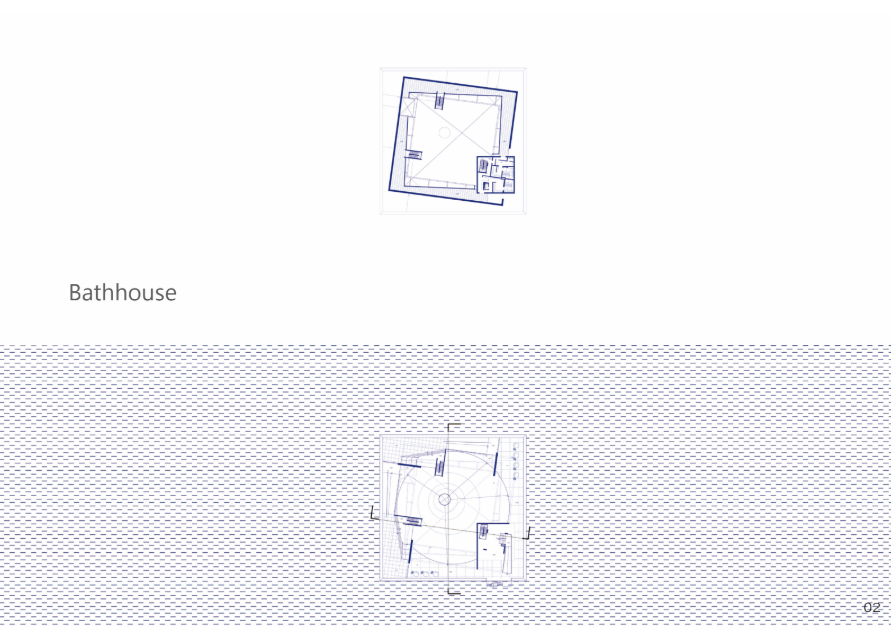
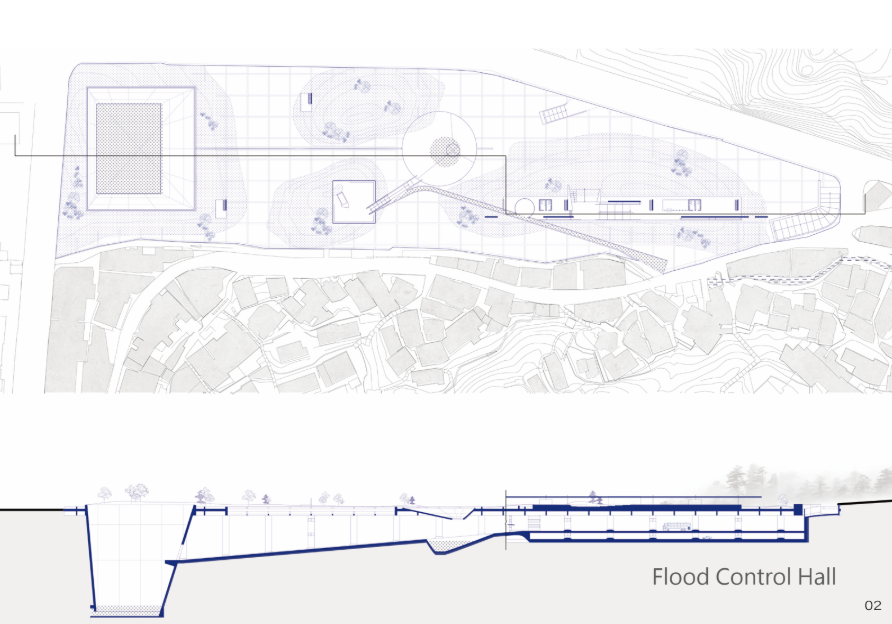
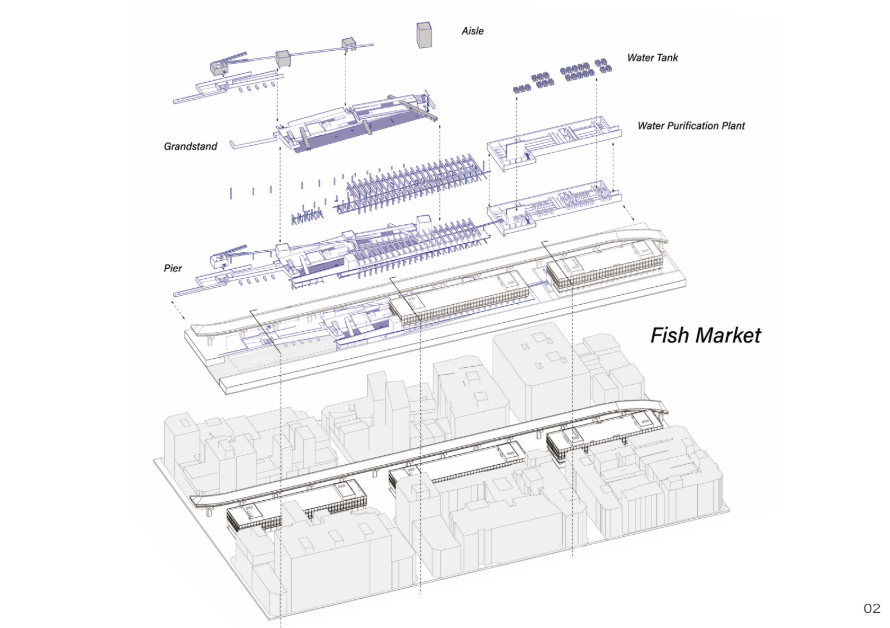
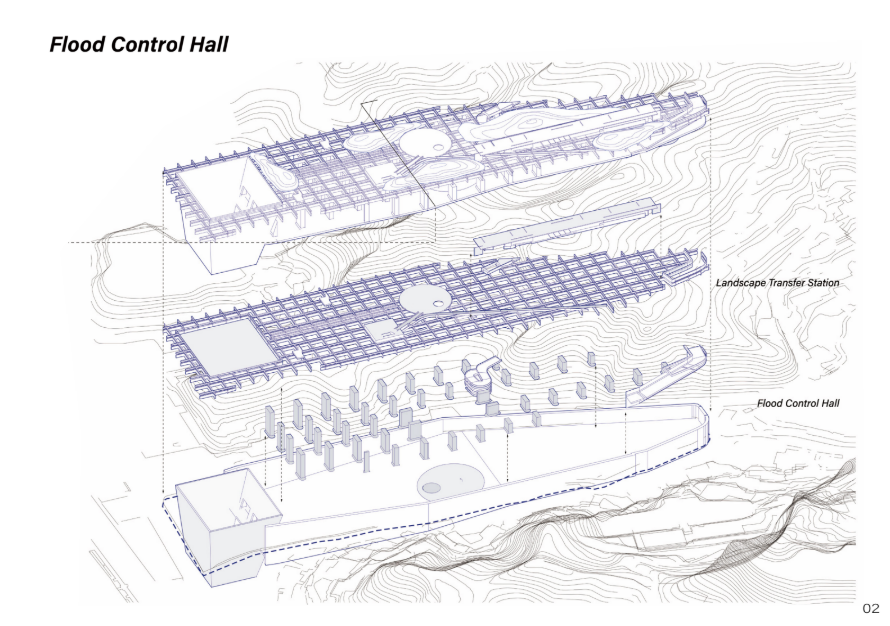
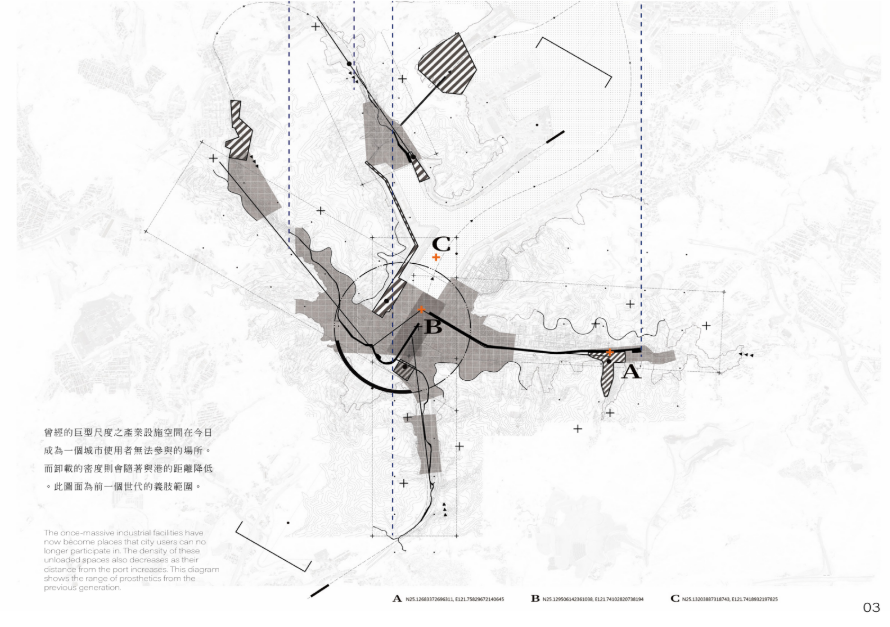
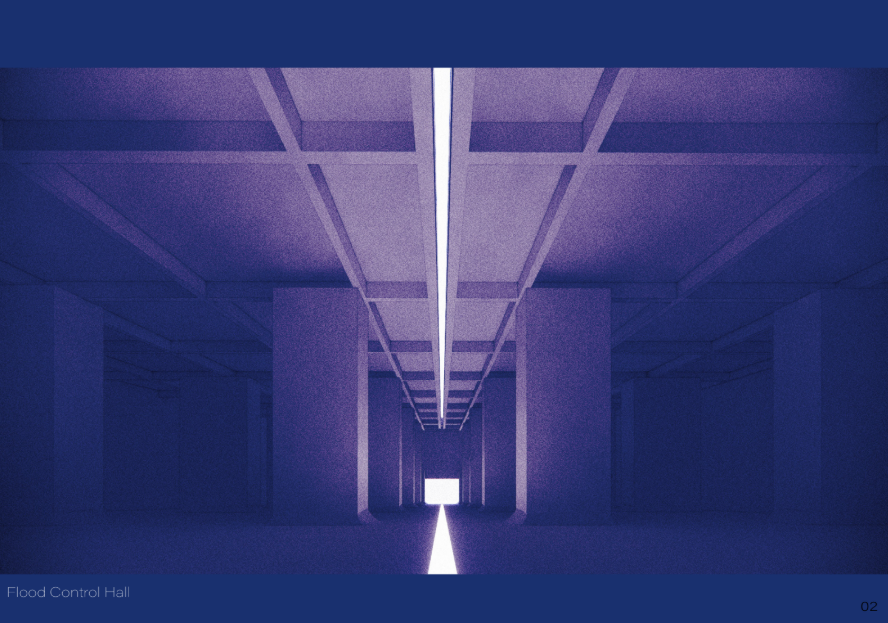
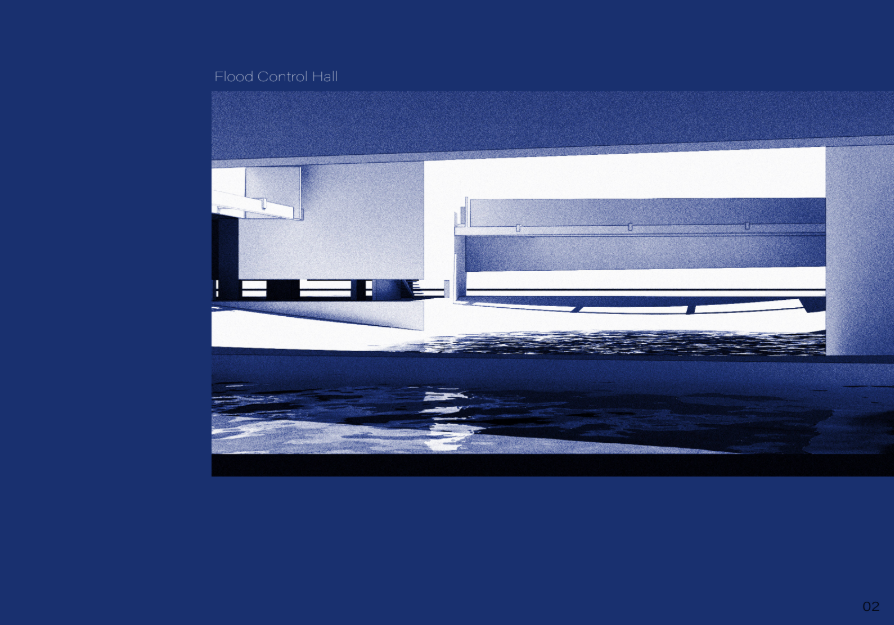
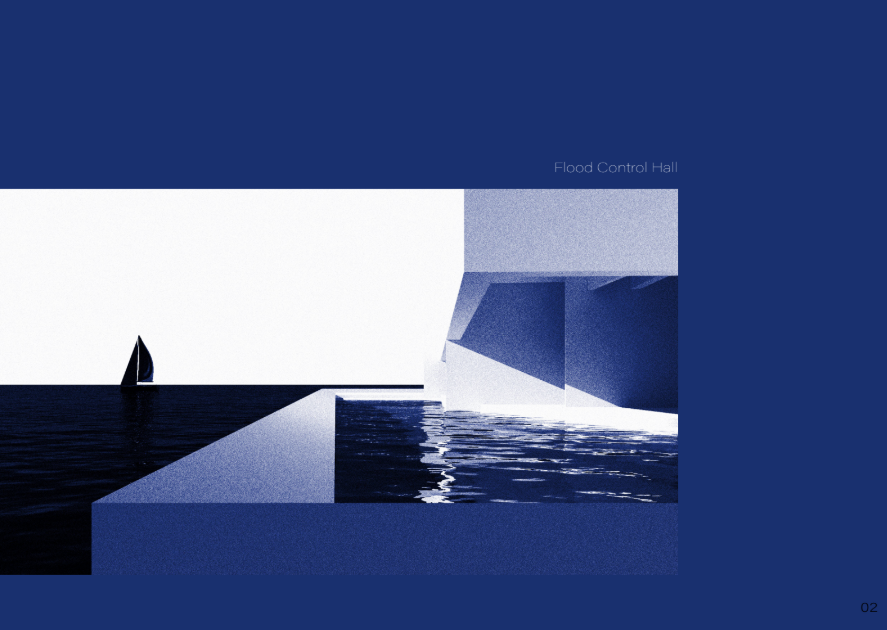
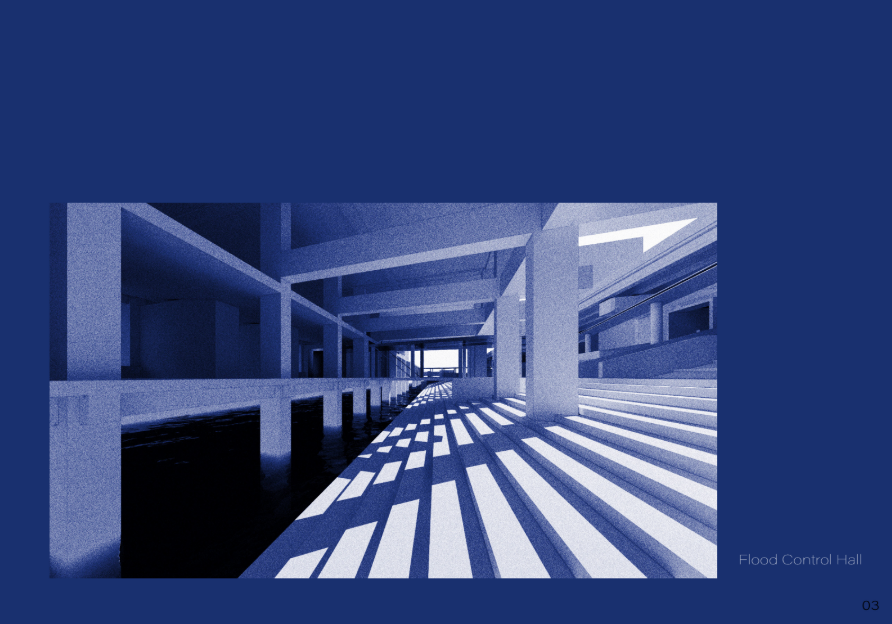
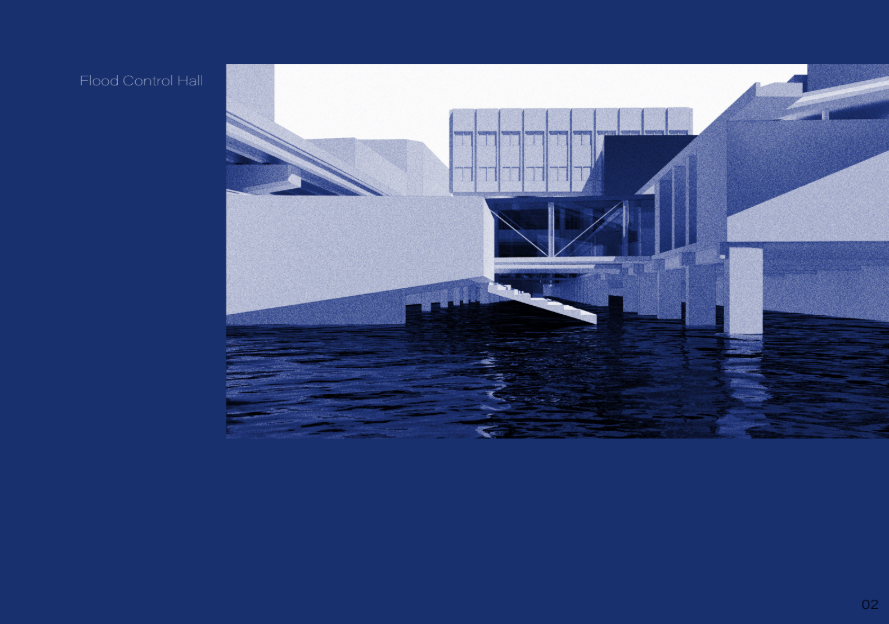
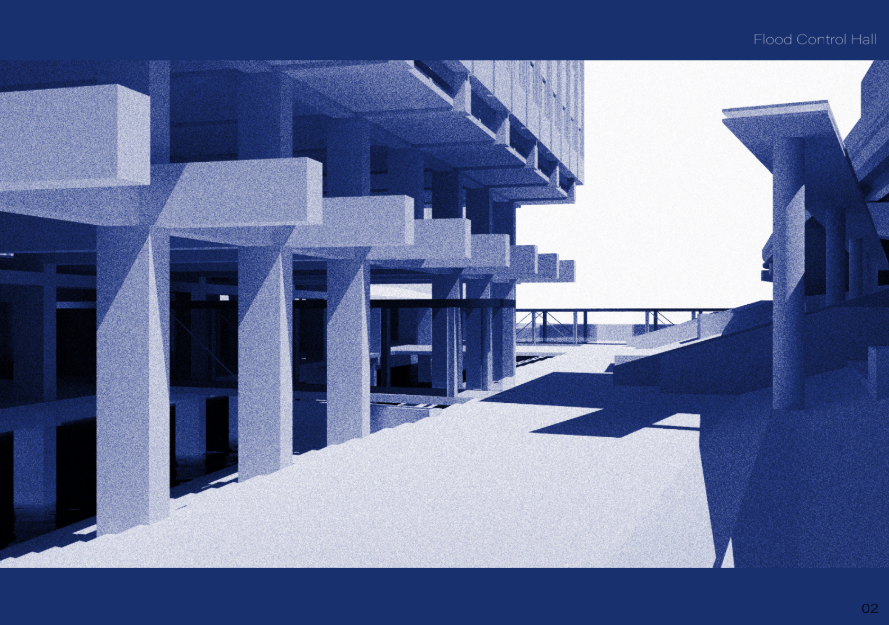
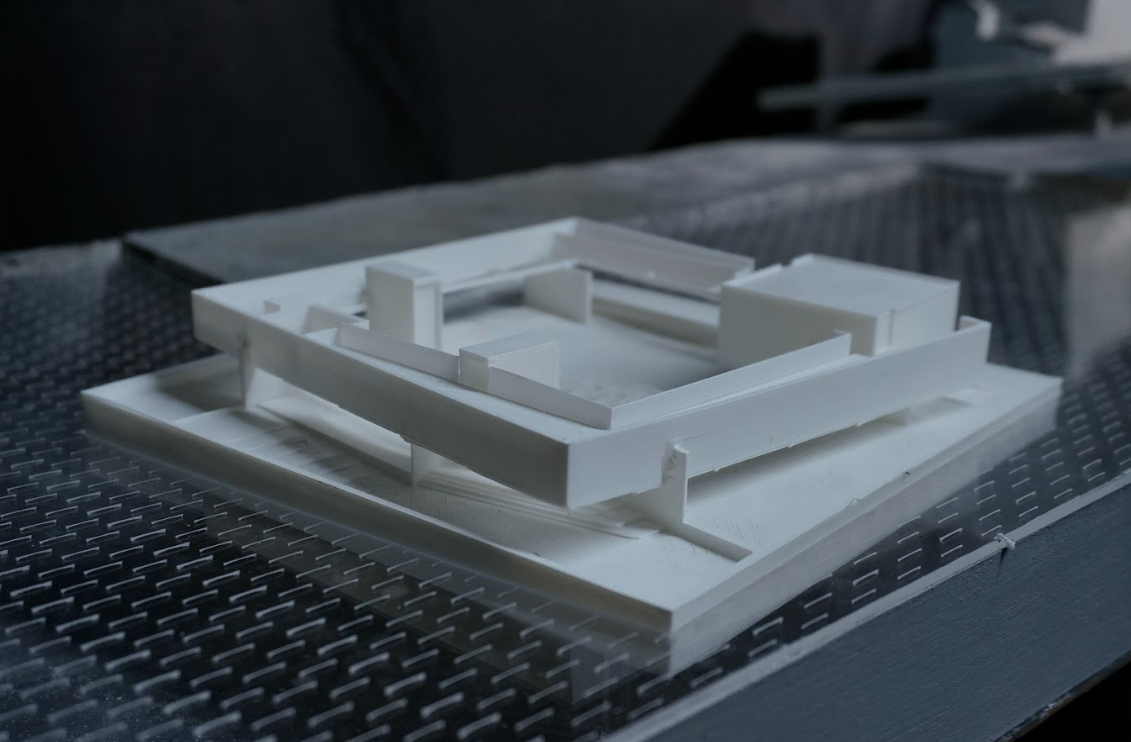
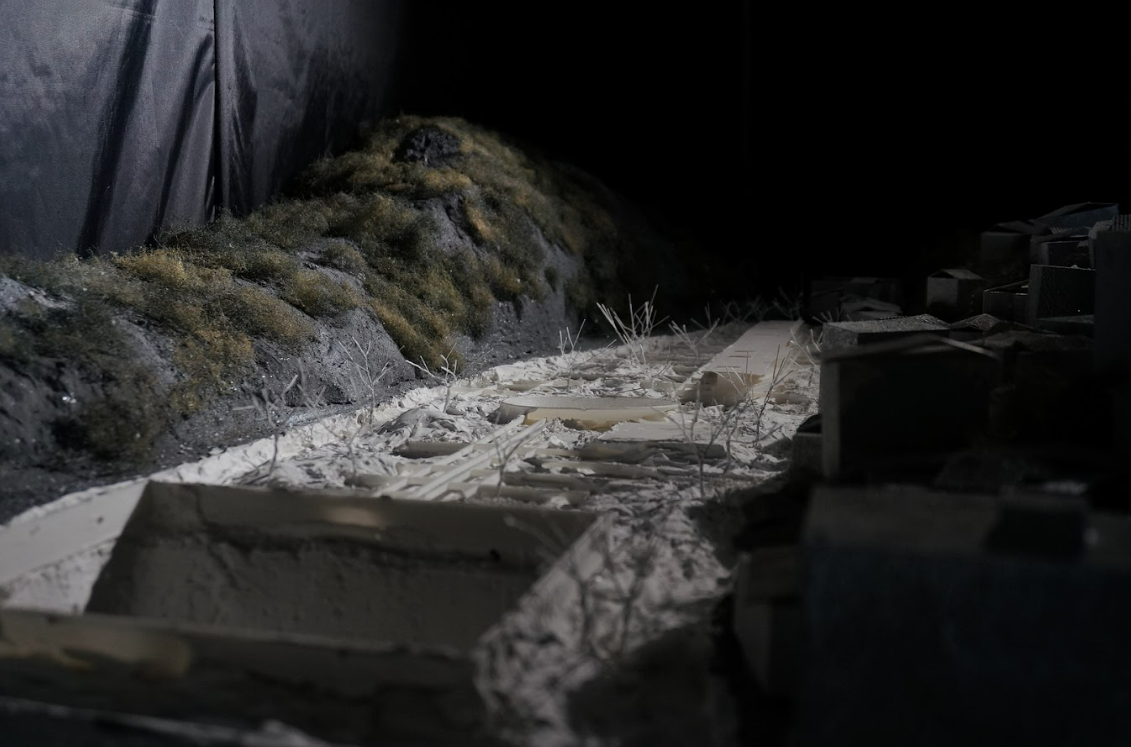
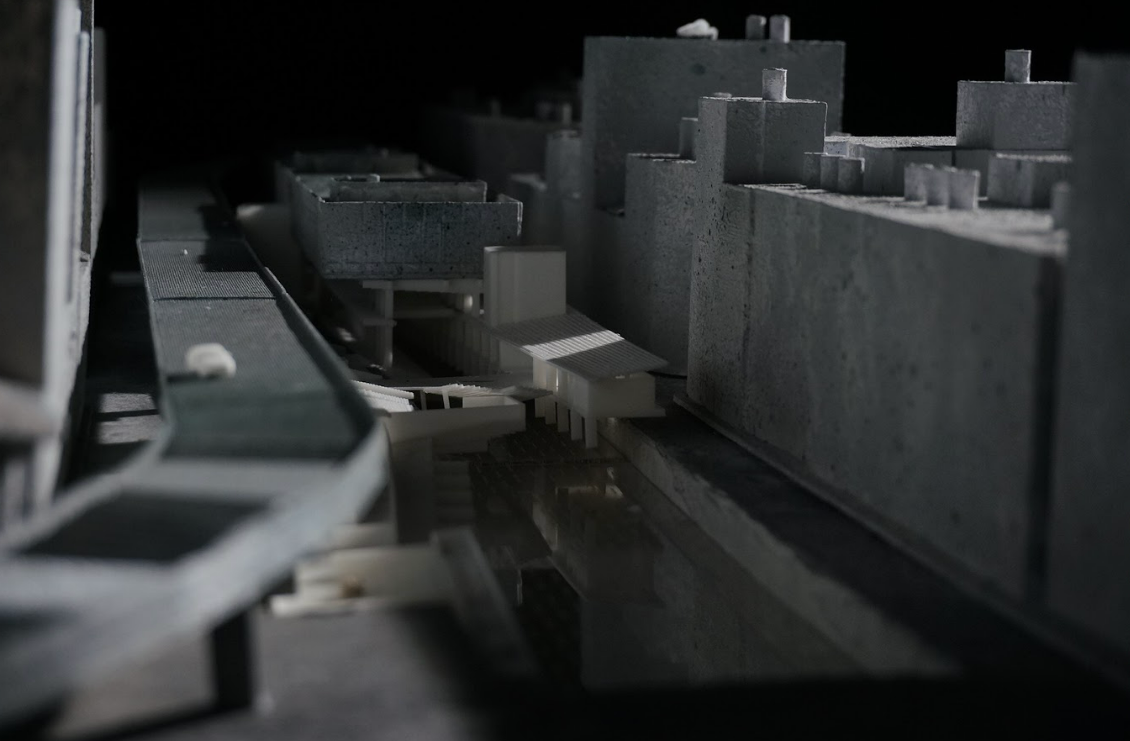
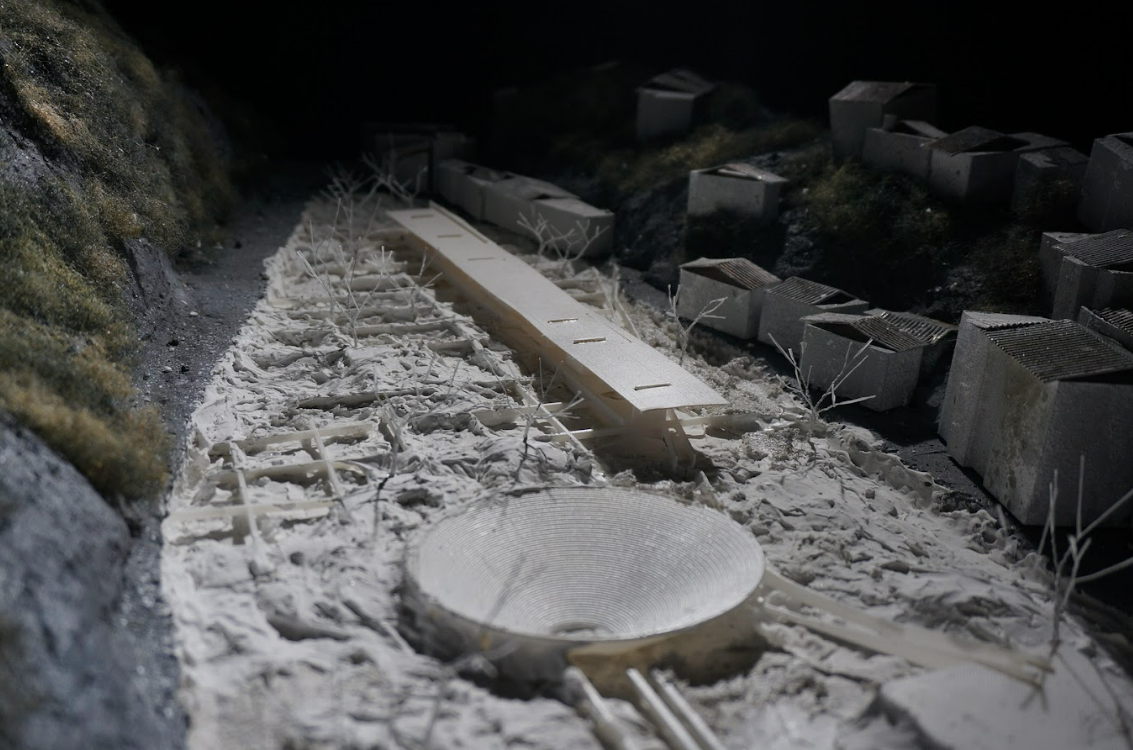
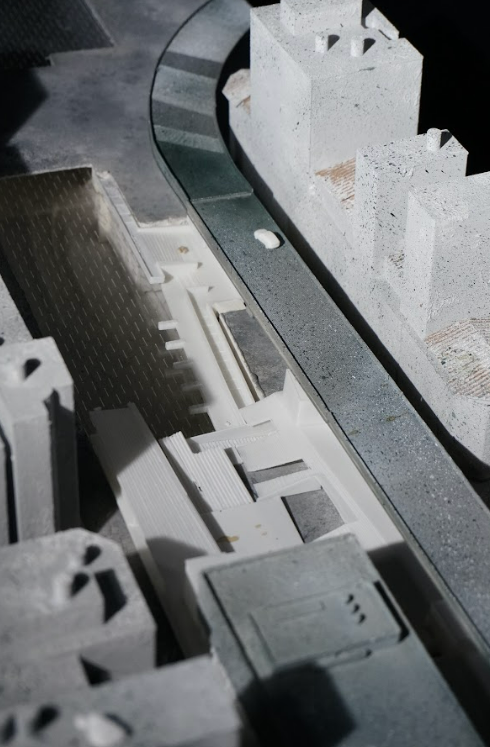
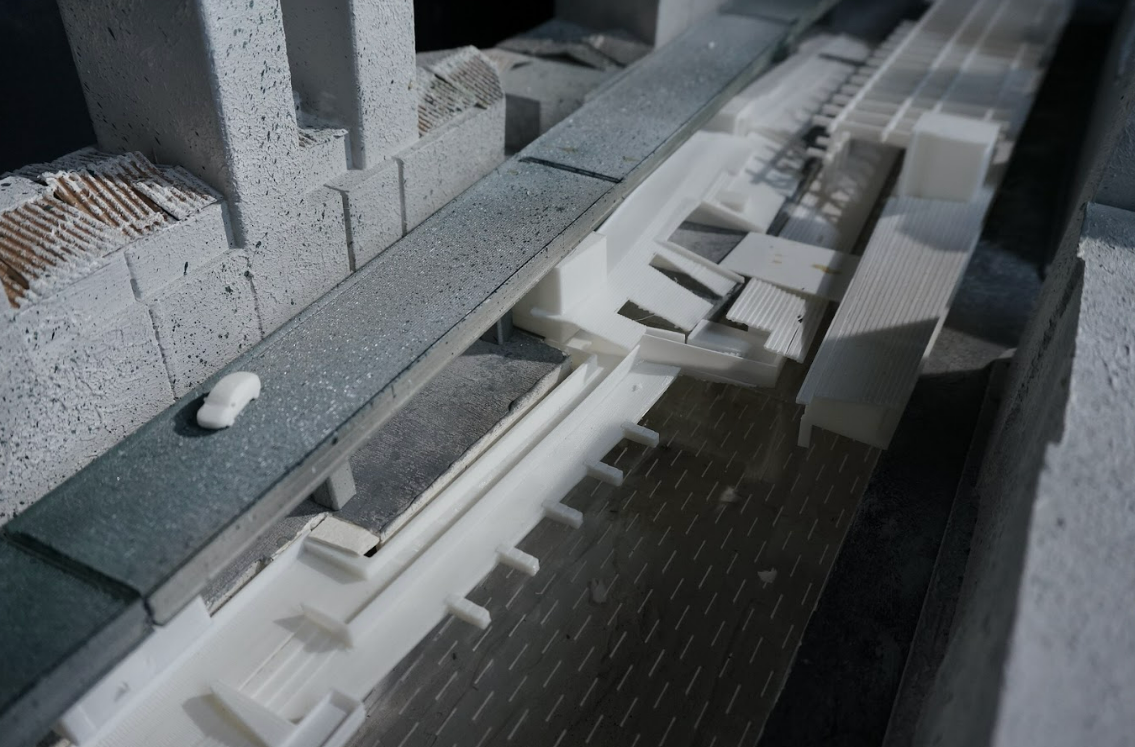
基隆自日治時期開始,就注定了他與港為不可分割的生命體。基礎設施的建成為基隆帶來產業上及運輸上的改變,甚至是控制都市紋理的條件。扮演如同遺傳學中控制未來機制走向,基因的角色。而人類自詡摸透進化機制,配合產業將周遭自然紋理安裝上強大的義肢,增加港與周遭產業的連結,使其原有的功能升級,進化成超級物種。但曾經的巨型尺度之產業設施空間在今日隨著人口增生而覆蓋並成為一個城市使用者無法參與的場所。義肢遭褪去,扁平化的場域以一種無法理解的狀態支撐著這個城市的經濟與產業。
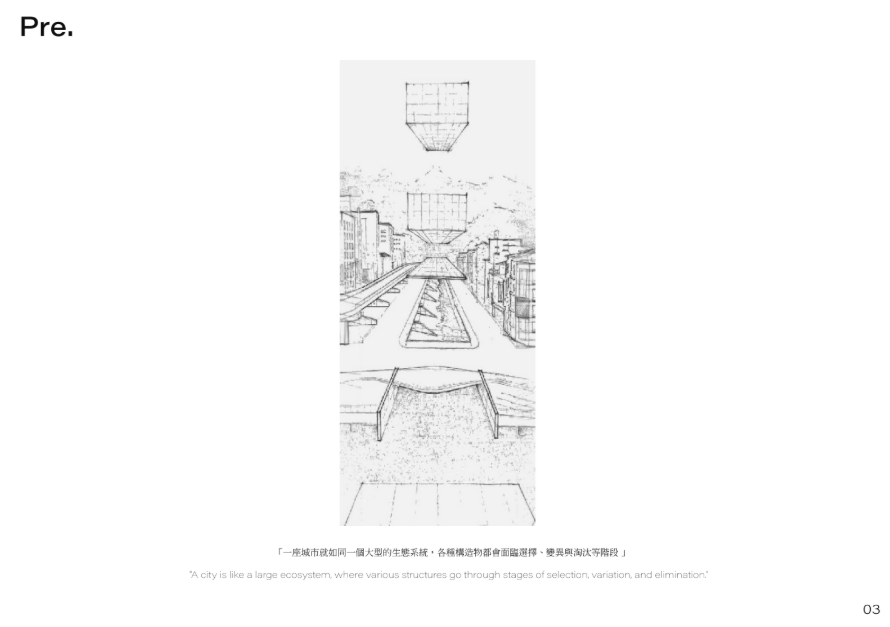
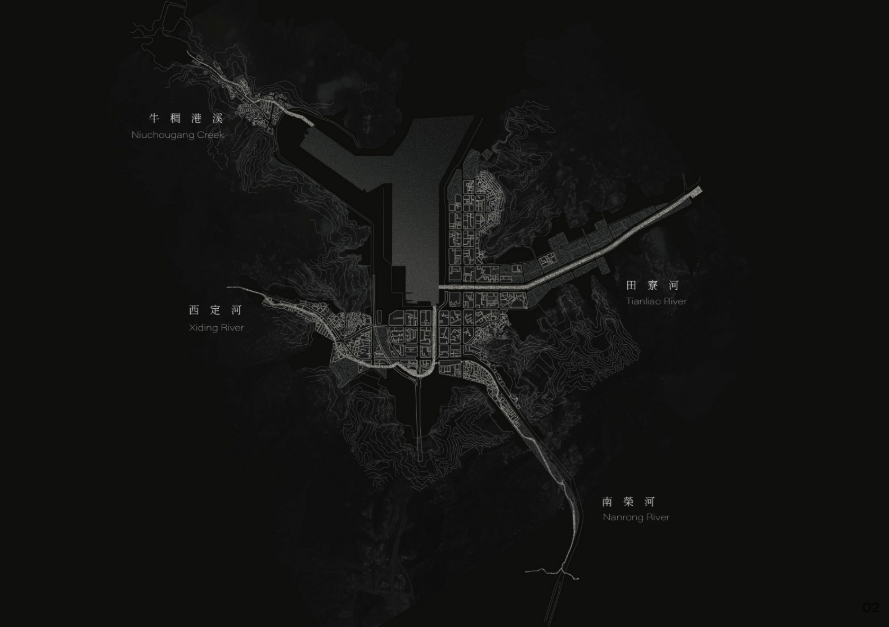
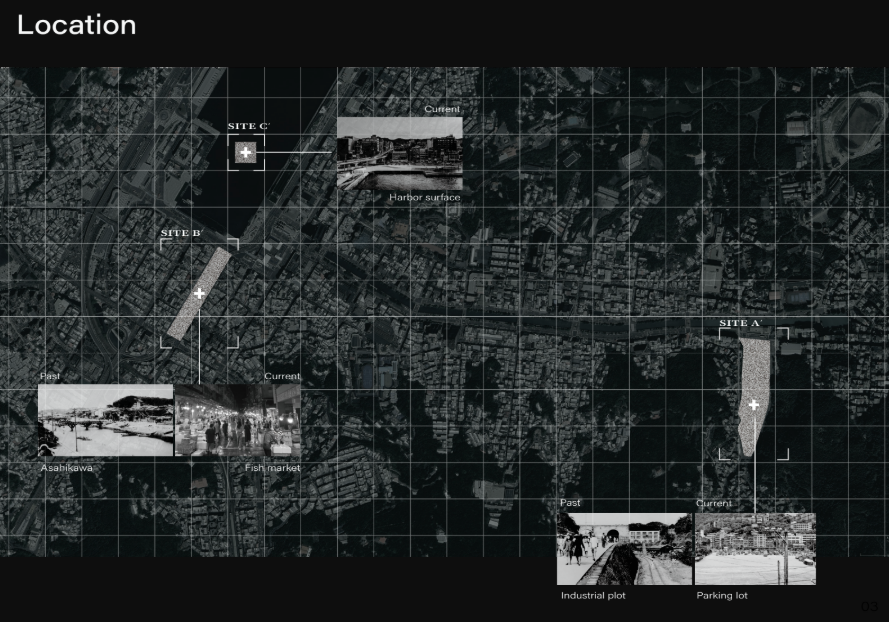
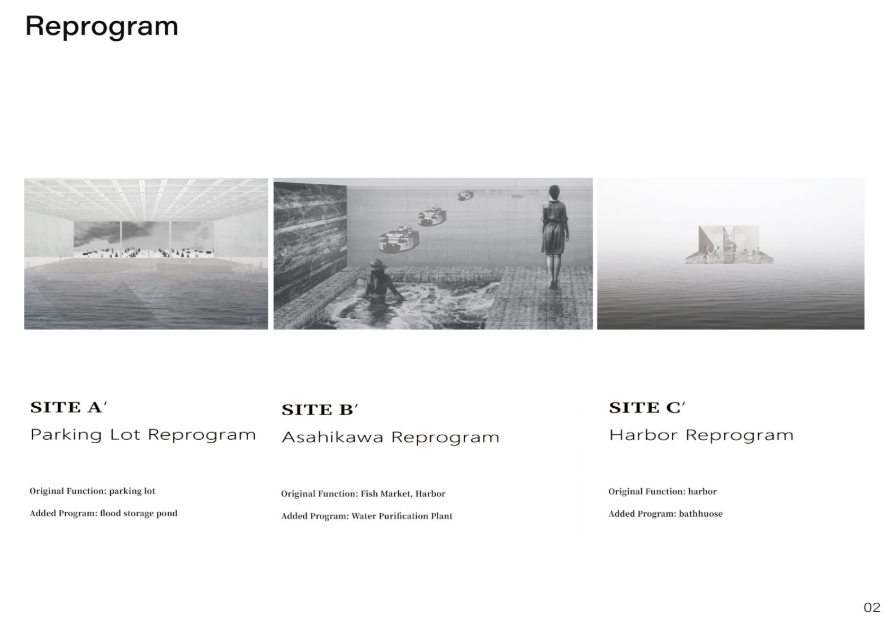
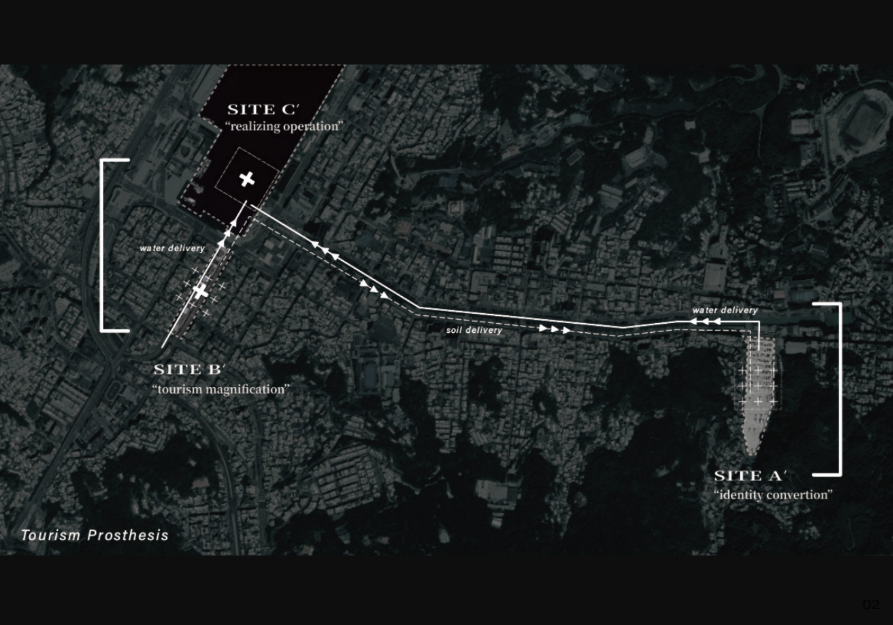
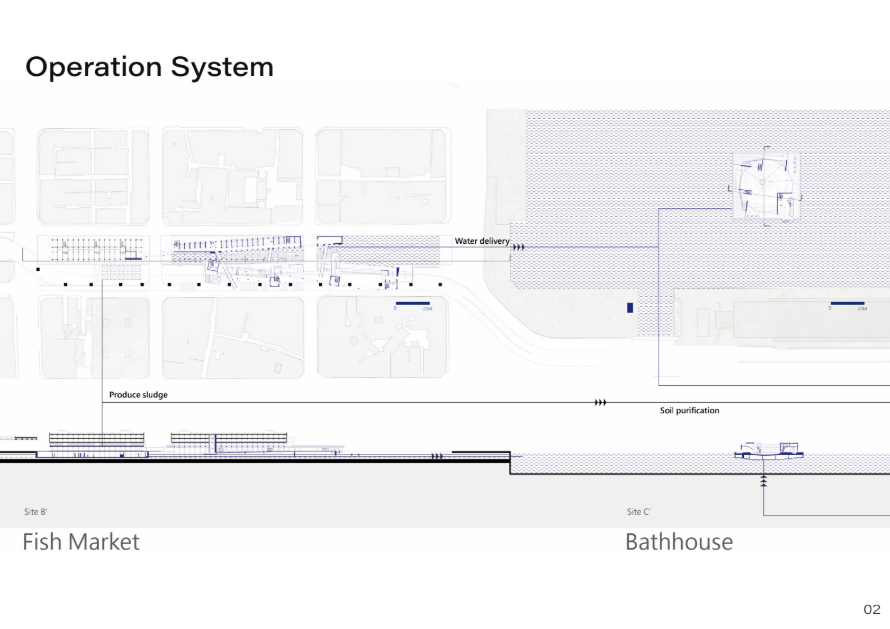
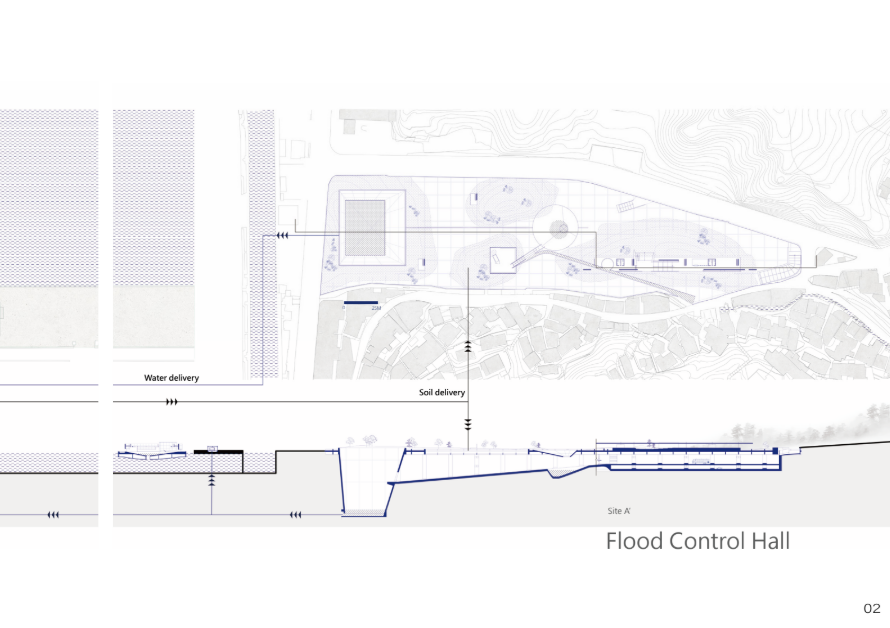
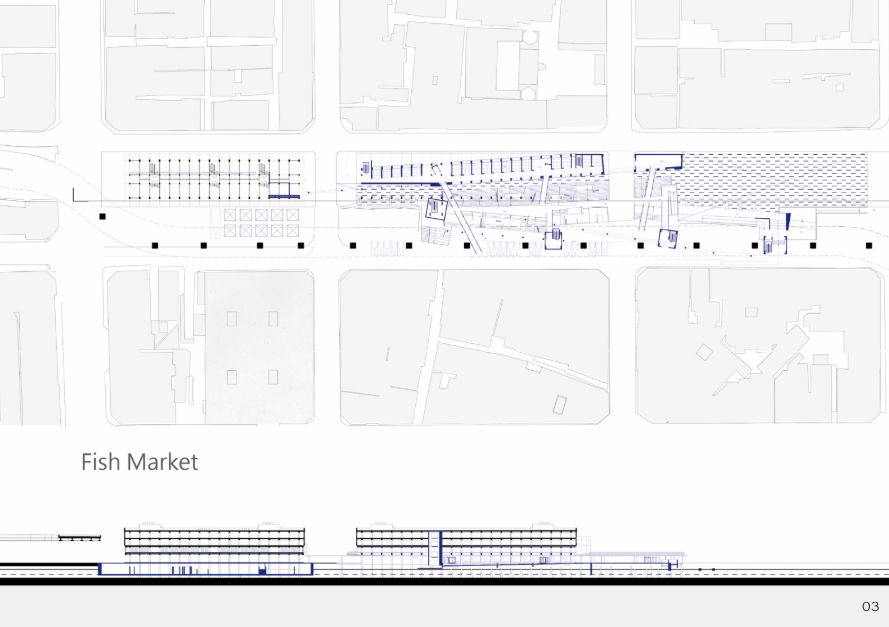
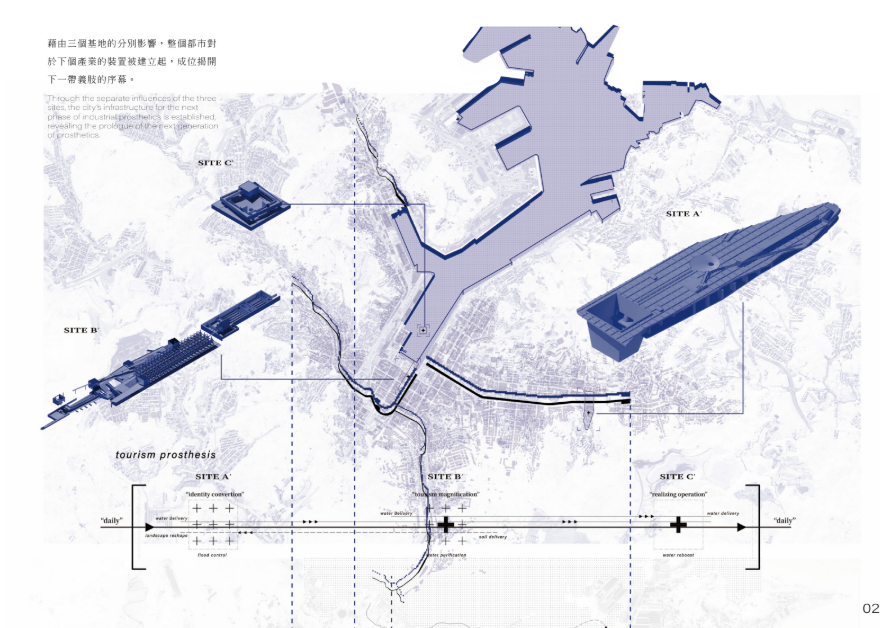
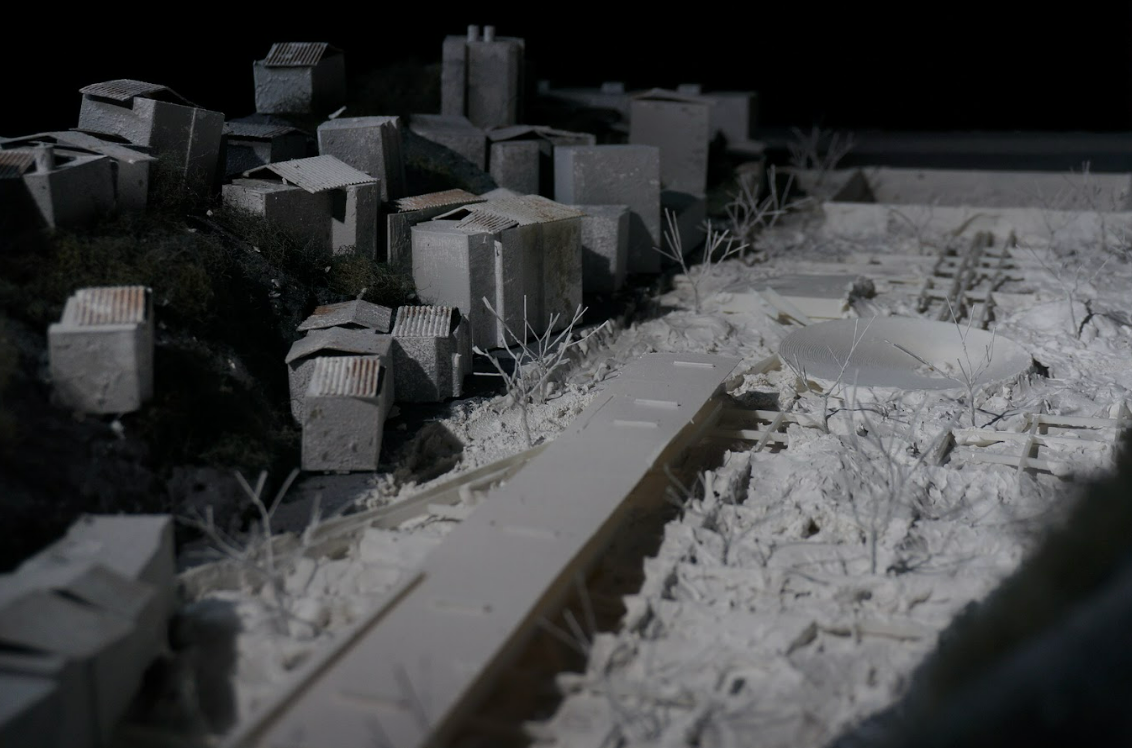
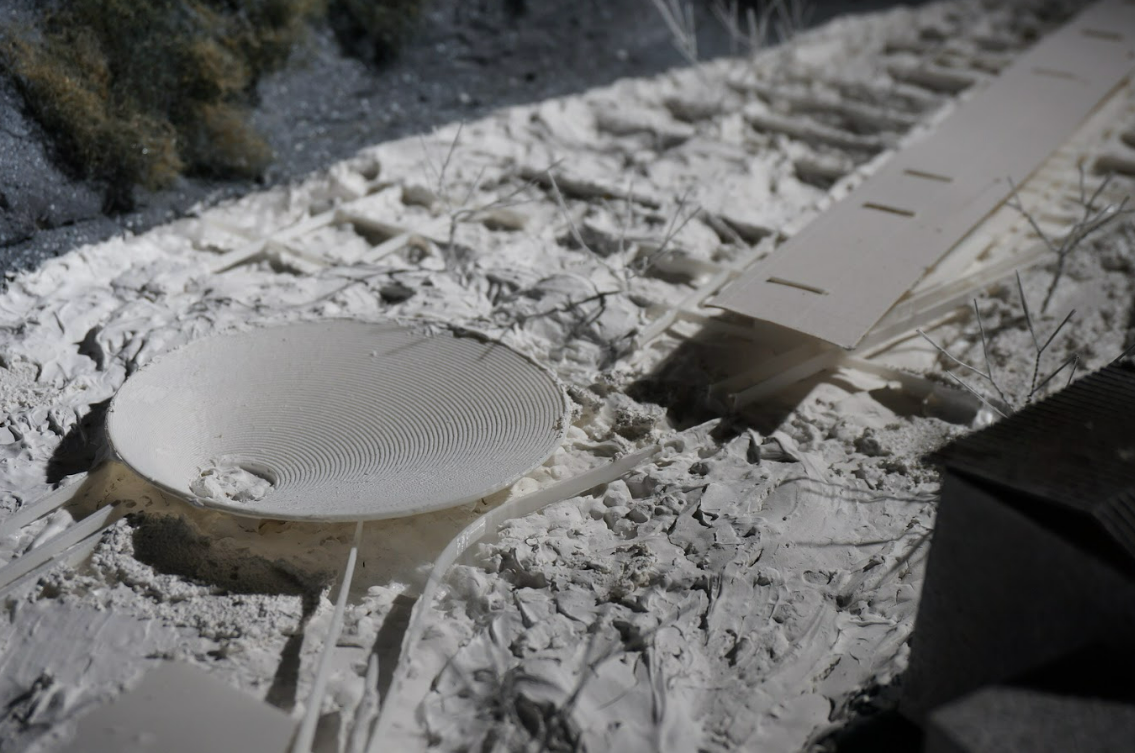
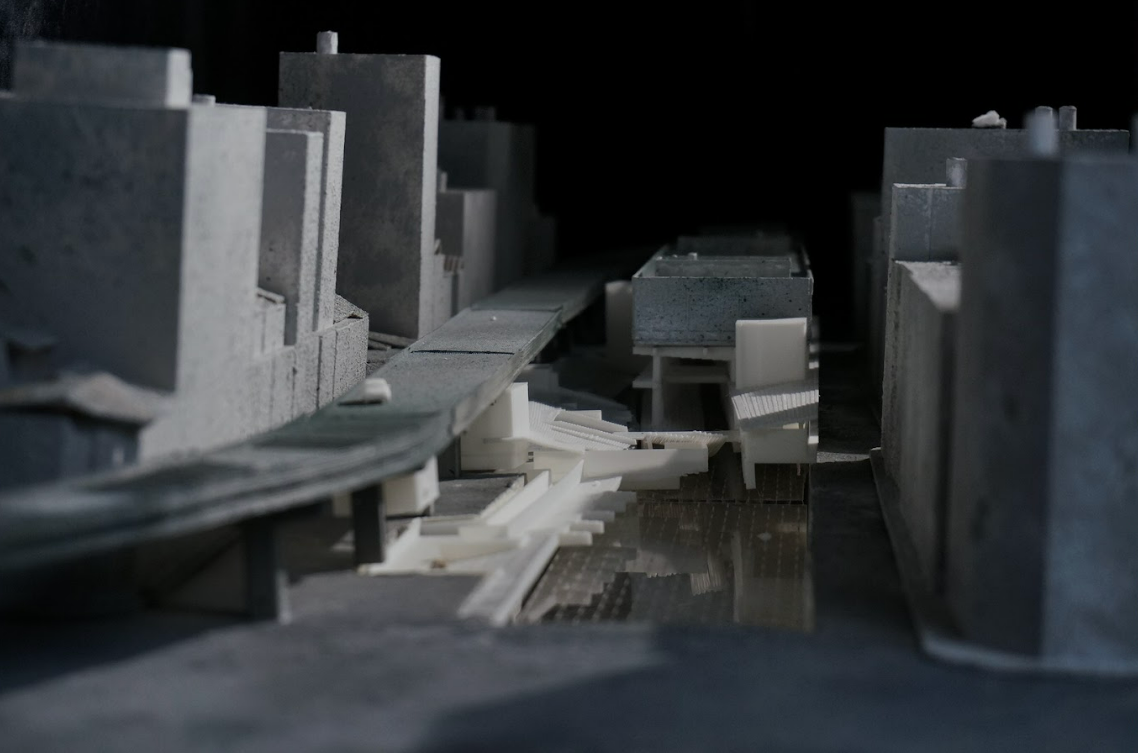
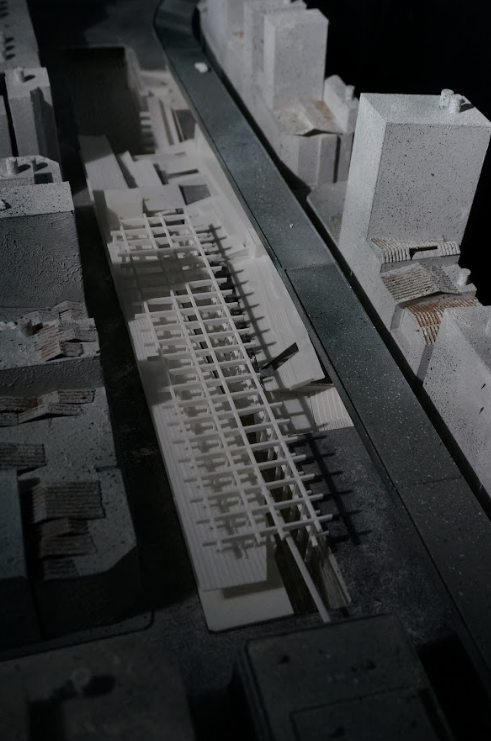
在現今逐漸觀光化的後工業時代,人們總把旅行當作遊歷的方式,卻只注重結果,結束後即重複的旅遊模式助長了城市紋理扁平化的現狀。這些隨著產業進化、繁盛、凋零、腐朽的運河,被覆蓋了太多層上去,失去了原始紋理與意義。因此我選擇將隱沒於人們記憶中的河川運輸節點作為演繹當代觀光性的實驗場域,討論產業運輸設施除了作為生產用途的人造地景外,能否藉由轉型過程中的變動性,揭露那些既存卻被刻意忽視的、隱沒的空間;同時利用基地本身特性,積極地迫使人類反思環境與認知城市旅遊的意義,並企圖修復這幾條消失的水域,在城市地景中揭開屬於新世代產業義肢的序幕。
–
Reviving the Industrial Prosthetics of a Sub-Constructed City
Since the Japanese colonial era, Keelung has been inseparable from its harbor—an infrastructural organism whose systems shaped the city’s industrial evolution and urban fabric. These large-scale infrastructures acted like genetic codes, preconditioning future urban developments. Humanity, believing it could master evolution, grafted powerful industrial “prosthetics” onto the natural terrain, upgrading the port and transforming it into a hyper-efficient super-species.
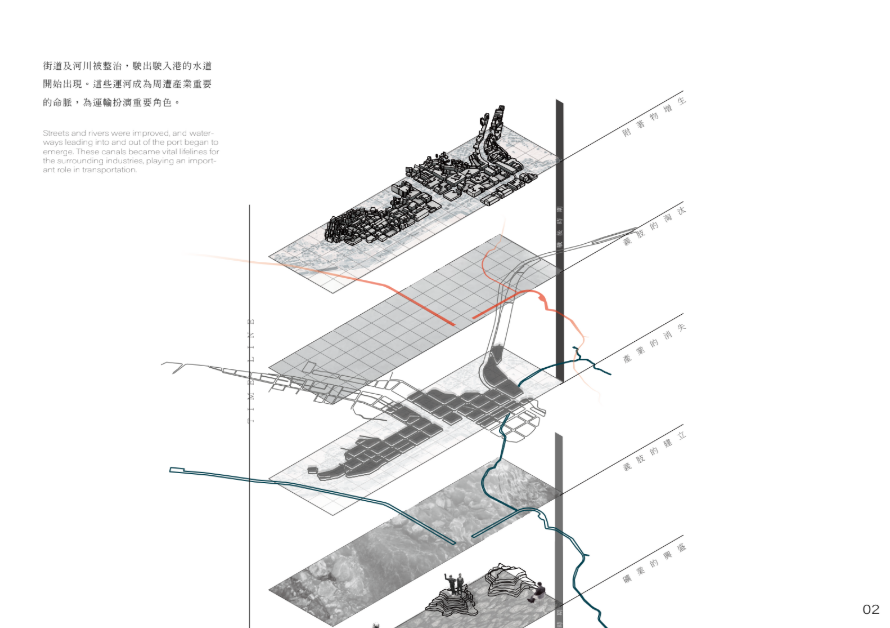
Today, however, these once-vast industrial spaces have become obsolete—buried beneath layers of urban expansion and rendered inaccessible to the everyday city dweller. These prosthetics have been stripped away, leaving behind flattened, ungraspable spaces that silently sustain the city’s economy.
In the current post-industrial, tourism-driven era, travel is often reduced to a consumable experience—encouraging a superficial reading of cities and accelerating the erasure of layered urban textures. The canals, once alive with transport, now lie buried and forgotten—losing their original meaning and material memory.
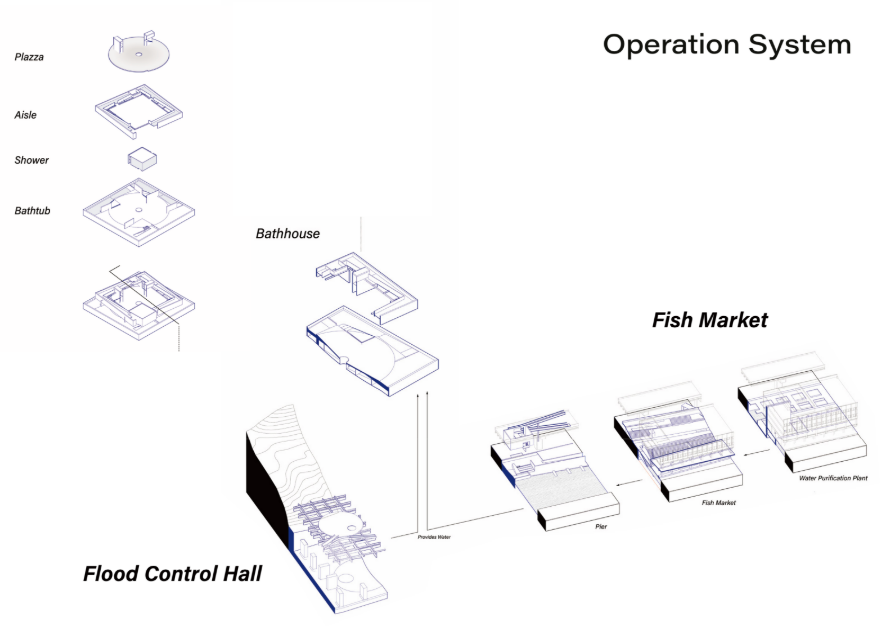
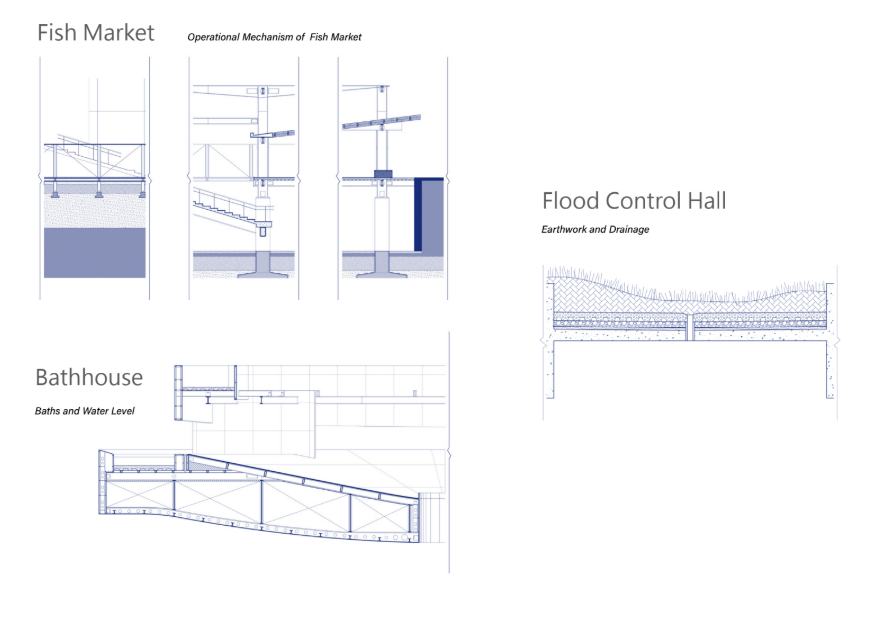
This project reclaims one of these hidden canal nodes in Keelung as a testing ground for contemporary tourism. It questions whether former industrial infrastructures can be reactivated—not merely as relics of production, but as dynamic spaces that reveal what has long been hidden or ignored. By leveraging the site’s unique conditions, the design provokes reflection on how we perceive travel, industry, and environment—initiating a new chapter in urban prosthetics, where lost waterways resurface as carriers of identity, memory, and spatial renewal.