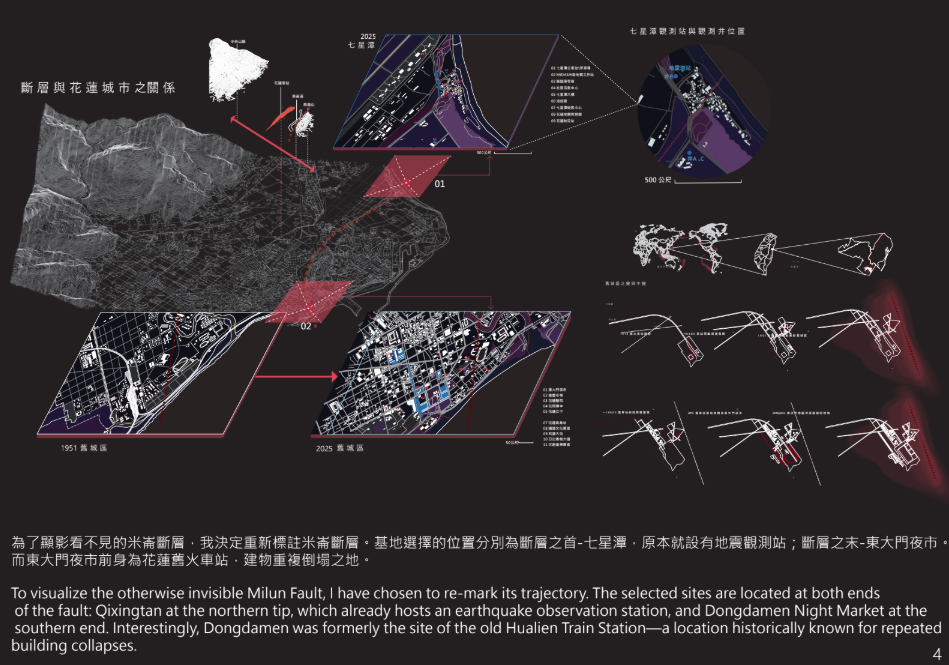
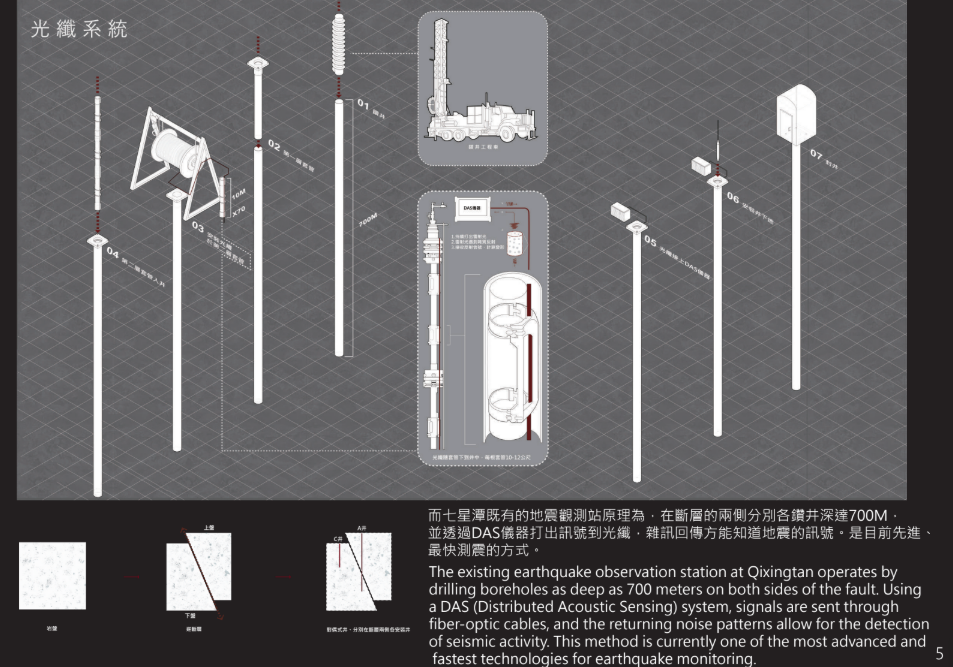
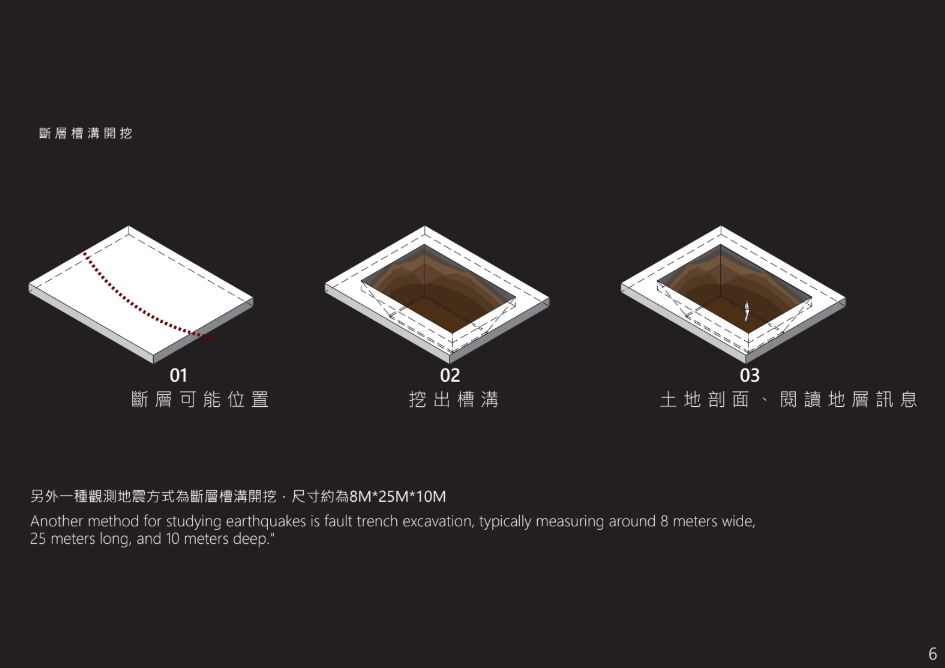
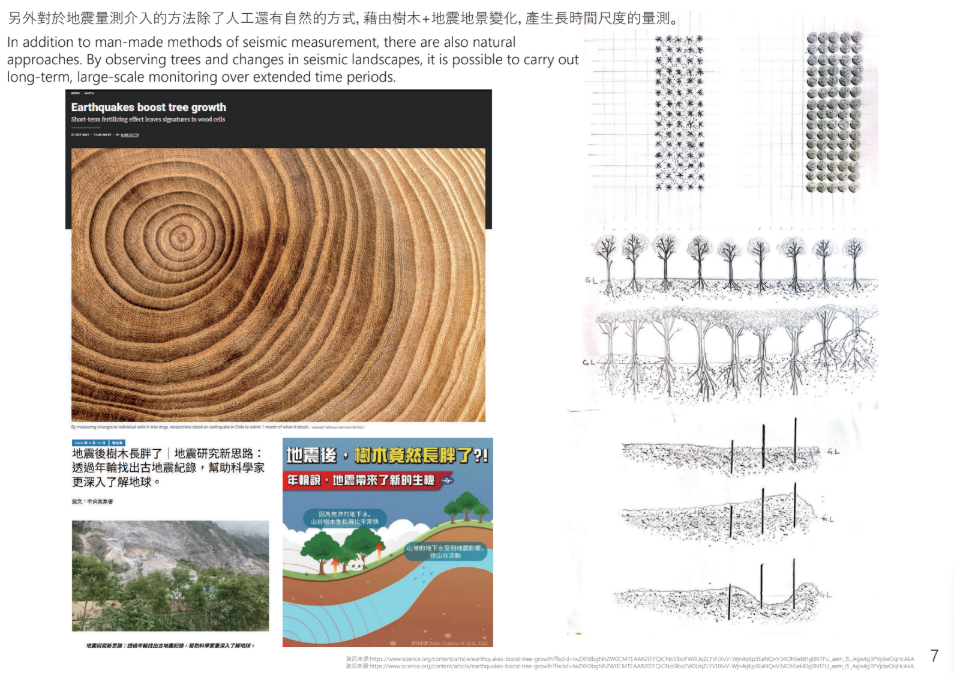
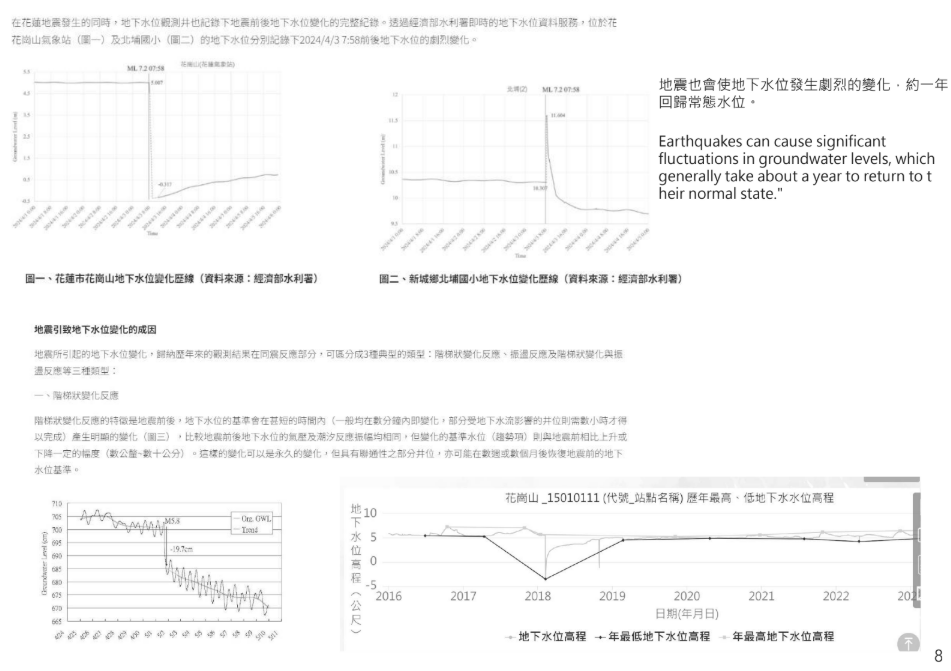
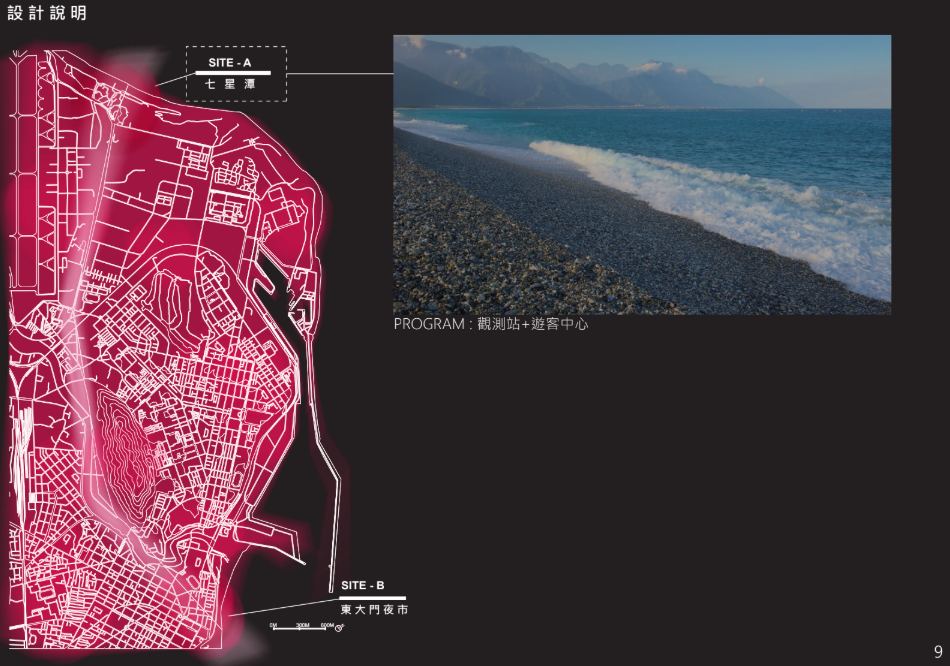
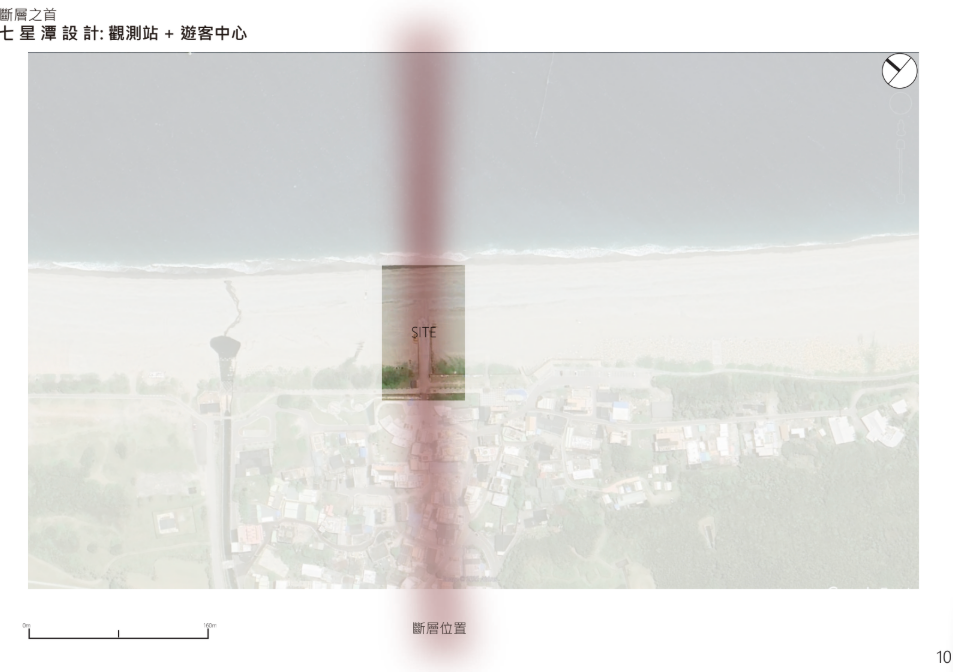
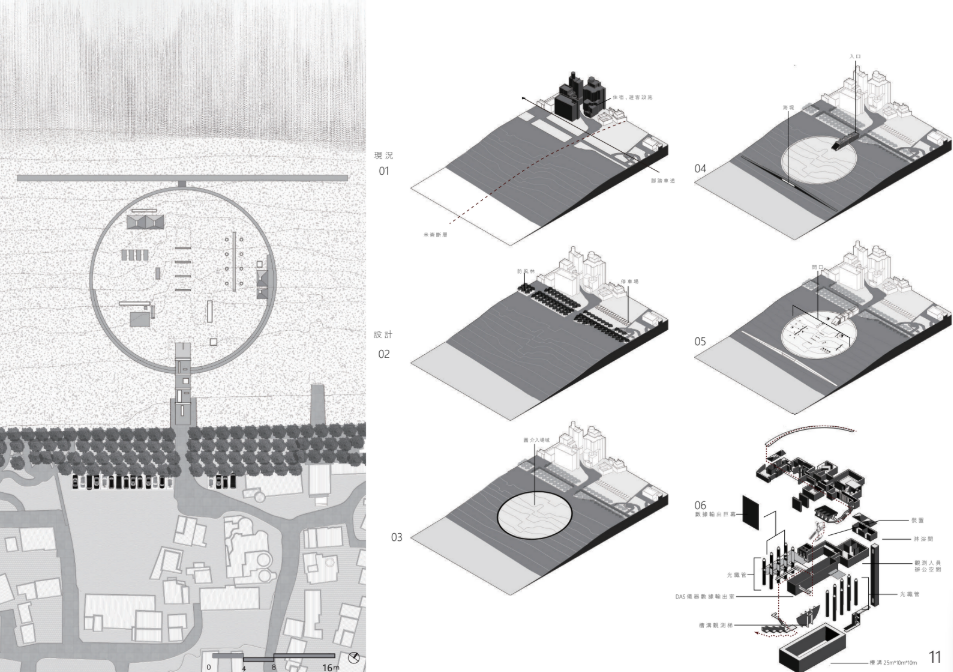
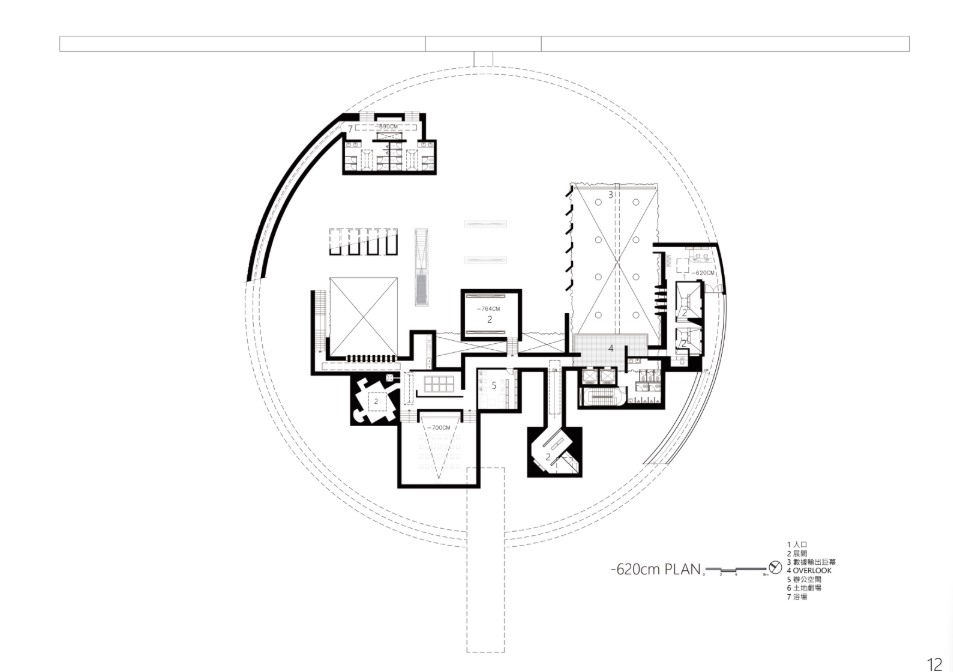
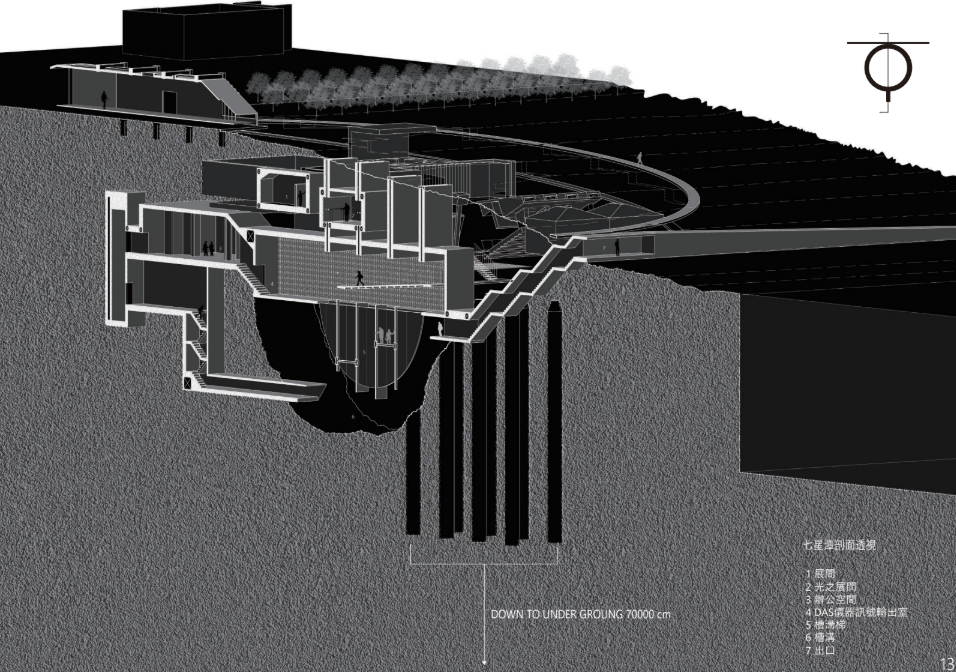
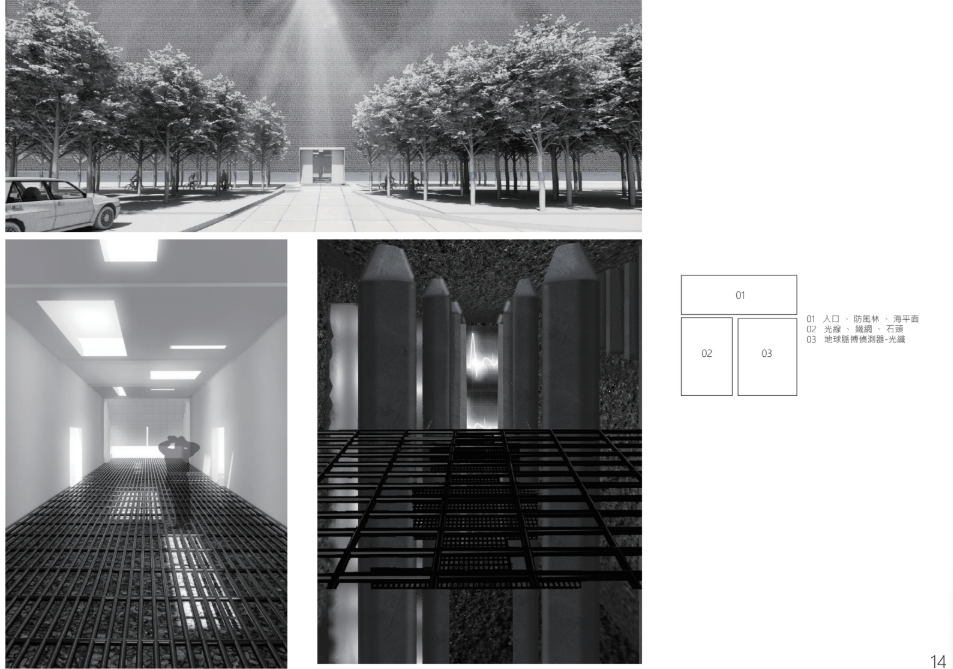
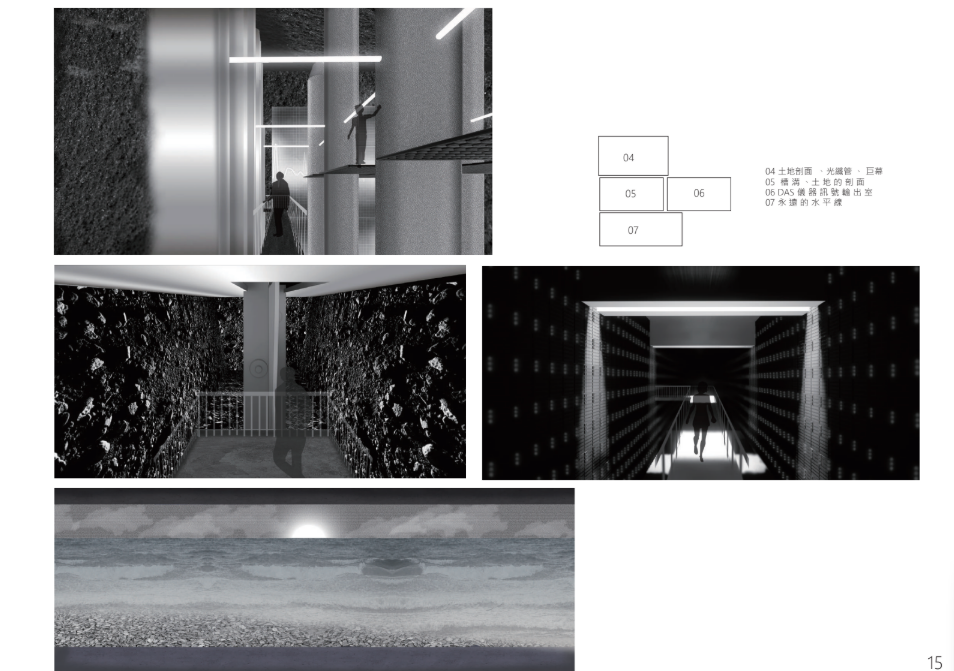
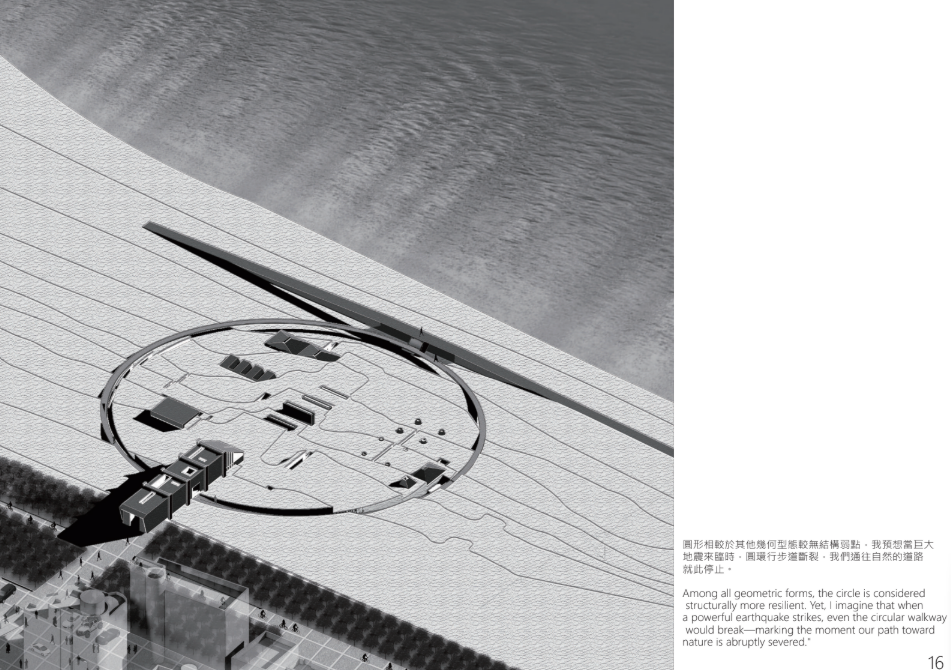
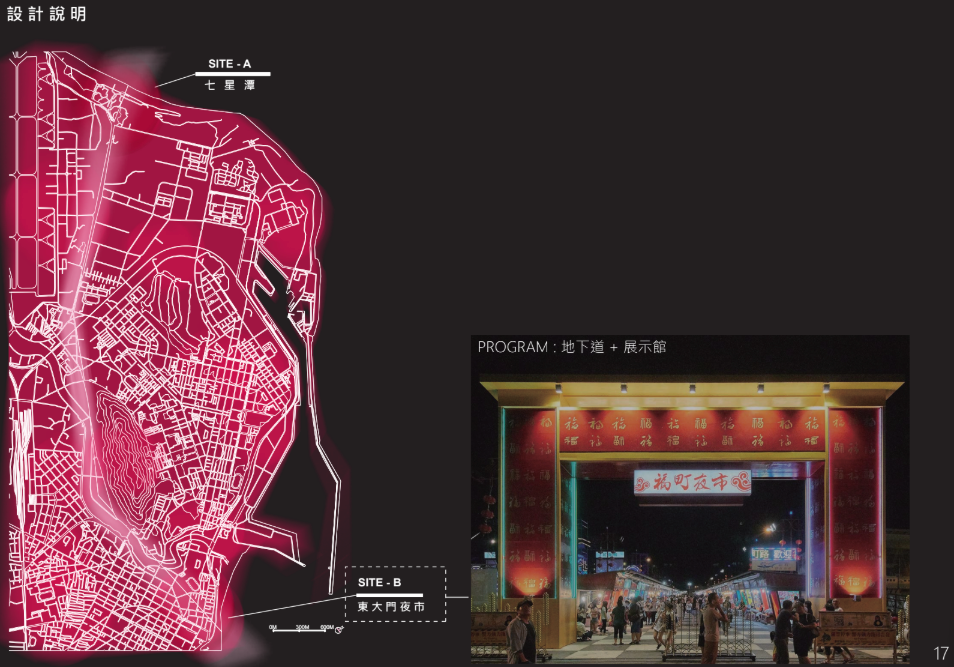
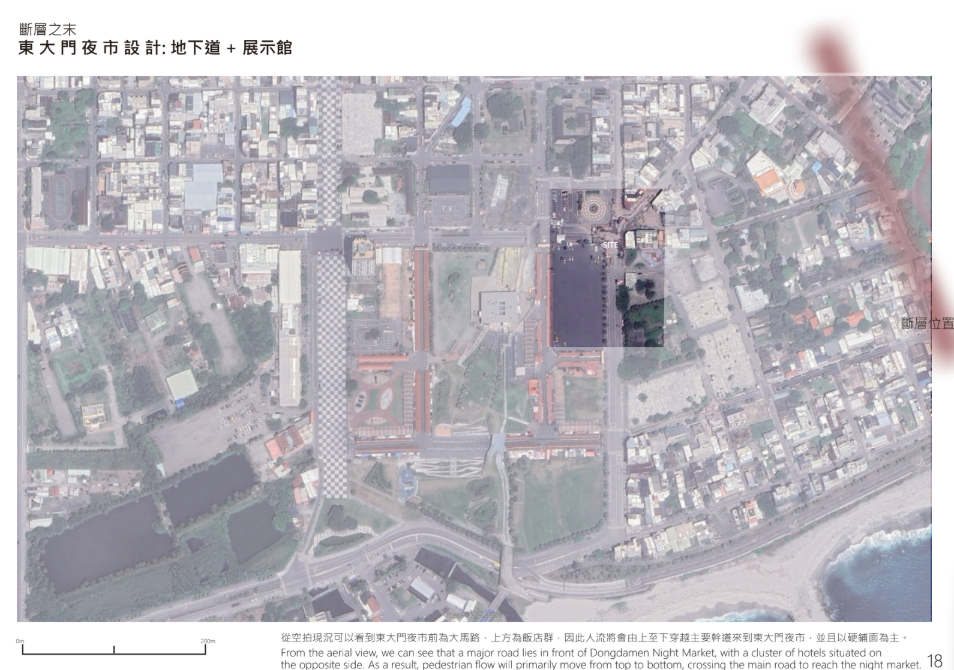
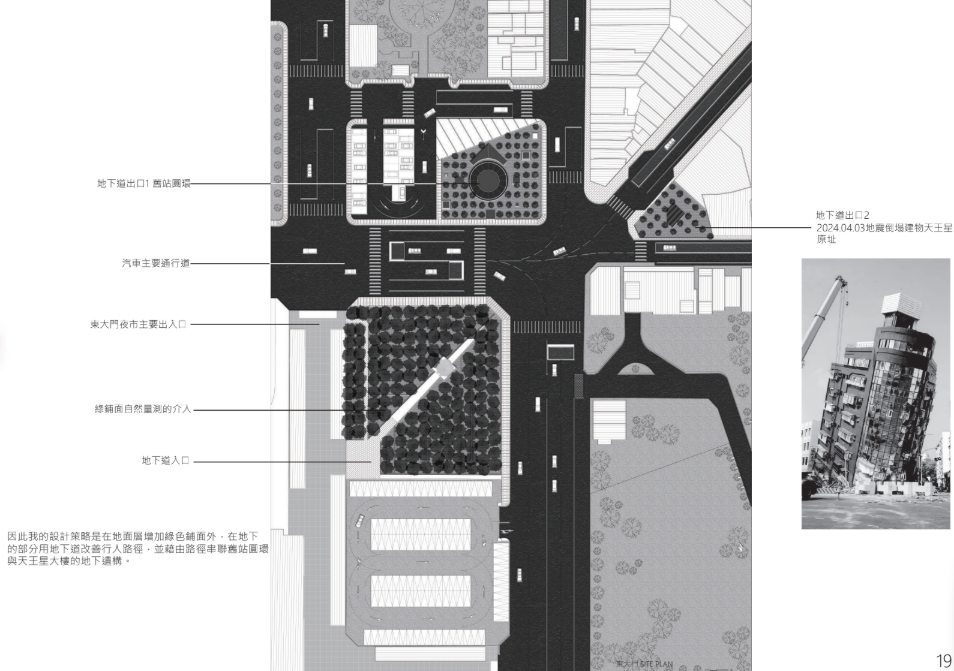
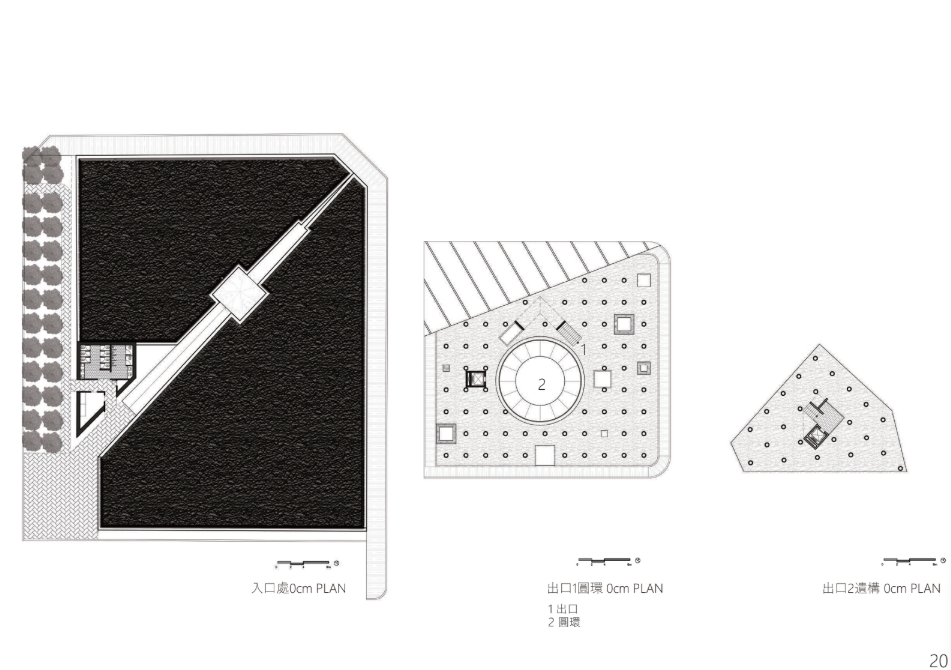
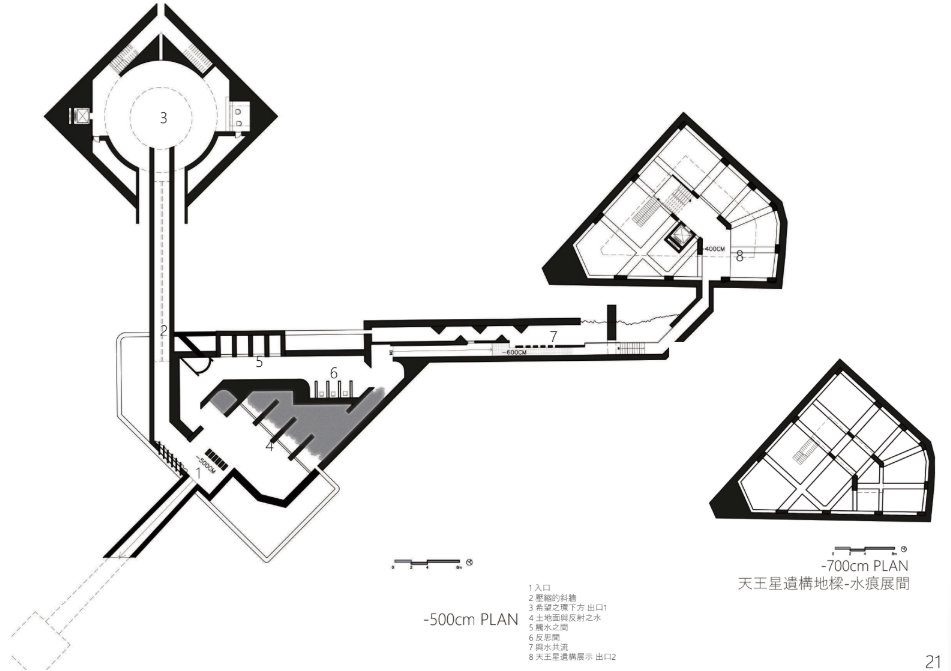
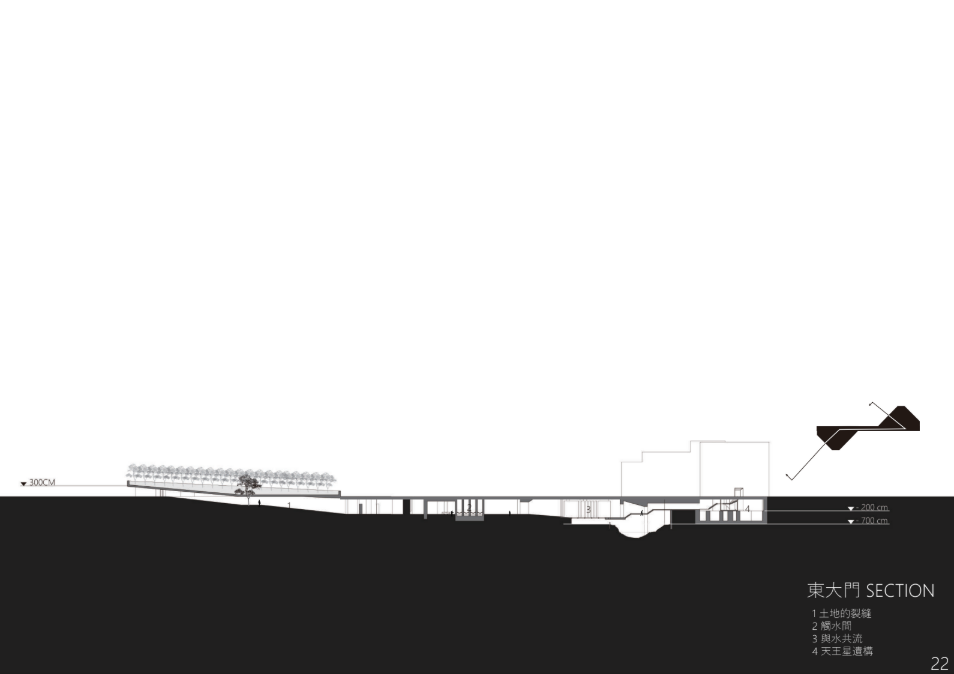
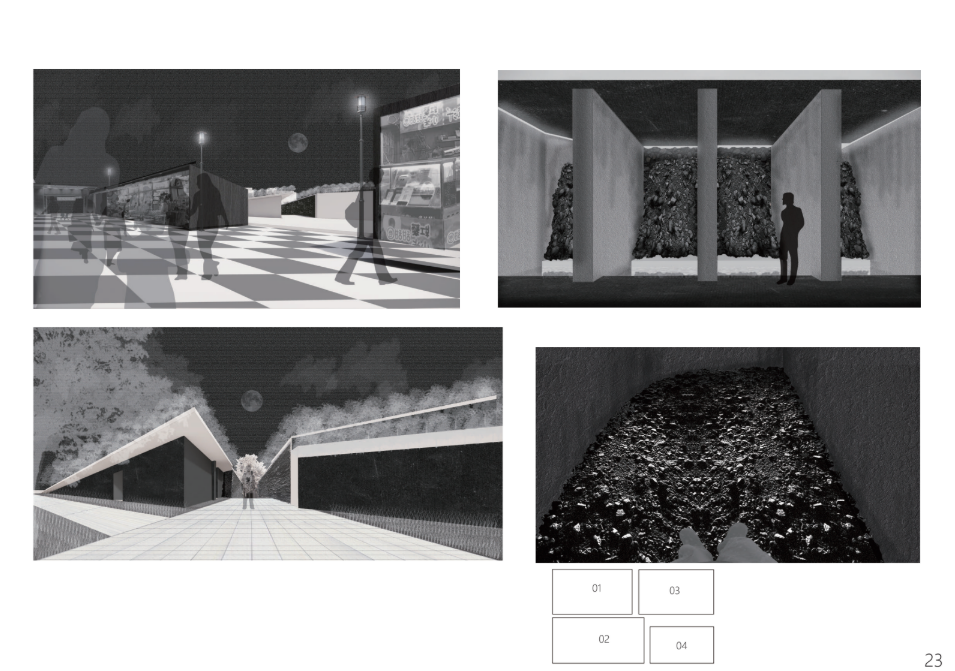
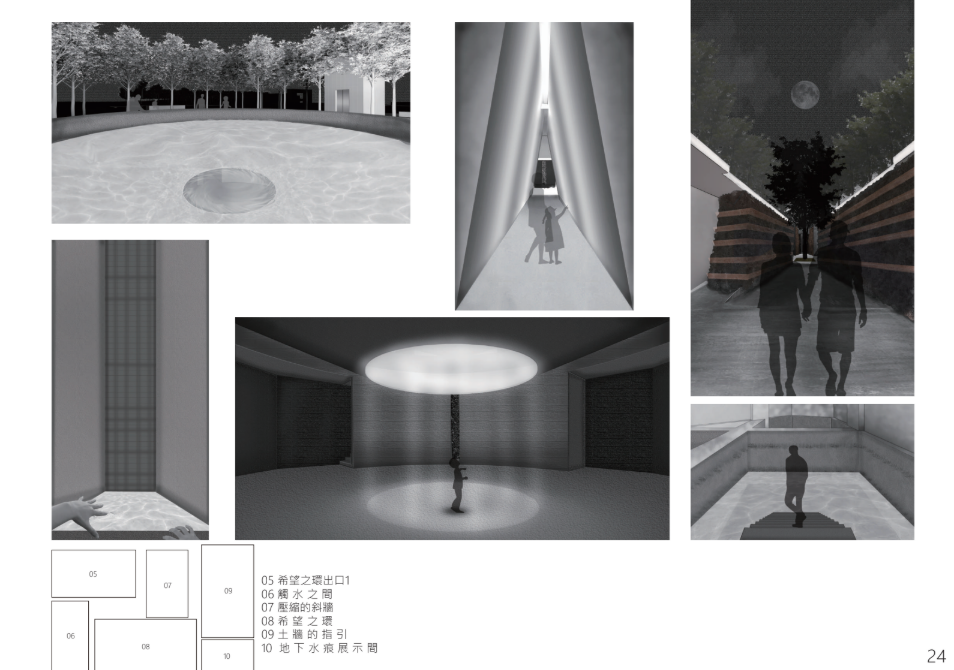
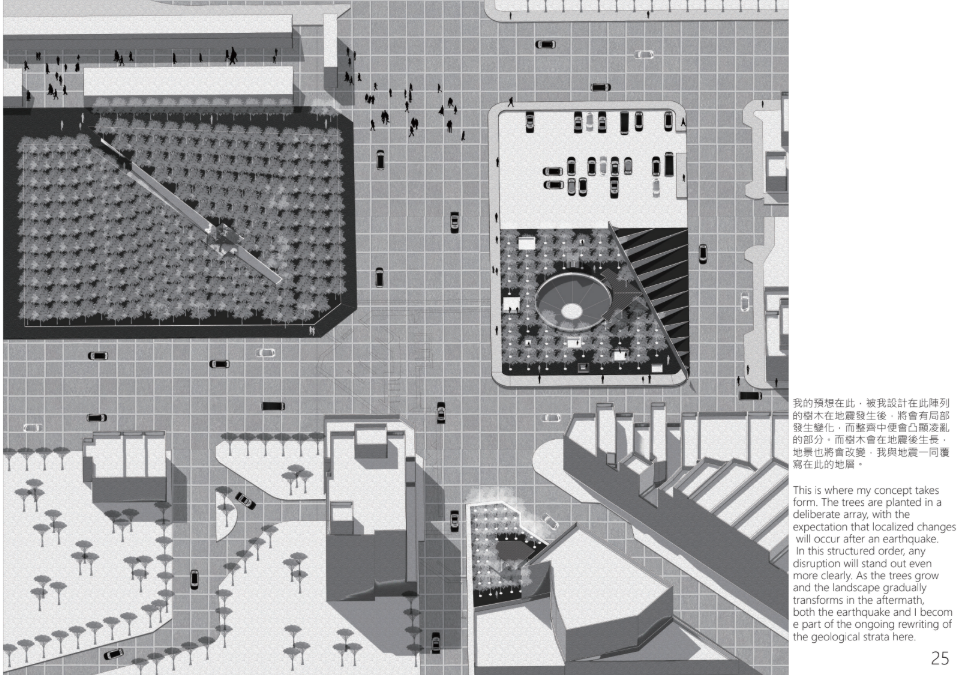
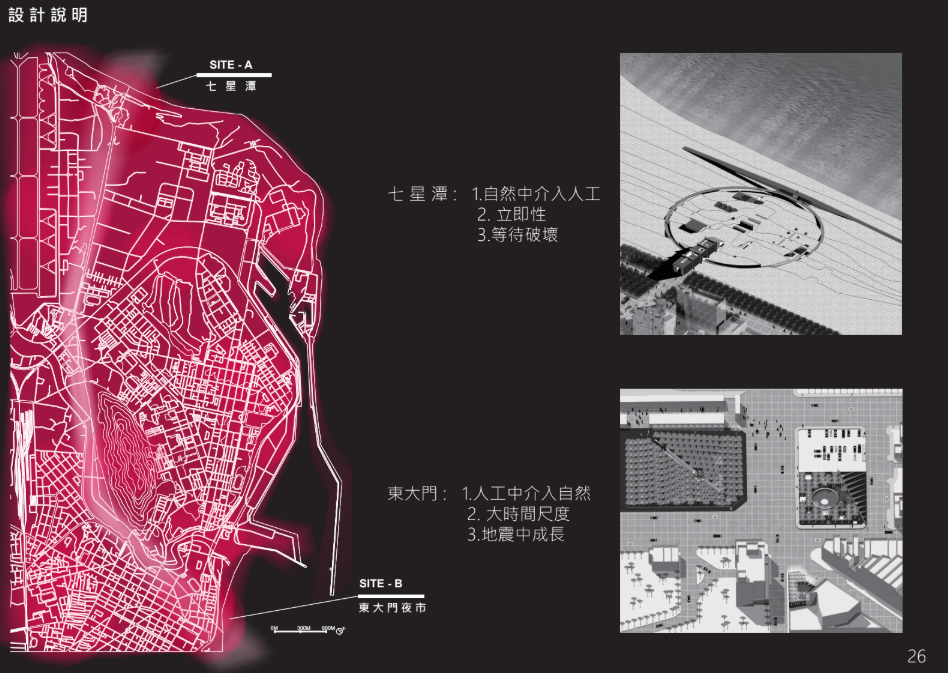
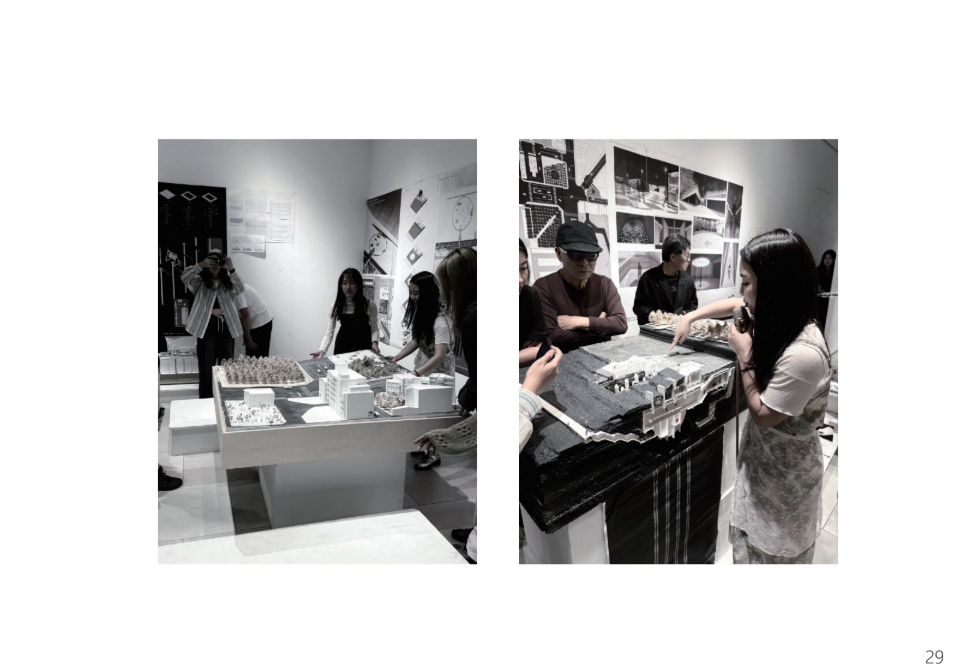
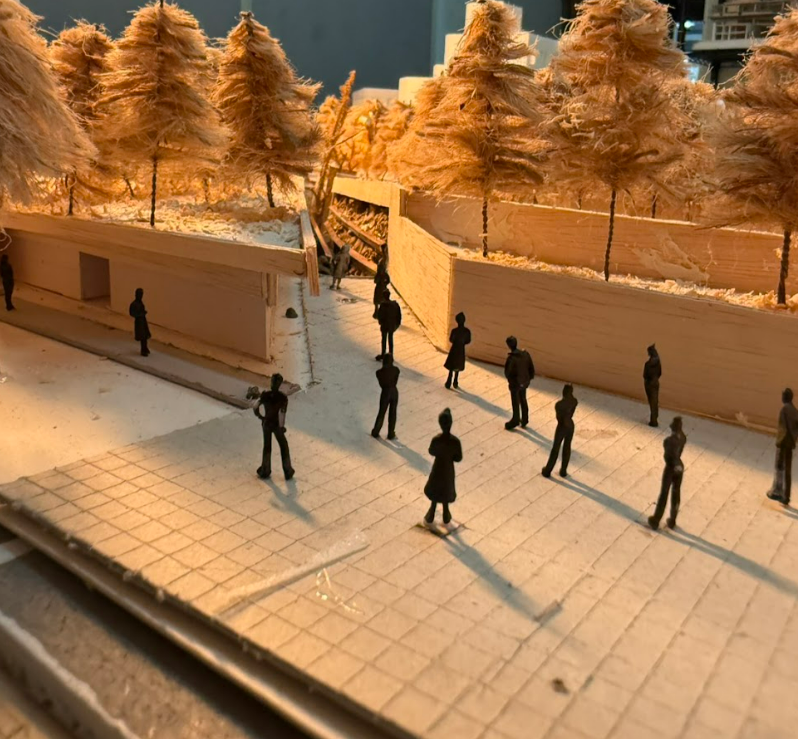
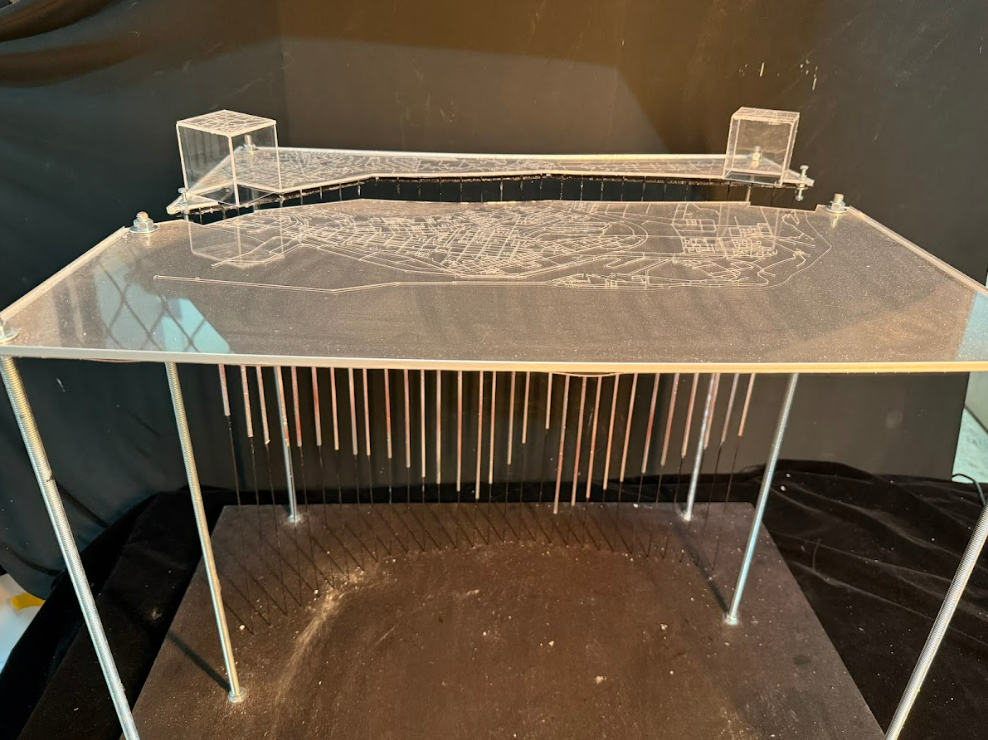
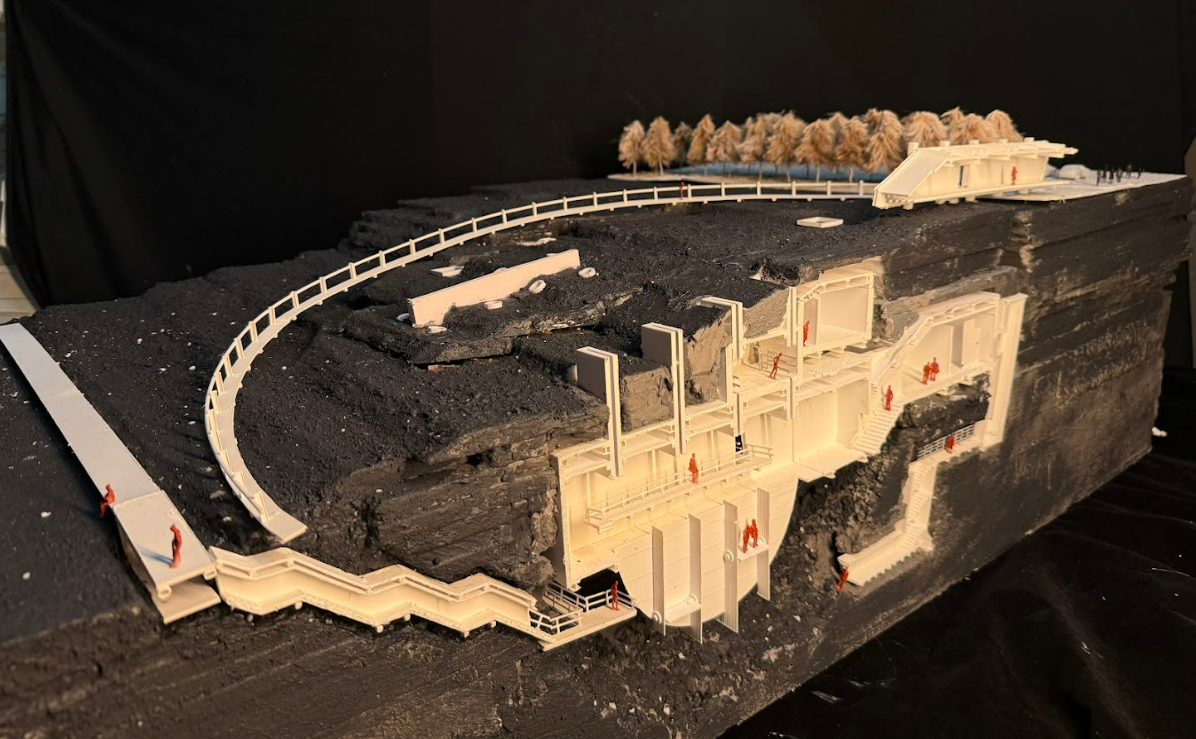
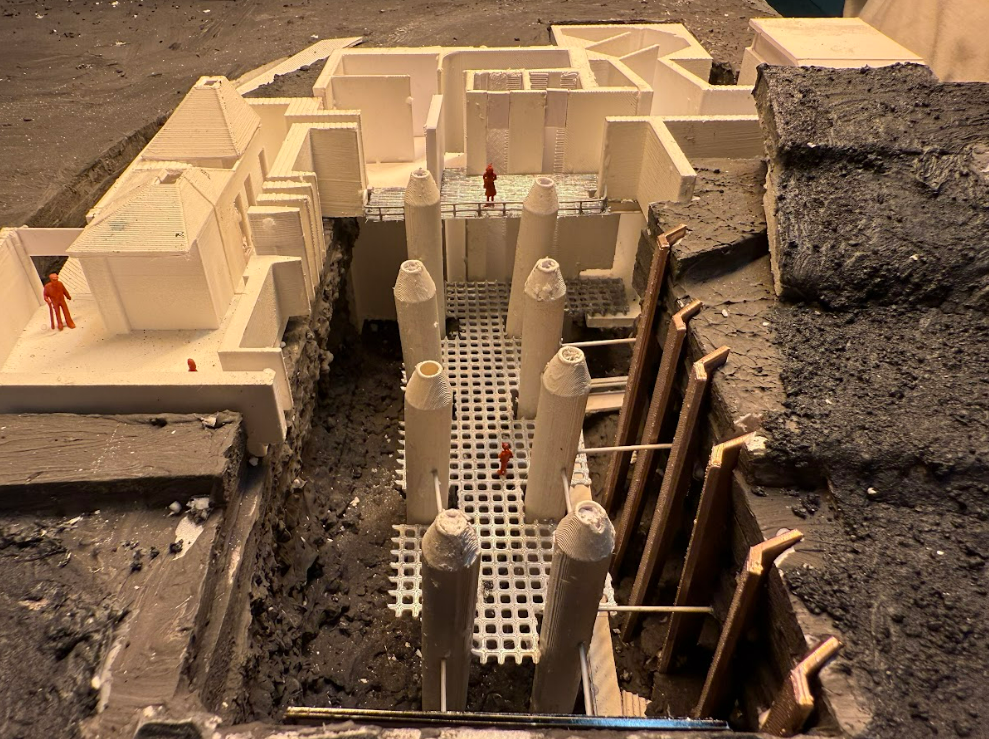
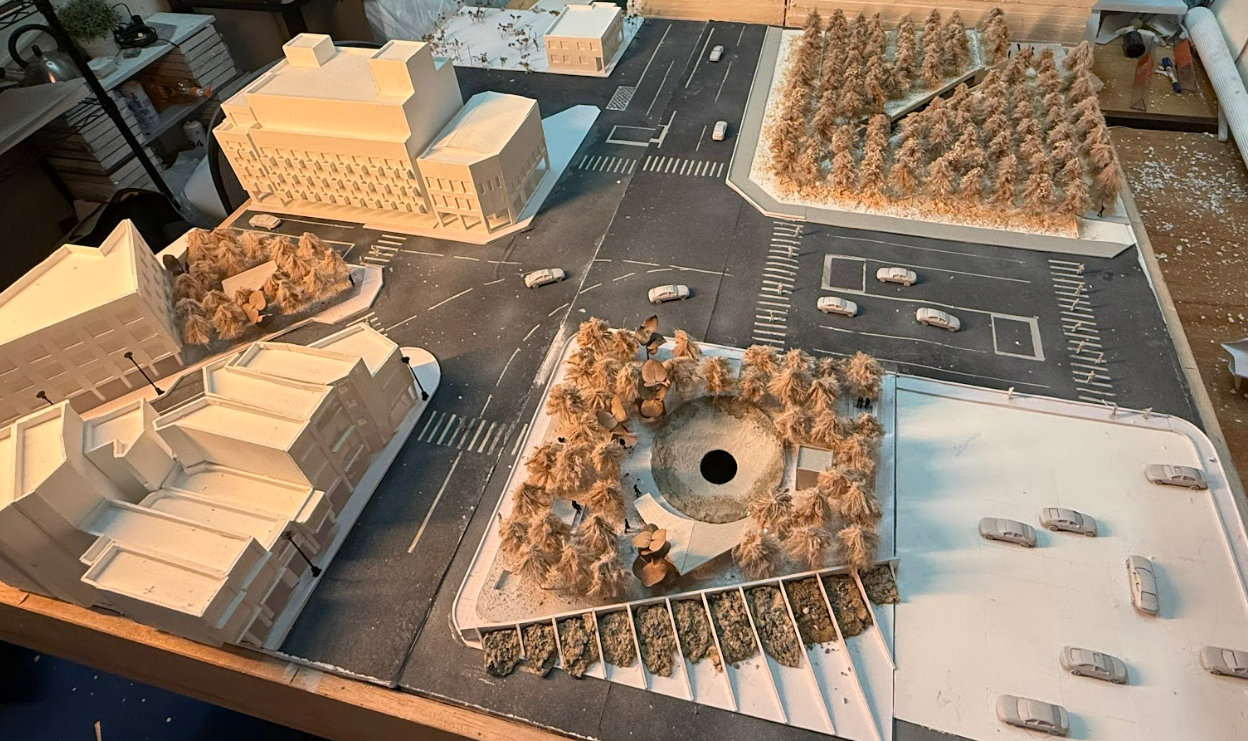
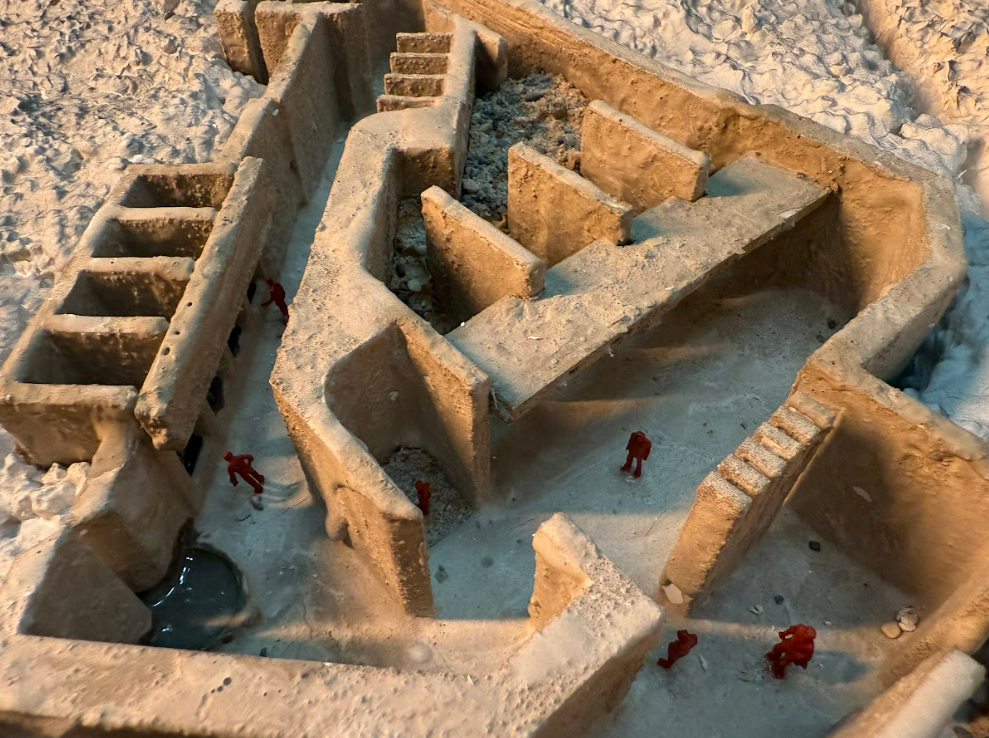
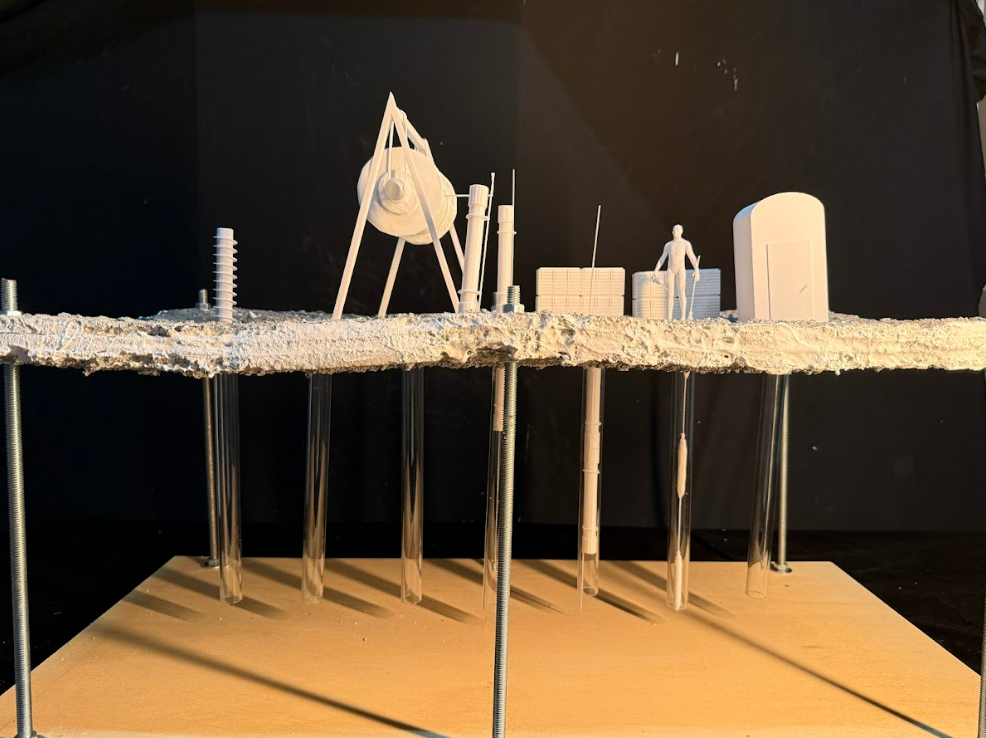
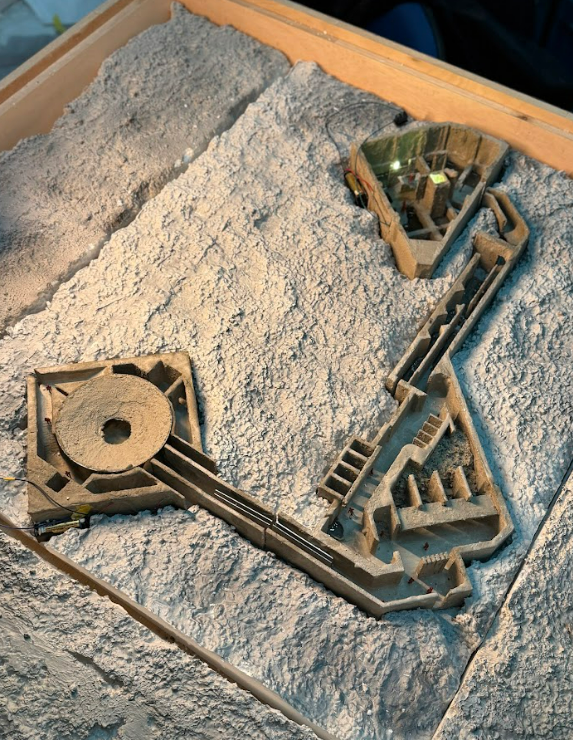
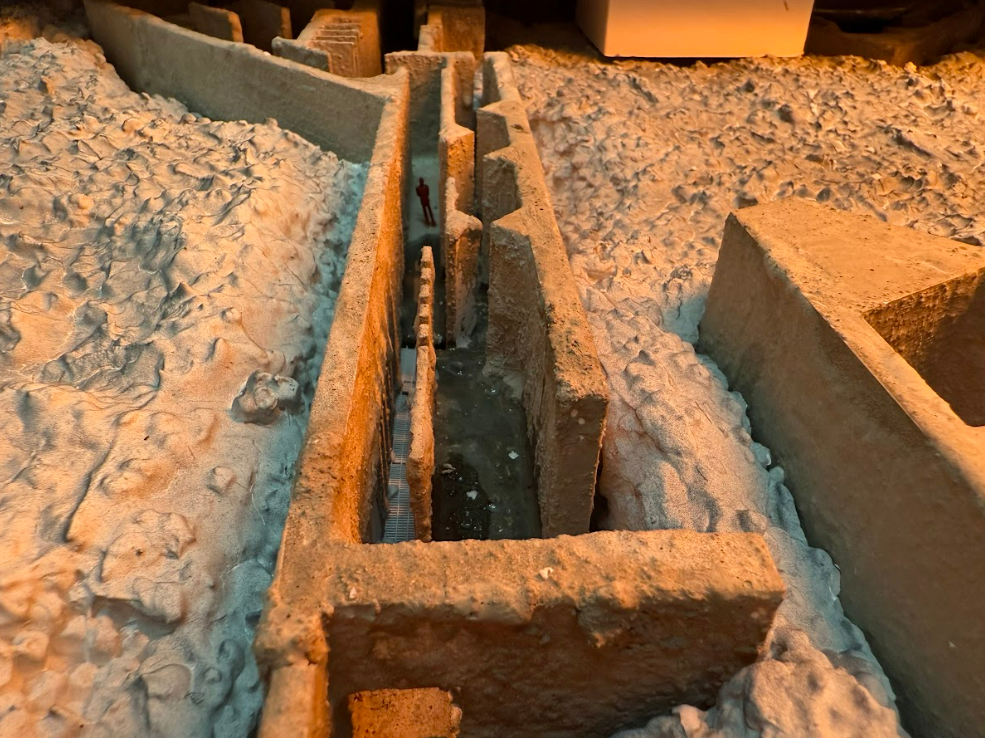
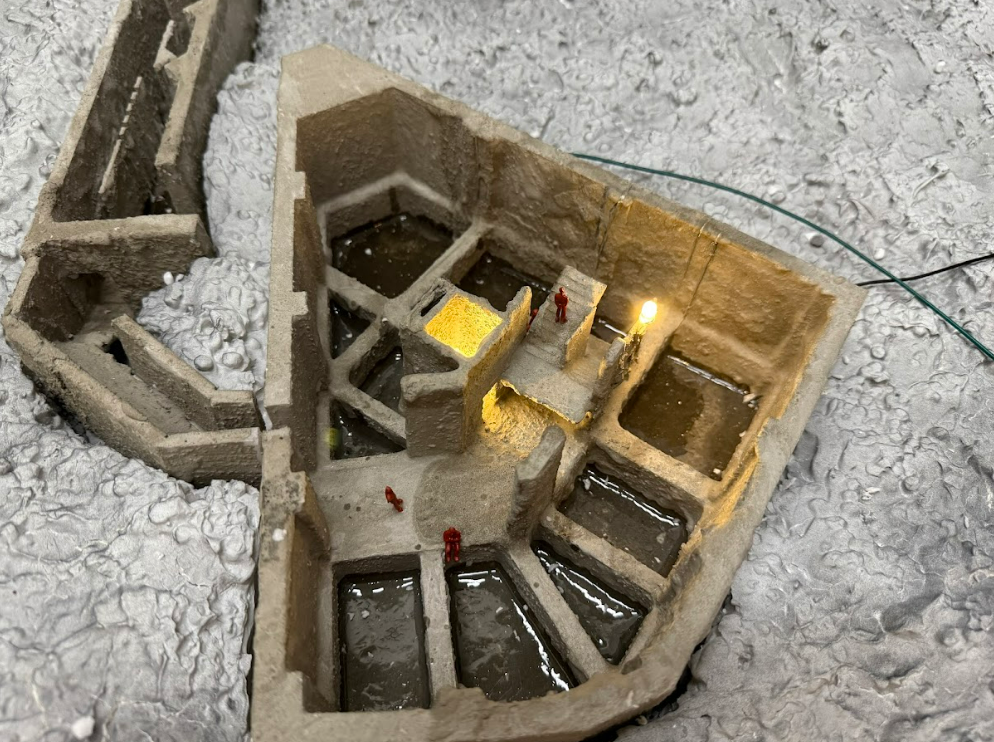
自身過往生命經驗,我關注到同為無可避免的瞬間,可能是一場天災、一場人禍。台灣有一個城市叫花蓮,對於花蓮我們的印象應是好山好水,但其實美好的背後,卻是承載著全台灣最多天然災害的土地,尤其當4月3號的大地震瞬間摧毀了對於當地精神象徵的太魯閣。透過研究花蓮的城市脈絡,可以得知花蓮現在的紋理是順應著天災而成,一條米崙的斷層通過花蓮市中心,其發震率高達88%,這也正是花蓮如此無常的原因,當地震一再發生,同一塊土地上的房子重複倒塌,差別只是經過了70年。我想做的是如何喚起人們僅存在於瞬間所擁有的記憶與感知、如何來去記得,透過空間、場域、裝置等,讓人們用身體來去記得。 嘗試重新標註米崙斷層,兩點成一線,兩個截然不同的基地分別位於斷層的頭跟尾,分別為自然環境的七星潭與舊市中心的東大門夜市,這兩處恰好都是遊客聚集之處。而七星潭基地處有一個最新科技的光纖觀測站,東大門夜市有一個不斷見證變動的不變圓環紋理。因此在七星潭所設置的機能為地震觀測站+遊客中心,在自然當中做人工的介入;在東大門夜市出入口做公園+地下道,在人工當中做自然的介入。七星潭的地震觀測站屬於立即性的感知,而東大門夜市區屬於大尺度的時間設計。
–
Invisible Lines: A Site of Reflection in Hualien
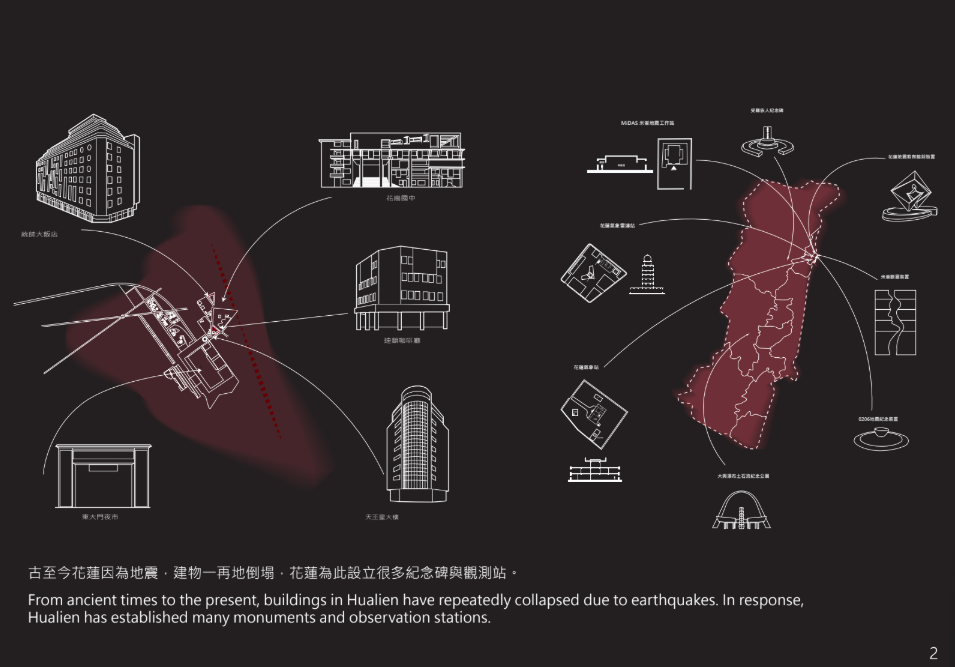
From personal experience, I have come to realize that certain moments—whether caused by natural disaster or human crisis—are both sudden and inescapable. In Taiwan, Hualien is often associated with scenic beauty, yet beneath this image lies a land burdened with the highest frequency of natural disasters in the country. The recent April 3rd earthquake, which devastated Taroko Gorge—a symbol of local identity—was one such moment.
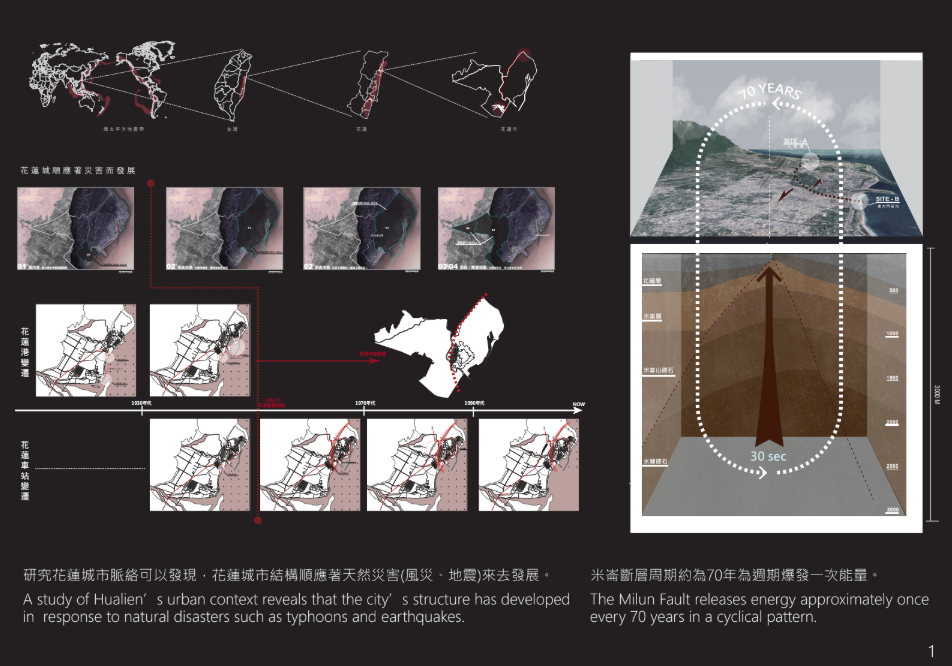
Through studying Hualien’s urban patterns, it becomes clear that the city has evolved in response to disaster. The Milun Fault runs directly through the city center, with an 88% probability of seismic activity. In Hualien, impermanence defines the land—buildings collapse, are rebuilt, and collapse again over time, often on the same ground.
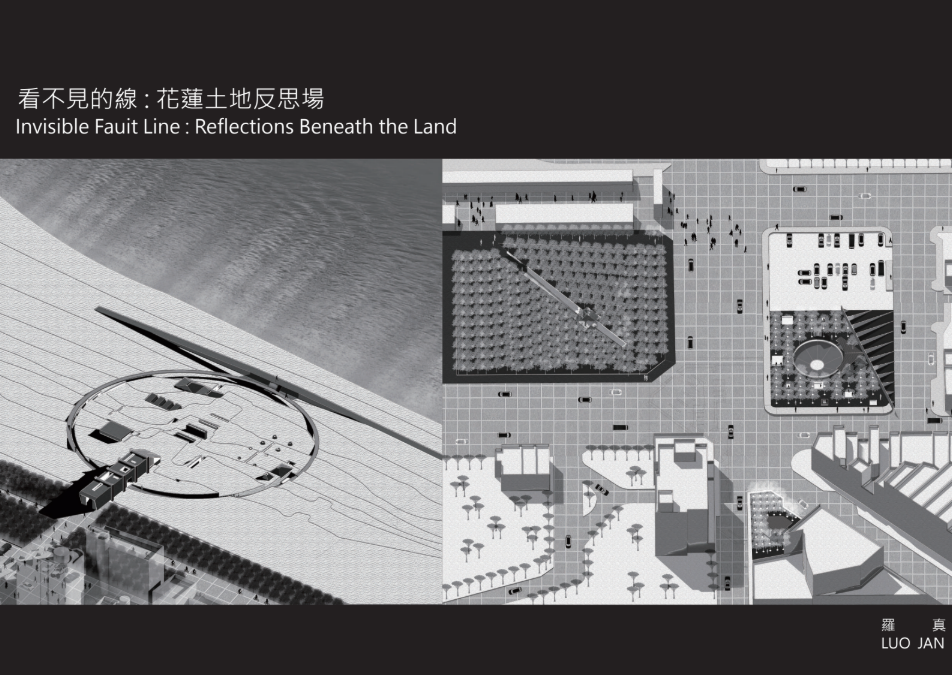
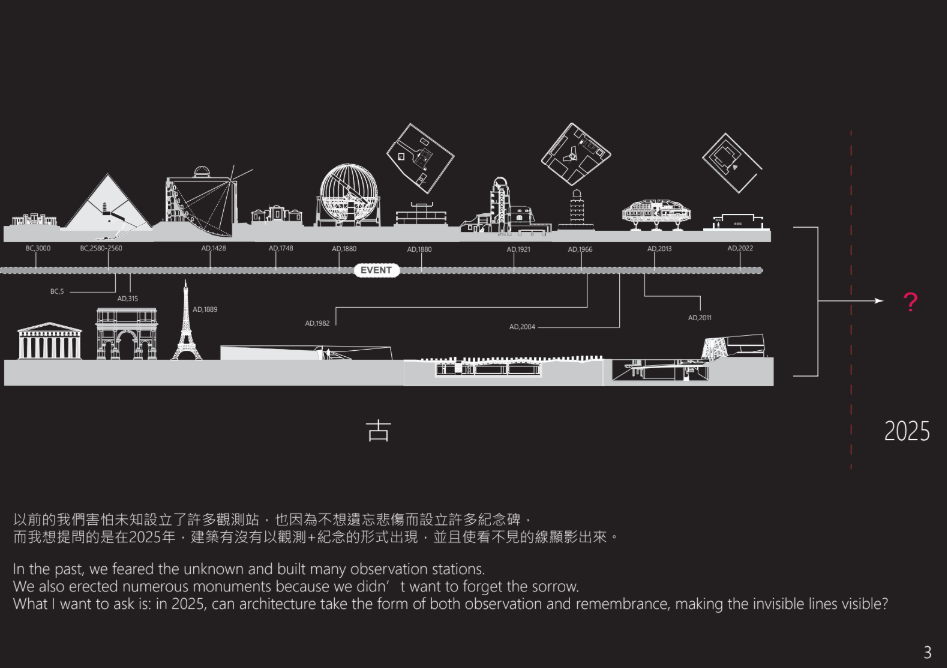
This project seeks to awaken bodily memory of these fleeting, traumatic moments—through space, landscape, and installation. I re-mark the Milun Fault as a line between two sites: Qixingtan, a coastal natural setting at one end, and the Dongdamen Night Market, a shifting urban center at the other. Both are popular tourist destinations, yet each holds a different temporal character.
At Qixingtan, where a fiber-optic seismic observatory already exists, I propose a Seismic Observation Station + Visitor Center, an artificial intervention within nature. At Dongdamen, I introduce a Public Park + Underpass, embedding natural elements into an artificial landscape. Qixingtan embodies immediate, bodily perception of seismic activity; Dongdamen, a design rooted in deep time and collective urban memory.
This is not a monument to destruction, but a reflection on how we remember what disappears in an instant—and how the invisible lines beneath us continue to shape how we live, rebuild, and remember.